

Stories

Are you looking for a unique way to experience the stunning scenery and serene lakes of Laurentides? Then paddle boarding may be your next favorite activity. Paddling allows you to glide across calm waters, offering a captivating perspective on the surrounding landscape.
In this guide, we'll delve into the top 10 spots for paddle boarding in the Laurentides. From tranquil lakes to gentle rivers, we'll help you discover the perfect location for your next paddle board Laurentides adventure.
DISCLAIMER: Before traveling to a paddle location, ensure that the location still allows for paddle boarding and make yourself aware of any rules and regulations in place.
1. Lake Provost
Nestled within Quebec, Canada's Laurentides region, Lac Provost boasts a serene escape from the bustling world perfect for paddle boarding. Lush forests surround the lake, its pristine waters reflecting the tranquility of the region. Unsupervised beaches make it a haven for swimmers, kayakers, and paddle surfers.

source: freepik
For a rustic experience near the water, choose spacious campsites like "Pinson Chanteur." Explore nearby trails, including the scenic route to the enchanting Chute aux Rats waterfall. Dip your toes in the cool water and create playful echoes near the little spit of land. Just be prepared for the black fly season in June - lavender or tea tree oil will keep them at bay.
- Travel time: Expect a 1.5-hour drive from Montreal.
- Water type: Lac Provost boasts calm, crystal-clear waters, ideal for beginners and experienced paddlers alike.
- Skills: Whether you're a seasoned paddler or a curious first-timer, Lac Provost caters to all skill levels.
- Launch point: There are several convenient access points for launching your paddle board (Lac Provost Beach, Plage du Domaine Rouge).
- Amenities: Public restrooms and free parking are available at Lac Provost Beach. There are no restaurants located directly on Lac Provost Beach. However, there are dining options available in the surrounding area.
- Cost: Park entrance fees apply, with additional charges for paddle board rentals if needed (around $50 for a full day).
- Unique: Lac Provost is a haven for wildlife sightings. Keep your eyes peeled for nesting loons and playful beavers!
2. Lake Ouimet
Paddle boarding on Lake Ouimet (Lac Ouimet) in the Laurentides offers a unique blend of tranquility and scenic beauty. The lake's geographical features include calm waters, perfect for beginners, with a shoreline boasting rolling hills and lush forests.
For the most captivating experience, plan your Lake Ouimet excursion during the summer months, ideally between June and August. Early mornings or evenings present the ideal time of day, as the lake's surface is like glass, and the temperatures are comfortable.
Lac Ouimet boasts a relatively small population, adding to the peaceful atmosphere. Beyond paddle boarding, the surrounding area offers opportunities for hiking, biking, and wildlife viewing.
- Travel time: The drive from Montreal to Lac Ouimet takes approximately 1 hour and 15 minutes.
- Water type: Lac Ouimet's calm waters provide a smooth paddling experience, perfect for exploring hidden coves and soaking up the natural beauty.
- Skills: This tranquil lake is suitable for paddlers of all experience levels.
- Launch point: Public boat launches are readily available around the lake (like Plage du Lac-Ouimet, Plage municipale d'Oka).
- Amenities: Depending on the launch location, you might find basic amenities like restrooms and picnic areas. Public transportation is limited, so arriving by car is recommended. Consider bringing a picnic basket as there's no food or drinks available.
- Cost: There are usually minimal launch fees or parking charges. Paddle board rentals start from $20 per hour.
- Unique: Lac Ouimet is a treasure trove of hidden islands. Explore these gems and discover secluded beaches for a truly unforgettable adventure.
3. Lake Mercier
Paddle boarding on Lake Mercier (Lac Mercier) in the Laurentides offers a unique blend of tranquility and scenic beauty.

source: freepik
Lac Mercier boasts a relatively small population surrounding it, contributing to its serene atmosphere. Beyond paddle boarding, the area provides opportunities for hiking, biking, and wildlife observation.
- Travel time: Take a scenic 1.5-hour drive from Montreal to reach Lac Mercier.
- Water type: The lake's calm and clear waters offer a tranquil paddling experience, making it ideal for families and leisure paddlers.
- Skills: Beginners and experienced paddlers will find Lac Mercier's calm waters enjoyable.
- Launch point: Public boat launches (like Plage municipale de Lac Mercier) provide easy access to the lake.
- Amenities: Depending on the launch location, you might find basic amenities like restrooms and picnic areas. Free parking is available near the beach, but it can get crowded on weekends and holidays, so be prepared for potential delays. There are no restaurants at the launch point itself. However, you can find a few restaurants in the nearby town of Saint-Sauveur, a short drive away.
- Cost: Minimal launch fees or parking charges. Paddle board rentals start from $18.
- Unique: Lac Mercier boasts breathtaking views of the surrounding mountains. Paddle towards the shore and capture stunning panoramic vistas.
4. Rivière Rouge
The Rouge River, snaking through the Laurentians, offers a picturesque playground for paddle board Laurentides enthusiasts. Framed by rolling hills and dense forests, the waterway winds its way through a landscape teeming with natural beauty.
Paddle boarding on the Rouge River is particularly idyllic during the summer months (June to August) when the water is calm and the surrounding wilderness bursts with life. Populated with friendly locals and fellow outdoor enthusiasts, the Rouge River fosters a welcoming atmosphere.
Beyond paddle boarding in the Laurentians, the region boasts excellent hiking and biking trails, while historical sites and local art galleries offer a taste of the Laurentians' rich culture.
- Travel time: The drive from Montreal to Rivière Rouge takes approximately 1 hour and 45 minutes.
- Water type: The Rivière Rouge features flowing currents, ideal for experienced paddlers who enjoy a bit of an adrenaline rush.
- Skills: Best suited for confident paddlers with experience navigating currents.
- Launch point: Several public access points (Lac Tremblant, Plage municipale d'Abercrombie, Parc national du Mont-Tremblant) are available along the river. Be sure to research the specific section you'd like to explore for launch details.
- Amenities: Parking varies; free at Lac Tremblant and Plage d'Abercrombie, permit required in the park. Washrooms are not available at all launches, public ones near Plage d'Abercrombie.
- Cost: Public access points are usually free. Paddle board rentals range from $20 to $40.
- Unique: Paddle through towering cliffs and lush forests, encountering cascading waterfalls and historical sites along the way.
5. Rivière Du Diable
Paddle boarding on the Rivière du Diable, nestled deep within the Laurentians, offers a unique experience. The river winds through a secluded valley, its banks carpeted with dense forests and punctuated by dramatic rock faces. Paddling upstream, you'll encounter small waterfalls and calm stretches perfect for observing the abundant wildlife.
- Travel time: The drive from Montreal to Rivière du Diable takes approximately 1 hour and 30 minutes.
- Water type: The Rivière du Diable boasts calm stretches with occasional gentle currents, suitable for paddlers of varying experience levels.
- Skills: Beginners with some basic instruction and experienced paddlers alike will enjoy this route.
- Launch point: Public boat launches are available at various points along the river (for example, Lac du Diable Public Beach).
- Amenities: Free parking is available close to the beach. There are no restaurants or restrooms located at the launch site.
- Cost: Public access points are usually free to use. Paddle board rentals can be obtained for a separate fee from local outfitters, starting from $75 (full day).
- Unique: The Rivière du Diable carves its path through a spectacular canyon. Paddle through towering rock faces and immerse yourself in the beauty of the Laurentian wilderness.

source: unsplash
6. Lake Tremblant
Paddle board Laurentides on Lac Tremblant, nestled amidst the Laurentians' majestic mountains, provides a unique scenic beauty. Imagine gliding across the crystal-clear waters, surrounded by towering peaks and lush forests.
The ideal time for paddle boarding in Lake Tremblant is during the summer months, from June to September when the weather is warm and sunny. Lac Tremblant boasts a relatively small population, creating a peaceful atmosphere.
Beyond paddle boarding, explore hiking and biking trails, or visit the charming resort town of Tremblant for a touch of après-paddle.
- Travel time: Enjoy a scenic 1.5-hour drive from Montreal to reach Lac Tremblant.
- Water type: Lac Tremblant boasts calm and clear waters, making it ideal for a relaxing paddle boarding experience.
- Skills: This lake is perfect for beginners and families due to its calm and sheltered waters.
- Launch point: Public boat launches and rental shops are readily available around Lac Tremblant (Lac Tremblant, Domaine Saint-Bernard, Marina Tremblant).
- Amenities: Depending on the launch location, you'll likely find a variety of amenities, including restrooms, picnic areas, and potentially restaurants. Changing rooms are only offered at Marina Tremblant (with a fee). Lessons can be offered by some outfitters operating in the area.
- Cost: There are usually minimal launch fees or parking charges. Paddle board rentals can be obtained for $32 (1 hour) and $50 (2 hours).
- Unique: Paddle towards Mont-Tremblant and capture breathtaking views of the iconic mountain resort. Enjoy the vibrant atmosphere and various activities around the lake.
7. Lac Des Sables
Ideal for paddle board Laurentides adventures, Lac Des Sables in the Laurentians boasts stunning scenery. The lake's geography, with its rolling hills and island-speckled waters, offers a visually captivating route for exploration.
Paddle board during the calm summer mornings (June to August) for the most idyllic experience. Lac Des Sables attracts a moderate number of visitors, creating a perfect balance between social atmosphere and peaceful escape.
Beyond paddle board Laurentides, kayaking and canoeing are popular activities on the lake. Hikers can explore nearby trails, and cyclists can enjoy scenic rides along the lake's perimeter. Remember to check for any restrictions on motorized watercraft before your visit.
- Travel time: The drive from Montreal to Lac Des Sables takes approximately 1 hour and 15 minutes.
- Water type: The lake generally has calm waters, making it suitable for paddlers of all experience levels.
- Skills: Beginners and experienced paddlers alike can enjoy the tranquility of Lac Des Sables.
- Launch point: Lac Des Sables Beach offers public easy access with ample parking, ideal for beginners.
- Amenities: Due to its popularity, Lac Des Sables offers a variety of amenities near launch points, including restrooms, picnic areas, restaurants, and potentially shops. Free public parking available at the beach.
- Cost: There are usually minimal launch fees or parking charges. Paddle board rentals are usually $25-$40 for an hour.
- Unique: Paddle towards the heart of the action and enjoy the vibrant atmosphere around Lac Des Sables. Observe sailboats, kayaks, and fellow paddle boarders, or explore the charming villages and shops lining the shore.
8. Lac Masson
Lac Masson in the Laurentides is a picturesque destination for paddle boarding Laurentides. Surrounded by rolling hills and dense forests, the lake's calm waters provide a serene escape for paddlers of all skill levels. The surrounding area boasts a small population, ensuring a tranquil experience on the water.

source: freepik
For the most favorable conditions, plan your trip between June and September during the early morning hours when the lake is at its most glassy.
Besides paddle boarding, Lac Masson offers opportunities for hiking, biking, and swimming, making it a perfect location for a day trip or weekend getaway.
- Travel time: Take a relaxing 1-hour drive from Montreal to reach Lac Masson.
- Water type: Lac Masson boasts vast areas of calm waters, ideal for leisurely paddling and exploring hidden coves.
- Skills: Perfect for beginners and paddlers of all experience levels due to its calm and sheltered areas.
- Launch point: Public boat launches are scattered around Lac Masson (Lac Masson Beach, Plage municipale de Saint-Hippolyte, and Marina Plage Nord), offering access to different sections of the lake.
- Amenities: Amenities vary depending on the launch location. Public restrooms are available at some launch points, but not all. Designated picnic areas are available at some launch sites. Be sure to pack out all trash.
- Cost: Public access points are usually free to use. Paddle board rentals range from $20 to $40.
- Unique: Explore the hidden coves and islands scattered across Lac Masson. You might even encounter charming villages bordering the lake, offering a glimpse into Laurentian life.
9. Lac Saint-joseph
Lac Saint-Joseph in the Laurentides is a hidden gem for paddle boarding. Nestled amidst calm waters, the lake's geography caters to both experienced paddlers and those just starting out. To truly soak in the scenery, aim for a summer excursion (June to August).
Consider early mornings or evenings for a peaceful experience, as Lac Saint-Joseph maintains a small, friendly community. The area boasts numerous trails perfect for hiking or biking.
- Travel time: Take a scenic 1.5-hour drive from Montreal to reach Lac Saint-Joseph.
- Water type: Lac Saint-Joseph boasts generally calm and clear waters, perfect for a peaceful paddle boarding experience.
- Skills: Suitable for paddlers of all experience levels due to its calm and sheltered nature.
- Launch point: Lac Saint-Joseph Beach’s public access point with ample parking and nearby restrooms.
- Amenities: Free parking at Lac Saint-Joseph Beach. Seasonal restrooms at Lac Saint-Joseph Beach. No SUP rentals (however, rentals are available nearby).
- Cost: Public access points are usually free to use. Paddle board rentals might require contacting local outfitters beforehand, around $55 for a full day.
- Unique: Lac Saint-Joseph offers a true escape into nature. Paddle across the tranquil waters and enjoy the breathtaking mountain scenery.
10. Lac Des Plages
Lac Des Plages, nestled within the Laurentians, is a haven for paddle board lovers. Picture yourself paddling effortlessly on the lake's mirror-like surface, enveloped by breathtaking geographical features – rolling hills and verdant forests.
To maximize your enjoyment, aim for paddle boarding between June and September, during the early morning or evening hours when the water is most tranquil.
The surrounding area is characterized by a small, peaceful population, ideal for a serene escape. Following your paddle boarding adventure, consider exploring the nearby hiking trails or visiting the quaint towns.
- Travel time: Enjoy a convenient 1-hour drive from Montreal to reach Lac Des Plages.
- Water type: Lac Des Plages boasts generally calm waters, making it ideal for a relaxing paddle boarding experience.
- Skills: Perfect for beginners and families due to its sheltered nature and calm waters.
- Launch point: Lac Des Plages offers a public beach for launching your paddle board.
- Amenities: Due to the lake's popularity, you'll find a variety of amenities near launch points, including restrooms, picnic areas, and potentially restaurants.
- Cost: There are usually minimal launch fees or parking charges. Paddle board rentals can be obtained for about $20 per hour.
- Unique: Take a break from paddling and relax on one of the many sandy beaches that dot the shores of Lac Des Plages. Enjoy the lively atmosphere and perfect spot for a family outing.
Start Your Paddle Boarding Adventures with iROCKER
Your paddle board Laurentides adventure awaits! We've explored the top 10 spots for tranquility or thrills, from glassy lakes to dynamic rivers. But the journey doesn't stop here.
Download the Blue Adventures app by iROCKER SUP to unlock a treasure trove of paddle board locations across the Laurentides. The app simplifies your exploration by offering a curated list of Laurentides paddle board locations. Find detailed descriptions, difficulty ratings, and insights from fellow paddlers, all at your fingertips.
So, pack your paddle, download the app, grab your paddle boards from iROCKER, and discover the magic of the Laurentians from a whole new vantage point!

Ottawa boasts a network of waterways perfect for exploring on a stand-up paddle board. Whether you're a seasoned paddler seeking a scenic journey or a curious beginner looking for a calming introduction to the sport, this guide to paddle boarding Ottawa offers 22 fantastic destinations.
From tranquil lakes ideal for leisurely glides to sections of the Ottawa River showcasing the city's iconic landmarks, this list caters to a range of preferences and skill levels. So, grab your paddle and sunscreen, and get ready to discover the beauty of Ottawa from a unique perspective.
DISCLAIMER: Before traveling to a paddle location, ensure that the location still allows for paddle boarding and make yourself aware of any rules and regulations in place.
1. Lac Meech
Lac Meech, located in Gatineau Park, Quebec, offers a beautiful and serene setting for paddle boarding Ottawa. Breathe in the fresh air and admire th
To avoid crowds and ensure the calmest water, consider a sunrise or early morning paddle. While motorized boats are rare, keep an eye out for fellow paddlers and kayaks.

source: freepik
After your paddle boarding Ottawa at Lac Meech, explore the nearby trails or enjoy a picnic on the shore. Lac Meech provides a wonderful escape from the city, perfect for a day trip or a relaxing afternoon.
- Travel time: 30 minutes from downtown Ottawa.
- Water type: Protected lake with calm waters, ideal for intermediate paddlers.
- Skills: Some experience is recommended due to occasional winds.
- Launch point: Beach area at Lac Meech.
- Amenities: Washrooms, parking (fee may apply), picnic areas, beach volleyball courts.
- Costs: Paddle board rentals typically range from $20-$25 per hour.
- Unique: Lac Meech offers diverse wildlife sightings. Keep an eye out for beavers, turtles, and various bird species.
2. Manotick
Paddle boarding Ottawa at Manotick offers a delightful exploration of this, a quaint village settled alongside the Rideau River. With a population of around 4,000 residents, Manotick exudes a peaceful atmosphere. Here you can wind through scenic geography with lush forests and towering cliffs.
For the most enjoyable paddle boarding experience, aim for the summer months, specifically between June and August. Early mornings or evenings are ideal when the water is usually calmer, and temperatures are more pleasant.
Beyond paddle boarding, Manotick offers a variety of activities. Explore the charming shops and restaurants lining the streets, or take a historical detour to the Merrickville Lock Station.
- Travel time: 20 minutes from downtown Ottawa.
- Water type: Calm waters of the Rideau River in Manotick are a great way to spend a relaxing afternoon.
- Skills: Beginner-friendly. Great for paddling with friends and family.
- Launch point: Public boat launch at Manotick Marina.
- Amenities: Washrooms, parking (fee may apply), and picnic areas are nearby.
- Costs: Paddle board rentals typically range from $15-$20 per hour.
- Unique: Manotick offers a charming small-town vibe. Explore historic buildings and grab a bite to eat after your paddle.
3. Lac Leamy
Lac Leamy, located just west of downtown Ottawa, is a popular spot for paddle boarding, kayaking, and canoeing. With a population of around 4,000 residents, Manotick exudes a peaceful atmosphere. Here you can wind through scenic geography with lush forests and towering cliffs.

source: freepik
For the smoothest paddling experience, aim for early mornings or evenings on weekdays, especially during the summer months (June to August) when the weather is warm and sunny.
Be aware that Lac Leamy is a popular spot, so expect more people on the water on weekends and during peak hours.
- Travel time: 10 minutes from downtown Ottawa.
- Water type: Mostly calm lake water with occasional wakes from motorized boats.
- Skills: Suitable for intermediate paddlers who are comfortable with some navigation.
- Launch point: Marina moored near the Canadian Museum of Nature.
- Amenities: Washrooms, parking (fee may apply), restaurants nearby.
- Costs: Paddle board rentals typically range from $18-$23 per hour.
- Unique: Paddle board Ottawa at Lac Leamy lets you experience Ottawa's natural beauty against the backdrop of its iconic Parliament buildings. Consider exploring the nearby trails or visiting the Canadian Museum of Nature for a well-rounded day trip.
4. Lac Saint-Pierre
Lac Saint-Pierre, located west of Montreal rather than Ottawa, wouldn't be the most ideal destination for an Ottawa paddle board in Canada's capital. Ottawa itself boasts numerous scenic waterways better suited for the activity, such as the Rideau Canal or Dow's Lake. These spots offer calmer waters, making for a more relaxing paddle boarding experience.
For those interested in paddle boarding in Lac Saint-Pierre, the best time to visit is during the summer months, ideally between June and August. Early mornings or evenings tend to be calmer and offer the most pleasant paddling conditions.
If you're set on exploring Lac Saint-Pierre, it's best to do some further research on accessibility and water conditions, as it's a much larger lake with different considerations compared to Ottawa's urban waterways.
- Travel time: 1 hour from downtown Ottawa.
- Water type: Vast lake with variable conditions, suitable for advanced paddlers.
- Skills: Advanced paddling skills and a strong understanding of water safety are crucial.
- Launch point: Public boat launch in Saint-Pierre-de-Lac.
- Amenities: Limited amenities available. Be sure to pack essentials. Paddle board rentals and lessons are readily available at various locations throughout the city.
- Costs: Paddle board rentals typically range from $25-$30 per hour.
- Unique: Lac Saint-Pierre offers an unparalleled paddling experience on a grand scale. Witness the vastness and power of nature.
5. Calabogie Lake
Calabogie Lake, located north of Ottawa, is a popular paddle boarding Ottawa activity. The lake is surrounded by forests and offers stunning views of the Canadian Shield. Crystal-clear waters reflect the beauty of the surrounding Ottawa Valley hills, making for a picturesque backdrop to a Calabogie Lake adventure.
source: freepik
While the population around the lake is sparse, you might encounter fellow paddlers, especially on sunny days. After your paddle board Ottawa experience, consider exploring the nearby hiking trails or Calabogie Peaks Resort for some downhill thrills.
- Travel time: 1.5 hours from downtown Ottawa.
- Water type: Large lake with a mix of calm coves and open water areas.
- Skills: Suitable for all skill levels depending on the chosen paddling route.
- Launch point: Several public boat launches are available around the lake.
- Amenities: Varied amenities depending on the launch location. Some offer washrooms, parking (fee may apply), and camping facilities.
- Costs: Paddle board rentals typically range from $20-$25 per hour.
- Unique: Calabogie Lake provides a complete escape from the city. Enjoy the peacefulness of nature and explore hidden coves.
6. Mississippi Lake
Paddle boarding Ottawa isn't complete without exploring Mississippi Lake. This scenic lake boasts numerous islands and peninsulas, creating a protected environment for calm paddling adventures. Surrounded by lush forests and charming cottages, the lake offers a true escape from the city.
For the most enjoyable paddle board Ottawa at Mississippi Lake experience, plan your trip during the summer months, ideally between June and August. Early mornings or evenings present the calmest waters and the most breathtaking sunrises and sunsets.
If you're looking for some post-paddle activity, venture into the town of Carleton Place for a delicious meal or explore the nearby Mississippi Lake Provincial Park for hiking and camping opportunities.
- Travel time: 30 minutes by car
- Water type: Calm and sheltered inland lake
- Skills: Beginner to intermediate
- Launch point: Public boat launch at MacSkimming Landing
- Amenities: Parking, picnic area
- Cost: Free to launch, SUP rentals available nearby
- Unique: Offers stunning views of the Canadian Shield, with plenty of islands to discover. After your paddle, consider exploring the town or enjoying a picnic on the shore.
7. Petrie Island
Petrie Island is a perfect spot for paddle boarding Ottawa enthusiasts. The island itself is geographically unique, featuring a long, narrow spit of land that juts out into the Ottawa River. This creates stunning views of the city skyline and surrounding Canadian Parliament buildings.

source: freepik
For the smoothest water conditions, aim for early mornings or evenings in the summer months (June to August). The island is relatively unpopulated, creating a tranquil atmosphere.
After your paddle, explore the island's trails or enjoy a picnic on the beach. If you're looking for additional activities, kayaking, canoeing, and birdwatching are all popular options.
- Travel time: 15 minutes east of downtown Ottawa
- Water type: Calm sheltered bay or open water on the Ottawa River
- Skills: Beginner to intermediate (depending on chosen area)
- Launch point: Several public beaches on the island
- Amenities: Washrooms, picnic areas, beach volleyball courts
- Cost: Free to launch, paddle board rentals available ($15-$20/hour)
- Unique: Paddle alongside historical sites like the Rideau Canal Locks and witness stunning sunrises over the Ottawa River.
8. Lac La Pêche
Lac La Pêche in Gatineau Park, just outside Ottawa, is a popular paddle boarding Ottawa destination for paddler enthusiasts. The lake's geography offers a scenic paddling experience.
For the most enjoyable experience, plan your paddle boarding trip for the calm waters of summer (June to August). Early mornings or evenings are ideal for avoiding crowds and basking in the golden light reflecting on the lake's surface. The area surrounding Lac La Pêche is sparsely populated, allowing you to truly commune with nature.
- Travel time: 1 hour northwest of downtown Ottawa
- Water type: Large freshwater lake with some protected bays and open water
- Skills: Intermediate to advanced (depending on chosen route)
- Launch point: Several public boat launches around the lake
- Amenities: Parking lots, some public beaches may have washrooms
- Cost: Free to launch your own board. Paddle board rentals are available at some locations
- Unique: Explore hidden coves, discover historical landmarks like the old Chelsea dam, and witness a diverse range of birdlife. Numerous small islands dot the lake, providing rest stops for a refreshing swim.
9. Algonquin Provincial Park
Paddle boarding in Algonquin Provincial Park, located about 2.5 hours west of Ottawa, offers a unique way to explore a vast and beautiful wilderness. The park encompasses over 7,600 square kilometres of lakes, rivers, and forests, providing a stunning backdrop for your paddle boarding Ottawa adventure.

source: freepik
For the calmest water, aim for early mornings or evenings during the summer months (June to August). Algonquin also boasts a relatively small population, ensuring a peaceful and serene atmosphere on the water.
After your paddle, consider exploring the park's hiking trails or camping grounds to extend your Algonquin experience.
- Travel time: 3-hour drive west of Ottawa
- Water type: Varied - calm lakes, scenic rivers with some rapids
- Skills: Intermediate to advanced (proper planning and safety knowledge required)
- Launch point: Various access points throughout the park (permits required)
- Amenities: Park campsites, some with boat launches and washrooms
- Cost: Park entry permit required, camping fees may apply
- Unique: Paddle through pristine wilderness, encounter diverse wildlife, and camp under a blanket of stars.
10. Rideau Canal
Paddle boarding Ottawa at Rideau Canal offers a unique blend of urban exploration and natural beauty. The 202-kilometer waterway winds its way through Ottawa's downtown core, providing paddlers with stunning views of Parliament Hill, the Fairmont Château Laurier, and other iconic landmarks.
The best time to paddle here is during the summer months (June to August) when the weather is warm and sunny. Early mornings or evenings offer the most pleasant paddling conditions, avoiding the heat of the midday sun and the crowds that tend to gather later in the day.
While paddle boarding is the main attraction, you can also enjoy cycling, walking, and inline skating along the canal's scenic pathways.
- Travel time: Runs through downtown Ottawa.
- Water type: Calm canal with slow-moving current.
- Skills: Beginner-friendly (be aware of boat traffic).
- Launch point: Several spots along the canal, including Dow's Lake and Dows Lake Pavilion.
- Amenities: Washrooms, restaurants, cafes, and car rentals nearby.
- Cost: Free to launch at public access points.
- Unique: Paddle board Ottawa on the canal and discover hidden coves, serene stretches of open water, and bustling urban areas.
11. Mooney's Bay
Mooney's Bay, a large, sheltered area of Ottawa's Rideau River, is a prime paddle boarding Ottawa destination for enthusiasts. Backdropped by the vibrant green spaces of Mooney's Bay Park, a paddle upstream reveals stunning views of the Ottawa cityscape.

source: unsplash
For the most comfortable experience, plan your paddle board outing during the summer months (June to August) on weekdays or early mornings, as the bay can get crowded with beachgoers and swimmers in the afternoons.
- Travel time: 15-minute drive from downtown Ottawa
- Water type: Calm, sheltered bay
- Skills: The bay's calm waters are ideal for beginners looking to find their balance on a paddle board and offer scenic beauty for seasoned paddlers.
- Launch point: Public beach with ample parking
- Amenities: Washrooms, concession stands, boat rentals (including paddle board rentals Ottawa), SUP lessons offered nearby
- Costs: Free to access the beach. Rentals typically range from $15-$20 per hour
- Unique: It offers a vibrant atmosphere, with beach volleyball courts, a splash pad, and easy access to restaurants.
12. Lac Philippe
Paddle boarding Ottawa, especially at Lac Philippe is a perfect way to experience the natural beauty of the Gatineau Hills. The lake's geographical features include hidden coves, inlets teeming with wildlife, and a central island.
For the most scenic beauty, plan your paddle boarding Ottawa at Lac Philippe adventure during the summer months (June to August). Early mornings or evenings offer stunning sunrises and sunsets, while midday provides calm waters. Lac Philippe is a popular spot, so expect more people on weekends.
Beyond paddle boarding, other activities around Lac Philippe include kayaking, canoeing, and swimming.
- Travel time: 30-minute drive from downtown Ottawa
- Water type: Calm lake with some sheltered coves.
- Skills: Lac Philippe boasts a calm and sheltered environment, ideal for beginners and seasoned paddlers alike.
- Launch point: Public boat launch with limited parking (consider carpooling).
- Amenities: Limited amenities, portable washrooms may be available.
- Costs: Free public access, some nearby outfitters offer stand up paddle board rentals.
- Unique: Tranquil setting with opportunities for wildlife viewing and spotting turtles along the shoreline.
13. Lac Vert, Lac St-Marie
Lac Vert and Lac Saint-Marie, located near Ottawa in Quebec's Outaouais region, offer a delightful escape for paddle boarding Ottawa. Lac Vert's charm lies in its seclusion, surrounded by verdant forests. Lac Saint-Marie, in contrast, boasts scenic vistas of rolling hills bordering the calm waters.

source: freepik
For a truly tranquil experience, plan your visit during the summer months (June to August) on calm mornings or evenings when there are fewer people on the water. The lakes are sparsely populated, adding to the peaceful atmosphere.
After your paddle boarding adventure, consider exploring the nearby trails or enjoying a picnic on the shore.
- Travel time: 45-minute drive from downtown Ottawa
- Water type: Varied, with some open stretches and protected coves
- Skills: Both lakes are ideal for paddlers of all experience levels due to their generally calm conditions.
- Launch point: Public boat launch at Lac Vert
- Amenities: Porta-potties at the launch site, otherwise limited
- Costs: Free public access, some nearby outfitters offer paddle board rentals.
- Unique: Offers a multi-lake paddling adventure with opportunities to spot beaver dams and a variety of fish species.
14. Britannia Beach
Britannia Beach offers a delightful setting for paddle boarding Ottawa. Scenic limestone cliffs border the shoreline, providing a picturesque backdrop as you explore the water.
For the best conditions, aim for calmer mornings or evenings during the summer months, from June to August. Britannia Beach is a popular spot, so expect moderate crowds.
- Travel time: 15-minute drive from downtown Ottawa
- Water type: Slow-moving section of the Ottawa River with some current
- Skills: Beginner to intermediate (be aware of current conditions)
- Launch point: Public beach with ample parking
- Amenities: Washrooms, concession stands, nearby shops, and sometimes Ottawa paddle board rentals at Britannia beach available.
- Costs: Free to access the beach; rentals may vary depending on the provider.
- Unique: Offers a scenic paddle with a historical backdrop and the possibility of spotting landmarks like the Canadian War Museum. If you're looking for a post-paddle activity, there are beach volleyball courts and a children's playground nearby.
15. Lac Echo
Lac Echo, located within Quebec's Papineau-Labelle wildlife sanctuary, is a haven for tranquility and boasts ideal conditions for paddle boarding Ottawa. Surrounded by stunning scenery and nestled amidst the Gatineau Hills, Lac Echo offers a true escape into nature.
For the most enjoyable paddle boarding experience, plan your visit during the summer months, ideally between June and August.
Keep in mind that since Lac Echo is within a wildlife sanctuary, there are no official boat launches. Camping is an option here, with some campsites even accessible by paddle board for the adventurous paddler.
- Travel time: 1-hour drive from downtown Ottawa.
- Water type: Large lake with calm bays and open water sections (check wind conditions).
- Skills: All levels (choose paddling route based on experience).
- Launch point: Several public boat launches around the lake.
- Amenities: Varied depending on launch location, some may have washrooms.
- Costs: Free public access for launching, some resorts offer paddle board rentals.
- Unique: Offers diverse paddling experiences, from exploring hidden coves to venturing out into the open water for breathtaking views.
16. Bobs Lake
Paddle boarding on Ottawa's Bobs Lake is a fantastic way to experience its natural beauty. Scenic highlights include Bald Island with its nesting eagles and the Narrows, a picturesque channel between two points of land.

source: freepik
For the smoothest paddling conditions, aim for early mornings or evenings in summer (June to August) when winds are typically calmer. Bobs Lake is a relatively quiet lake with a sparse population, adding to its tranquility.
After your paddle, you can consider picnicking on one of the islands or exploring the nearby historic sites and charming towns.
- Travel time: 1.5 hours from downtown Ottawa.
- Water type: Calm freshwater lake.
- Skills: Beginner-friendly.
- Launch point: Carleton University Boathouse & Mooney's Bay Park.
- Amenities: Parking, picnic area, and washrooms are available at both launch sites.
- Costs: Free to launch, boat rentals available.
- Unique: It offers a variety of coves and islands to explore, which is perfect for a leisurely paddle with stunning scenery.
17. Port de Plaisance Jacques-Cartier
Paddle boarding Ottawa at Port de Plaisance Jacques-Cartier offers a unique perspective of the city from the water. Paddle past scenic beauty like Parliament Hill and the Canadian War Museum, all while enjoying the city skyline.
The best time for paddle boarding at Port de Plaisance Jacques-Cartier is during the summer months, from June to September, on calm mornings or evenings to avoid crowds.
With a population of over 900,000, Ottawa can get busy, so planning your paddle ahead of time is recommended.
- Travel time: 15 minutes west of downtown Ottawa (across the Ottawa River)
- Water type: Protected harbor on the Ottawa River
- Skills: Intermediate to experienced (can be busy with motorized traffic)
- Launch point: Public boat launch at the marina
- Amenities: Full marina facilities with restaurants and washrooms
- Costs: Paid parking and paddle board rentals are available at the marina.
- Unique: Paddle alongside iconic landmarks and enjoy vibrant city life.
18. White lake
Ottawa's White Lake, located roughly an hour west of the city center, is a picturesque spot ideal for paddle boarding enthusiasts. Surrounded by dense forests and boasting clear waters, the lake's geography creates a tranquil environment for paddling.

source: freepik
To truly soak up the tranquility at White lake, consider paddle boarding during the shoulder seasons (spring or fall) when the crowds are smaller. Weekdays and early mornings are ideal for the most serene experience.
- Travel time: 1 hour west of downtown Ottawa
- Water type: Pristine, spring-fed lake with clear waters.
- Skills: Beginner to experienced.
- Launch point: Public boat launch on Burnstown Road.
- Amenities: There are limited amenities nearby. While White Lake itself is a sparsely populated area, the nearby town of Arnprior provides shops and restaurants.
- Costs: Free to launch, paddle board rentals available nearby.
- Unique: The water is exceptionally clear, making it ideal for spotting fish and underwater life. You can explore the historic Waba Cottage Museum and Gardens or visit Robert Simpson Park for a picnic and a swim.
19. Charleston Lake
Paddle boarding Ottawa on Charleston Lake is a perfect way to experience its natural beauty. Paddle boarders can enjoy stunning scenery, including lush green forests, rocky outcrops, and abundant birdlife.
The ideal time for paddle boarding on Charleston Lake is during the summer months, from June to September. Early mornings or evenings offer calmer waters and the most pleasant temperatures. Charleston Lake is a relatively quiet lake with a small population surrounding it.
For those seeking a more active outing, kayaking, canoeing, and swimming are all popular activities on the lake.
- Travel time: 1.7 hours southwest of downtown Ottawa.
- Water type: Large lake with open water sections and protected channels.
- Skills: Intermediate to experienced (be prepared for varying conditions).
- Launch point: Mooney's Bay Park Beach (south end), Brewer Park, and Rideau Canoe Club (seasonal).
- Amenities: Parking and washrooms (available at Mooney's Bay Park and Brewer Park). Concessions are available at Mooney's Bay Park. Limited options at Brewer Park.
- Costs: The launch is free, and paddle board rentals are available nearby. Rideau Canoe Club is a private club with fees, while the other launch points are free public beaches.
- Unique: Explore historical sites and hidden coves along the extensive shoreline.
20. Sharbot Lake
Sharbot Lake, located a short drive from Ottawa, is a picturesque destination ideal for paddle boarding Ottawa. The beauty of the Canadian Shield surrounds you with lush forests, granite cliffs, and sparkling waters.

source: freepik
For the best experience, plan your trip between June and September during the warmer months. Early mornings or evenings offer stunning sunrises and sunsets, making for a truly unforgettable experience.
Sharbot Lake boasts a small, year-round population, adding to its peaceful atmosphere. In addition to paddle boarding, you can enjoy kayaking, canoeing, swimming, or fishing.
- Travel time: 1.5 hours west of downtown Ottawa.
- Water type: Calm and sheltered environment due to its many islands and bays.
- Skills: Suitable for all skill levels.
- Launch point: Public boat launch at Narrows Lock.
- Amenities: Limited amenities nearby. Consider packing refreshments and sunscreen.
- Cost: Free to launch, Ottawa paddle board rentals available nearby (research online for pricing)
- Unique: Explore hidden coves and granite islands and encounter a variety of wildlife, including loons and beavers.
21. Otty Lake
Escape the bustle of Ottawa and head west for a serene paddle boarding Ottawa experience on Otty Lake. The surrounding landscape offers scenic beauty with a mix of forests and open water.
For optimal conditions, plan your trip during the summer months (June to August) when the weather is warm and sunny. Early mornings or evenings tend to be the calmest, offering a tranquil escape on the water.
Otty Lake itself remains relatively uncrowded, but you may encounter some fellow paddlers, swimmers, or fishers enjoying the lake's tranquility.
- Travel time: 45 minutes from downtown Ottawa.
- Water type: Calm freshwater lake.
- Skills: All levels
- Launch point: Public boat launch on Poole Island Road.
- Amenities: Limited amenities nearby. Consider packing snacks and drinks.
- Cost: Free to launch, Ottawa paddle board rentals are available nearby (prices vary).
- Unique: Enjoy a tranquil paddle surrounded by nature, perfect for a relaxing escape from the city. After your paddle, explore the nearby trails or enjoy a picnic on the shore.
22. Gatineau Park
Paddleboarding Ottawa at Gatineau Park offers a unique way to explore the scenic beauty. Gatineau Park, located just a stone's throw from Ottawa's city center with a population of roughly 1 million, encompasses a vast area featuring forests, lakes, and rivers. Paddle across calm lakes with forested shorelines, observing wildlife and enjoying the tranquility of nature.
For the smoothest paddling experience, plan your visit between June and September during calm mornings or evenings to avoid crowds.
- Travel time: 15 minutes from downtown Ottawa
- Water type: Varies (calm lakes, scenic rivers).
- Skills: Intermediate (depending on chosen location).
- Launch point: Multiple launch points depending on the chosen lake or river.
- Amenities: Park facilities include washrooms, picnic areas, and parking.
- Cost: Park entrance fee, Ottawa paddle board rentals available nearby.
- Unique: Paddle by Parliament Hill and experience Ottawa's natural beauty from a different perspective. The park also offers hiking, biking trails, and historical sites to explore
When Is The Best Time to Go Paddle Boarding In Ottawa?
Enjoying Ottawa's beauty from a paddle board is a fantastic experience, but timing is key. The best season for paddle boarding in Ottawa is during the warm summer months, typically between June and September. During this time, you'll encounter pleasant water temperatures and long sunny days, perfect for paddling on the Rideau Canal or exploring calmer lakes.
Meanwhile, spring and fall offer shoulder seasons with decent weather, but be prepared for cooler temperatures and potentially choppier waters. With the right timing and preparation, paddle boarding in Ottawa will be an unforgettable adventure.
Explore Ottawa's Waterways with Confidence
Paddle boarding Ottawa offers a wealth of opportunities for stand-up paddle boarders. From serene lakes to historic waterways, there's a perfect spot for every paddler.
To enhance your exploration and discover hidden gems, consider downloading the Blue Adventures app by iROCKER SUP. This app boasts a community-driven database of paddle boarding locations, providing valuable insights and fostering connections with fellow enthusiasts.
So grab your paddle board, download Blue Adventures, and get ready to discover the beauty of Ottawa from a unique perspective.

Stand up paddle boarding is a fantastic way to explore waterways and enjoy the outdoors. However, the ideal location for your paddle board adventure can significantly impact your experience. Our article will explore various factors that contribute to the perfect paddle board location, so you can choose the most suitable environment based on your skill level and desired activity.
Whether you seek a calm and scenic cruise or challenging waves, you will need to know what makes a location ideal for a safe and enjoyable paddle experience.
DISCLAIMER: Before traveling to a paddle location, ensure that the location still allows for paddle boarding and make yourself aware of any rules and regulations in place.
Top 5 Things to Consider for a Perfect Paddle Board Location
Before launching yourself onto the water, consider these top 5 things to transform any body of water into your perfect location paddle board. By acknowledging these factors, you can ensure your chosen spot aligns with your skill level, desired experience, and overall enjoyment.

source: unsplash
Water Types
Choosing the ideal paddling location depends on your experience level and desired experience. Here's a breakdown of three popular water types for paddle boarding:
Flat Water
Calm, sheltered bodies of water are ideal for beginners and those seeking a relaxing paddle. Lakes, canals, and protected bays offer flat water with minimal current or wind chop. You will have a stable platform for practicing balance, paddling techniques, and yoga poses on your board.
Flat water environments are also perfect for sightseeing, wildlife watching, and enjoying the tranquility of nature. Paddling on glassy waters at sunrise or sunset can be a truly serene experience.
Moving Water
Moving water encompasses environments with a consistent current, such as slow-moving rivers or canals. They offer a different experience compared to flat water.
The current can add a fitness element to your paddle, providing a workout even on a leisurely outing. Paddling with the current allows you to cover greater distances efficiently while paddling against the current challenges your strength and endurance.
Whitewater
For thrill-seekers, paddling on whitewater presents an exciting challenge. Rivers with rapids offer varying degrees of turbulence, requiring paddlers to navigate currents, waves, and obstacles.
This dynamic environment demands strong paddling skills, good balance, and quick decision-making. Whitewater paddling offers an adrenaline rush and the satisfaction of conquering challenging sections of the river. Important safety precautions must be taken, including wearing a life jacket and helmet and scouting rapids beforehand.
However, not all whitewater experiences are extreme. Some rivers offer sections with milder rapids that are suitable for intermediate paddlers.
Scenic Beauty
A visually stunning backdrop can elevate your paddle board experience from enjoyable to unforgettable. Here's what to consider:
- Variety and Contrast: Look for locations that offer a combination of elements. Calm, sheltered coves are perfect for leisurely paddling, while open water with interesting rock formations or distant islands provides a sense of adventure. Consider a coastline with dramatic cliffs juxtaposed against sandy beaches, or a calm lake surrounded by vibrant autumn foliage.
- Light and Time of Day: Consider how light plays on the landscape. Early mornings often boast a glassy surface and soft light, perfect for capturing breathtaking photos. Conversely, a paddle at sunset can paint the sky in fiery hues, making for a truly magical experience.
Technical Factors to Consider for a SUP Location
Now, let's delve into the technical aspects that make a location the perfect match for your paddle boarding desires.

source: unsplash
Accessibility of the Area
Consider how easy it is to get your paddle board to the water's edge.
-
Ease of Entry and Exit: Look for locations with calm, shallow water for easy launching and landing. Sandy beaches or calm coves are ideal, while rocky shores or areas with strong currents can be challenging, especially for beginners.
-
Parking and Amenities: Consider the proximity of parking and restrooms. If you're carrying a paddle board, a long walk from the car can be tiring. Public boat launches with restrooms and changing areas offer a convenient starting point.
Environmental Factors
- Water Cleanliness: Clear water is ideal for stand up paddle boarding (SUP) as it allows you to see potential hazards like submerged objects or uneven terrain. It also enhances the overall experience, allowing you to admire the underwater environment and marine life. Aim for locations with minimal pollution or debris for a safe and enjoyable paddle.
- Wind Speed: Wind speed significantly impacts your SUP adventure. Gentle breezes can be refreshing, but strong winds can create choppy water and make paddling difficult, especially for beginners. Conversely, very calm conditions with no wind can make it challenging to maintain momentum. Look for forecasts with moderate wind speeds, ideally below 10 knots, for a smooth and controlled paddling experience.
- Waves: The size and type of waves significantly impact your paddle boarding experience. Calm, flat water is ideal for beginners and those seeking a relaxing session. Gentle swells can add an element of fun for experienced paddlers. However, large waves or strong currents can be dangerous and should be avoided by inexperienced paddlers.
- Trees: Trees along the shoreline can provide much-needed shade during hot days. Look for locations with a good mix of sun and shade to ensure a comfortable paddling experience. However, be cautious of areas with low-hanging branches or potential hazards like falling debris.
- Sun & Heat: Sun exposure can be a concern during extended paddle boarding sessions. Consider paddling in the early morning or later afternoon to avoid peak sun hours. Opt for locations with shade options, like trees or designated shelters, to take breaks and protect yourself from sunburn.
Pros & Cons of Remote Areas
While the allure of remote areas is undeniable, it's important to weigh the advantages against the potential drawbacks before heading out.
- Pros: Remote locations often boast stunning scenery, pristine water, and minimal crowds. This can be perfect for experienced paddlers seeking a peaceful and immersive experience.
- Cons: Remote areas may lack amenities like washrooms, changing areas, or emergency assistance. Cell phone reception might also be limited. Ensure you plan accordingly, have the necessary safety equipment, and let someone know your paddling route and estimated return time for safety.
Your Paddle Boarding Skill Level
The ideal location for paddle boarding is highly dependent on your skill level.
- Beginners: Opt for calm, flat water with minimal wind or current. Protected coves, lakes, or calm sections of rivers are ideal as they allow you to focus on balance and paddling techniques without the added challenge of waves or currents.
- Intermediate/Advanced Paddlers: As your skills progress, you can explore more dynamic locations. Consider gentle waves, open water with predictable currents, or calmer sections of bays, as they offer a variety of paddling experiences to hone your skills and explore further distances.

source: unsplash
Safety Essentials
Before hitting the water, it's crucial to equip yourself for safety. Here are some safety essentials to consider for your chosen paddle board spot:
Moving Water
Calm, flat water is ideal for beginner and recreational paddle boarders. Avoid locations with strong currents, rapids, or heavy wakes from passing boats. Moving water can quickly turn a relaxing paddle into a difficult and potentially dangerous situation.
If you're unsure about the water conditions, be cautious and choose a different location.
Environmental Hazards
Be aware of your surroundings before heading out on your paddle board. Look for obstacles in the water such as rocks, submerged trees, or construction sites.
Also, watch out for wildlife that might be startled by your presence, such as aggressive fish or nesting birds. Pay attention to weather conditions; avoid paddling during thunderstorms, high winds, or extreme heat.
Rips Currents
Rip currents are powerful channels of water that flow out to sea. They can be difficult to identify and can easily pull even experienced swimmers underwater.
If you find yourself caught in a rip current, stay calm and don't fight against it. Swim parallel to the shore until you're out of the current, then paddle back to shore at an angle.
If you're unsure about rip currents or how to escape them, take a lesson from a qualified instructor.
Paddle Distance
Plan your paddling route carefully, considering your fitness level and experience. It's tempting to set off on an ambitious journey, but remember, you'll need the energy to paddle back as well.
Factor in wind and current conditions that can significantly affect your paddling effort. Always let someone know where you're going and when you expect to be back.
Safety Gear
A personal flotation device (PFD) is essential for all paddle boarders. Choose a PFD that is comfortable to wear and won't restrict your movement. A leash that connects you to your board is another crucial safety item. If you fall off in deep water, a leash will prevent your board from drifting away.
Also, consider carrying a whistle or noisemaker, and a waterproof phone case to attract attention in case of an emergency.
Community and Culture
The people and cultural experiences surrounding a paddle boarding location can significantly enhance your trip. Here's how:
- Local knowledge and support: A welcoming community of fellow SUP enthusiasts can provide valuable insights and recommendations. Experienced local paddlers can share their favorite routes, hidden gems, and tips on navigating specific conditions. Local knowledge at your spot can elevate your paddling experience and ensure your safety on the water.
- Cultural immersion: Paddling in a location steeped in cultural significance allows you to combine your SUP adventure with a unique cultural experience. Imagine paddling past ancient temples in Southeast Asia or exploring a historic harbor town in Europe. The cultural encounters broaden your horizons and provide a deeper understanding of the local way of life.
Top 5 Paddle Board Locations in Canada
Armed with this knowledge of the ideal paddle board location, let's dive into some of the incredible spots Canada has to offer for your next stand-up paddle boarding adventure! We've compiled a list of the top five paddle board locations in Canada, catering to a variety of skill levels and preferences.
1. Lake Louise, Alberta
Nestled amidst the majestic peaks of Banff National Park, Lake Louise paddle boarding is a postcard-perfect destination renowned for its turquoise waters and stunning mountain backdrop.

source: unsplash
Calm conditions in the morning make it ideal for a peaceful paddle board exploration, offering a unique perspective of the iconic Fairmont Chateau Lake Louise.
- Time to get there: 1.5 hours west of Calgary (180 km)
- Water type: Lake (calm in the mornings, can be windy in the afternoons)
- Skills: Beginner to intermediate (lessons available)
- Launch point: Lakeside near the Fairmont Chateau or Moraine Lake canoe docks (seasonal)
- Amenities: Rentals, washrooms, shops, restaurants
- Costs: $20-30 per hour for board rentals, park entrance fee required (up to $20)
- Unique features: Stunning turquoise water, backdrop of Victoria Glacier and surrounding mountains, possible wildlife sightings (loons, marmots)
2. Moraine Lake, Alberta
Often overshadowed by its neighbor Lake Louise, Moraine Lake offers a more secluded and intimate paddle board experience.
Surrounded by towering peaks and a vibrant blue glacial lake, Moraine Lake is a photographer's paradise and a haven for nature lovers.
- Time to get there: 2 hours west of Calgary (188 km)
- Water type: Lake (generally calm)
- Skills: Beginner to intermediate
- Launch point: Moraine Lake canoe docks (seasonal)
- Amenities: Rentals (limited), washrooms
- Costs: $30-40 per hour for board rentals (when available), park entrance fee ($20)
3. Algonquin Provincial Park, Ontario
Escape the urban jungle and delve into the pristine wilderness of Algonquin Provincial Park. Explore a vast network of interconnected lakes and waterways, perfect for multi-day paddle board adventures.

source: unsplash
Camp on secluded islands, encounter diverse wildlife, and immerse yourself in the beauty of the Canadian Shield.
- Time to get there: 3-4 hours north of Toronto (depending on location within the park)
- Water type: Lakes, rivers (varying difficulty depending on route)
- Skills: Intermediate to advanced (guided tours available)
- Launch point: Various access points throughout the park
- Amenities: Backcountry campsites, some with basic facilities (outhouses)
- Costs: Park permit ($17.50/day), camping fees ($36.75/night), board rentals (variable)
- Unique features: Diverse wildlife (moose, beaver, loons), multi-day exploration opportunities, backcountry camping experience
4. Tofino, British Columbia
Tofino, a haven for surfers and outdoor enthusiasts, offers a unique paddle board experience on the rugged Pacific coastline.
Glide through protected inlets, explore hidden coves, and witness the untamed beauty of Clayoquot Sound. Be prepared for potential wind and ocean swells, making this a suitable location for experienced paddlers.
- Time to get there: Varies depending on departure point (Victoria: 6 hours by car and ferry, Vancouver: 4 hours by ferry and car)
- Water type: Ocean (protected inlets, exposed to wind and waves)
- Skills: Advanced (strong paddling skills and ocean awareness required)
- Launch point: Various beaches and inlets
- Amenities: Rentals, surf schools often offer SUP lessons/tours, shops, restaurants
- Costs: $40-50 per hour for board rentals, lessons/tours extra
- Unique features: Ocean paddling experience, potential for wildlife sightings (whales, seals, sea lions), explore Clayoquot Sound, witness the power and beauty of the Pacific Ocean
5. Prince Edward Island National Park, PEI
Paddle along the gentle coastline of Prince Edward Island National Park and discover a charming maritime landscape. Explore secluded beaches, red sandstone cliffs, and lush sand dunes.

source: unsplash
The calm waters and protected coves make this a perfect location for a relaxing paddle boarding PEI adventure suitable for all skill levels.
- Time to get there: Varies depending on the departure point within the park
- Water type: Ocean (protected coves, generally calm waters)
- Skills: Beginner to intermediate
- Launch point: Various beaches within the park
- Amenities: Park facilities (washrooms, picnic areas), some beaches with concession stands
- Costs: Park entrance fee ($7.80), board rentals (variable)
- Unique features: Gentle coastline with red sandstone cliffs and sand dunes, calm and protected waters, explore PEI's natural beauty, immerse yourself in the island's rich history and culture
Unleash Your Inner Explorer with Blue Adventures
Finding the ideal paddle board location adventure requires considering various factors. The perfect spot should cater to your experience level, offer stunning scenery, and provide the amenities you desire. With careful planning and the help of resources like this guide, you can transform any body of water into your paddling paradise.
However, why limit yourself to just this guide? Dive deeper into the world of stand up paddle boarding with Blue Adventures by iROCKER! The comprehensive database of SUP locations worldwide from this app allows you to discover hidden gems, plan epic journeys, and connect with a vibrant paddling community.
Grab your favorite paddle board from iROCKER and download the Blue Adventures App today. It’s time to unlock a universe of possibilities on your next paddle board expedition!

The Riviere Rouge is a dynamic waterway that flows over 200km north to the Ottawa River in Quebec, offering a rich paddling experience for both Riviere Rouge paddle board and kayak enthusiasts. This guide explores the top eight spots on the Riviere Rouge, highlighting the unique features and experiences each location provides.
These locations cater to a range of interests, from peaceful stretches ideal for leisurely paddling and picnicking to sections with exciting rapids for experienced kayakers. Let’s get started!
Can You Paddle on Riviere Rouge?
Yes, you can paddle board on the Riviere Rouge, but the ideal section depends on your experience level. For a leisurely paddle with stunning scenery, choose the calm stretches with shallow sandbars and expansive beaches. These are perfect for a scenic Riviere Rouge paddle board tour that can combine swimming and a picnic on the shore.
However, the upper Rouge, with its rapids and falls, is best left to experienced whitewater paddlers in kayaks or canoes. The last 10 km of the Riviere Rouge transform into a thrilling canyon run, with wild rapids and waterfalls that turn it into Quebec's top whitewater rafting destination. The strong currents and potential hazards there make paddle boards unsuitable.
8 Best Places to Paddle Board and Kayak on Riviere Rouge
Now, we'll explore the specific details and unique offerings of these eight exceptional paddling destinations along the Riviere Rouge.
1. The Riviere Rouge
Riviere Rouge paddle boarding offers a unique opportunity to explore the breathtaking scenery of the area. The river winds through a valley with lush forests, dramatic cliffs, and hidden coves, all waiting to be discovered from the perspective of your paddle board.

Source: unsplash
For the best experience, plan your paddle board trip during the summer months, from June to August. Early mornings or evenings offer calmer waters and stunning sunrises or sunsets.
The Riviere Rouge is sparsely populated, so you'll likely share the waterway with only a few kayakers or fellow paddle boarders. In addition to paddle boarding, the area offers opportunities for hiking, camping, and fishing.
- Time to get there: Varies depending on location. Montreal - 1.5 hours, Ottawa - 2 hours.
- Water type: Calm flat water (Labelle and Lac Tremblant), slow-moving current (Lac Mercier).
- Skills: Beginner to intermediate (calm sections), advanced (rapids).
- Launch points: Parc de la Plage (Lac Saint-François) is suitable for all levels, while Plage municipale de Saint-Zotique is calm water, ideal for beginners.
- Amenities: Varied depending on location. Some areas have public washrooms, picnic areas, and kayak/paddle board rentals.
- Costs: Public access points are free. Kayak/Paddle board rentals typically range from $20 to $40 per hour.
- Unique: The Riviere Rouge offers a chance to paddle through beautiful wilderness scenery, spot diverse wildlife, and even explore historical sites like the covered bridge at L'Assomption.
2. Labelle, QC
Riviere Rouge paddle boarding near Labelle offers a chance to explore the region's natural beauty. Paddle beneath towering limestone cliffs, past secluded beaches and lush forests teeming with wildlife.
For the most scenic and peaceful experience, plan your paddle board trip in Labelle between May and September during calm mornings or evenings. The area around Labelle attracts visitors year-round, so be sure to check for any park closures or events before you head out.
In addition to paddle boarding, Rouge National Urban Park offers hiking, biking, and fishing opportunities.
- Time to get there: 1.5 hours from Montreal.
- Water type: Calm flat water.
- Skills: The Riviere Rouge itself boasts a gentle current, making it ideal for paddlers of all experience levels.
- Launch point: Lac Tremblant (public beach), Marina de la Baie, and Plage municipal de Saint-Faustin-Lac-Carré.
- Amenities: There are public washrooms, picnic areas, kayak/paddle board rentals, and restaurants nearby. SUP rentals have limited availability; check with local vendors.
- Costs: Public beach access is free; about $50/day for paddle board rental, and about $75/day for kayak rental.
- Unique: Riviere Rouge paddle board enthusiasts can enjoy a scenic paddle past sandy beaches, lush forests, and charming cottages.
3. Lac Tremblant
While Lac Tremblant is a popular destination for boating and water sports, it's also a hidden gem for Riviere Rouge paddle board enthusiasts. The surrounding geography is a paddler's paradise, offering stunning views of rolling hills, lush forests, and the iconic Laurentian Mountains.

source: unsplash
For the most scenic beauty, aim for late spring (June) to early fall (September), when the vibrant foliage creates a breathtaking backdrop. Weekdays and early mornings offer the quietest experience, allowing you to fully appreciate the tranquility of the surroundings. Keep in mind that Lac Tremblant is a popular area, so expect some fellow paddlers, especially on weekends.
- Time to get there: 1.5 hours north of Montreal.
- Water Type: Calm and sheltered with designated swimming areas.
- Skills: Beginner to intermediate. Some sections can be choppier depending on wind conditions.
- Launch Points: Public beaches and outfitters around the lake offer rentals and launch points.
- Amenities: Restrooms, picnic areas, and various shops and restaurants are located around Lac Tremblant.
- Costs: Access to public launch points is free. Rentals typically range from $20 to $40 per hour.
- Unique: Enjoy panoramic views of the Laurentian mountains while paddling on the crystal-clear waters of Lac Tremblant. Take a break on the shore and explore the vibrant Tremblant resort area.
4. Lac Mercier
The calm waters and scenic beauty of Lac Mercier, nestled amidst rolling hills and lush forests, provide a tranquil escape for Riviere Rouge paddle boarding.
For the best conditions, plan your paddle board adventure between late spring (June) and early fall (September) when the weather is warm and sunny. Early mornings or evenings are ideal times to enjoy the glassy water and observe the abundant birdlife.
The surrounding area boasts a small, friendly population, making for a peaceful paddling experience. Beyond paddle boarding, Riviere Rouge offers opportunities for hiking, biking, and camping. Note that motorized boats are not permitted on Lac Mercier, ensuring a serene paddling experience.
- Time to get there: 1.5 hours north of Montreal.
- Water Type: Calm and clear, ideal for a relaxing paddle.
- Skills: Beginner-friendly. Great for those seeking a peaceful paddle surrounded by nature.
- Launch Points: Public beaches and outfitters around the lake offer rentals and launch points.
- Amenities: Restrooms and picnic areas are available at some launch points. Limited restaurants nearby. Free parking is available at Plage du Lac Mercier.
- Costs: Free to access public launch points. Paddle board/Kayak rental typically starts around $20/hour.
- Unique: Spot a variety of birdlife while paddling on this serene lake.
5. Kayak & Cabana
Paddle boarding on the Rivière Rouge offers a unique perspective of the Laurentian landscape. The calm waters wind through rolling hills and dense forests, providing a peaceful escape.

source: unsplash
The area attracts a mix of families, nature enthusiasts, and outdoor adventurers. You can enjoy kayaking, canoeing, and whitewater rafting on the river.
- Time to get there: 1.5 hours from Mont Tremblant (south) or 2 hours from Ottawa (east).
- Water type: Calm with shallow sections, ideal for beginners.
- Skills: The calm, sheltered waters with minimal current make it perfect for beginners or a leisurely cruise.
- Launch point: Kayak & Cabana dock and Lac Saint-Joseph (Lac Saint-Joseph Marina) provide launch points on the Riviere Rouge.
- Amenities: Kayak and paddle board rentals, life jackets, picnic areas, and camping (with reservations) are available at the launch points but may vary by location. No on-site food service, consider bring your food.
- Costs: about $50/half day for paddle board rental, about $70/half day for kayak rental (prices may vary).
- Unique: Multi-day excursions (8, 12, or 23 kilometers), camping available, opportunity to explore the surrounding forests.
6. Pause Plein Air, an Outdoor Break
Paddle boarding on the Rivière Rouge with Pause Plein Air offers a chance to experience the Laurentides region's beauty firsthand. The calm waters, surrounded by rolling hills and lush forests, provide a scenic and tranquil escape.
For optimal conditions, plan your paddle board adventure between June and September, during the daytime when sunlight paints the landscape in vibrant hues.
While enjoying the peacefulness of the river, keep an eye out for local wildlife and the charming towns that dot the shoreline. Pausing for a picnic on a secluded beach or exploring nearby hiking trails are perfect ways to extend your adventure.
- Time to get there: 1.5 hours from Mont Tremblant (south) or 2 hours from Ottawa (east).
- Water type: Calm with shallow sections. This outfitter caters to paddlers seeking a leisurely escape on the calm waters.
- Skills: Basic paddling is recommended.
- Launch point: Pause Plein Air dock on the Riviere Rouge or Lac Tremblant (beach area) provides a safe and easy spot to launch your paddle board.
- Amenities: Board/kayak rentals, life jackets, on-site washrooms. Similar to Kayak & Cabana, they offer rentals and guided tours for various distances.
- Costs: about $45/half day for paddle board rental and about $60/half day for kayak rental (prices may vary).
- Unique: Offers various paddling routes (6, 12, and 24 kilometers) that take you past scenic landscapes and hidden coves, allowing you to tailor your adventure to your desired pace and distance.
7. La Rivière du Diable
La rivière du Diable (Farouche Tremblant) offers a unique adventure beyond the tranquil stretches of the Riviere Rouge. Head north to the Rivière du Diable (Devil's River) for an exhilarating whitewater experience. Navigate winding sections and conquer rapids on a specially designed stand-up paddle board. This excursion is for experienced paddlers only.

source: unsplash
The best time to Riviere Rouge paddle boarding on La Rivière du Diable is during the summer months (June-August) when the water is calm and warm. While the area remains relatively unpopulated, you might encounter other paddlers, kayakers, or fishermen enjoying nature.
- Time to get there: 1 hour 15 minutes from Mont Tremblant (north)
- Water type: Flowing river with some rapids (suitable for experienced paddlers only)
- Skills: Advanced paddlers only
- Launch point: A designated launch site provided by Farouche Tremblant is available.
- Amenities: Unique wooden paddle board rentals, life jackets, and guided tours are available. There are no restaurants or cafes directly at the launch points. Be sure to bring your own food, drinks, and any other supplies you might need.
- Costs: Contact Farouche Tremblant for current rates (guided tours are typically more expensive).
-
Unique:
- Exciting rapids, beautiful scenery, and unique wooden paddle boards.
- You can consider exploring the nearby hiking trails or visiting the charming town of Rivière-Rouge.
8. Mont Tremblant Activity Centre
After your paddle board adventure, consider exploring the charming village of Mont Tremblant, located just a short distance away, which offers a variety of shops, restaurants, and cafes.
- Time to get there: 15 minutes from Mont Tremblant.
- Water type: Calm, shallow in most areas.
- Skills: Beginner to intermediate.
- Launch point: Mont Tremblant Activity Centre (shuttle service provided to the starting point).
- Amenities: The center offers paddle board/kayak rentals, a shuttle service, and a safety briefing. Restrooms and changing rooms are available for freshening up after your paddle. Lockers can be rented to secure your belongings while you're on the water.
- Costs: Rentals are from $30/hour, and full-day tours are from $80/person.
- Unique: Choose from a 6-kilometer, 12-kilometer, or a full-day 24-kilometer route. This is a convenient option for Mont Tremblant visitors, with transportation included. Explore the beauty of the Riviere Rouge without needing your own equipment.
Where Can I Go Camping in Riviere Rouge?
Riviere Rouge, nestled in Quebec's Laurentian mountains, offers a captivating escape for campers. Here, camping blends seamlessly with exploring the stunning Riviere Rouge.
 source: freepik
Several campgrounds cater to different preferences, ranging from basic sites with fire pits to fully equipped campgrounds with amenities like washrooms and showers. Prices typically range from $20 to $50 per night, depending on the location and amenities offered. Be sure to research and book your campsite in advance, especially during peak season.
Paddle More, Explore Further: Your Riviere Rouge SUP Journey Starts Here
With its diverse sections and stunning scenery, the Riviere Rouge is a paddler's paradise. This guide has equipped you with the knowledge to find the perfect stretch for your skill level and paddling desires.
To streamline your exploration and maximize your enjoyment, consider the Blue Adventures app by iROCKER SUP. This app puts Riviere Rouge paddle board locations at your fingertips, along with valuable user reviews. Don't forget to share your discoveries and contribute to the vibrant SUP community!
Download the Blue Adventures app, grab your paddle board from iROCKER, and chart your course for unforgettable adventures on the Riviere Rouge!

Winnipeg is a vibrant city with scenic rivers and expansive lakes, marrying its urban energy with the tranquility of nature. From calm rivers to expansive lakes, the diversity of waterways provides an ideal setting for all skill levels. Whether you're seeking a peaceful paddle in serene waters or an adventurous journey through scenic landscapes, Winnipeg's best paddle boarding spots have something for everyone. Let's take a closer look at the 12 best places to paddle board Winnipeg.
DISCLAIMER: Before traveling to a paddle location, ensure that the location still allows for paddle boarding and make yourself aware of any rules and regulations in place.
1. The Forks
At the heart of downtown Winnipeg, where the Red River and Assiniboine River converge, lies The Forks. It is a cultural and historical hub and also a fantastic starting point for paddle boarding Winnipeg.

source: unsplash
The calm waters make it perfect for beginners, offering breathtaking views of the city skyline and the Canadian Museum for Human Rights.
- Skill Level: Beginner-friendly, with flat and calm water conditions that are perfect for newcomers to paddle board Winnipeg.
- Launch Points: Paddlers have access to convenient launch points at The Forks Harbour or The Forks Canoe and Kayak Launch.
- Access: The area is freely accessible to the public, welcoming everyone to enjoy its waters.
- Unique Feature: The Canadian Museum for Human Rights is a breathtaking architectural landmark visible from the river, offering an unparalleled backdrop for your paddle boarding adventure.
- Time to get there from Winnipeg: Located in downtown Winnipeg, it's accessible within minutes from anywhere in the city.
2. Red River
The wide and majestic Red River brings a dynamic paddle boarding experience, with conditions varying from tranquil to challenging based on the season. It's an awe-inspiring waterway that cuts through the city, providing paddlers with a unique vantage point to explore Winnipeg's stunning skyline, historic sites, and natural beauty from the tranquility of the water. The river's accessibility from various points allows for numerous adventures.
- Skill Level: Suitable for intermediate to advanced paddlers, especially during times of faster currents.
- Water Type: The water conditions vary seasonally from calm to fast-flowing, offering a diverse paddle boarding experience.
- Launch Points: Popular launching spots include Kildonan Park, Maple Grove Park, and Whittier Park, each providing unique views and challenges.
- Access: Public and free access along various points of the river encourages exploration.
- Unique Feature: The Esplanade Riel pedestrian bridge near The Forks is a striking landmark that paddlers can admire from the water.
- Time to get there from Winnipeg: From immediate to 20 minutes, depending on your starting point in the city.
3. La Salle River
A quieter tributary of the Red River, the La Salle River offers a peaceful paddle through southern Winnipeg. Its gentle flow, surrounded by lush greenery and abundant wildlife, is ideal for beginners. It's an excellent place for beginners to get comfortable on the water or for experienced paddlers to enjoy a peaceful day surrounded by nature.
- Skill Level: Beginner-friendly, with slow-moving waters that are easy to navigate.
- Water Type: Calm and steady, ideal for a relaxing paddle boarding experience.
- Launch Points: La Barriere Park is a popular launch site with a variety of scenic routes.
- Access: The river is accessible to the public, with free entry points making it a convenient choice for paddle boarders.
- Unique Feature: St. Norbert Provincial Heritage Park, located near the river, adds a cultural dimension to your paddle boarding adventure, showcasing the life and culture of the Métis people.
- Time to get there from Winnipeg: Approximately 20-30 minutes drive to La Barriere Park from downtown Winnipeg.

source: freepik
4. Whiteshell Provincial Park
An outdoor enthusiast's paradise, Whiteshell Provincial Park boasts over 200 lakes and rivers. Paddle boarding here means gliding through crystal-clear waters, surrounded by pristine wilderness.
From the tranquil waters of Falcon Lake to the mysterious depths of West Hawk Lake, Whiteshell is a paradise for those looking to immerse themselves in the beauty of Canadian Shield country. Its clear waters and diverse landscapes provide a perfect backdrop for both tranquil paddles and exhilarating journeys.
- Skill Level: Ranges from beginner to advanced, catering to all paddle boarding skills and preferences.
- Water Type: Offers a mix of flat, calm lakes and more challenging water bodies, perfect for a variety of paddle boarding experiences.
- Launch Points: Numerous accessible launch points are available, including those at Falcon Lake, West Hawk Lake, Caddy Lake, and the Whiteshell River.
- Unique Feature: The Caddy Lake Tunnels offer an unforgettable paddle boarding adventure, with tunnels carved through the rock, connecting Caddy Lake to South Cross Lake and North Cross Lake.
- Time to Get There from Winnipeg: Approximately 1.5 hours to 2 hours by car.
5. Seine River
Flowing quietly through Winnipeg's eastern parts, the Seine River is a hidden gem for paddle boarders. Its calm currents and shaded banks offer a tranquil escape, perfect for families and beginners.

source: freepik
The slow-moving waters of the Seine River make it an ideal spot for wildlife watching, photography, and simply enjoying the tranquility of nature. As you glide along, keep an eye out for the local flora and fauna that make this river a mesmerizing scene within the city.
- Skill Level: Beginner-friendly, with calm waters that are easy for newcomers.
- Water Type: Slow-moving and steady, providing a safe and enjoyable paddle boarding Winnipeg experience.
- Launch Points: Various public access points along the river, including Bois-des-Esprits Park and John Bruce Park.
- Access: Free and public, with easy access for all wanting to explore the river.
- Amenities: Features like parking, washrooms, picnic areas, and trails are available at different points along the river.
- Unique Feature: The Bois-des-Esprits Forest, with its carved woodland sculptures, offers a magical and inspiring setting for paddle boarders.
- Time to Get There from Winnipeg: Located within Winnipeg, accessing various points along the river can take anywhere from 5 to 20 minutes.
6. Assiniboine River
Experience the essence of Winnipeg by paddle boarding down the Assiniboine River. It is a central piece of the city's landscape with a diverse paddle boarding Winnipeg experience that ranges from peaceful floats through scenic parklands to more adventurous journeys past urban backdrops.
With its relatively gentle flow, the Assiniboine River is suitable for paddle boarders of all skill levels, making it a popular choice for those looking to explore Winnipeg's natural and urban environments from the water.
- Skill Level: Welcomes all levels, from beginners to advanced paddlers.
- Water Type: Mostly calm with a gentle current, perfect for a relaxing paddle boarding experience.
- Launch Points: Various access points are available, including those at Assiniboine Park and Omand’s Creek Park.
- Access: The river is easily accessible and free to the public, encouraging everyone to enjoy its waters.
- Amenities: Depending on the launch point, amenities can include parking, washrooms, picnic areas, and playgrounds.
- Unique Feature: Paddling along the Assiniboine River offers views of significant landmarks, such as the Manitoba Legislative Building, adding a cultural touch to the paddle board Winnipeg adventure.
- Time to Get There from Winnipeg: As it flows through Winnipeg, access points can vary from immediate to about 20-30 minutes drive from downtown.
7. Sturgeon Creek
Ideal for first-timers, Sturgeon Creek's slow-moving waters provide a safe and serene environment for learning to paddle board Winnipeg. The creek's lush surroundings create a picturesque backdrop for a leisurely day on the water, with the historic Sturgeon Creek Bridge serving as a charming landmark.
- Skill Level: Perfect for beginners due to its calm waters and easy navigation.
- Water Type: Slow-moving and gentle, ensuring a smooth paddle boarding experience.
- Launch Points: Accessible launch points can be found along the creek, such as at Sturgeon Creek Park and Woodhaven Park.
- Access: The creek is publicly accessible, offering a hassle-free paddle boarding outing.
- Unique Feature: The historic Sturgeon Creek Bridge provides a picturesque spot for paddling with its elegant design from the water.
- Time to Get There from Winnipeg: Situated in the western part of Winnipeg, it's about a 10-20 minute drive from downtown.

source: freepik
8. FortWhyte Alive
For a unique paddle boarding experience, head to FortWhyte Alive, where nature and education converge. The area's lakes and wetlands are teeming with wildlife, including a bison herd. FortWhyte Alive's calm waters are perfect for paddlers of all skill levels seeking a tranquil escape or a picturesque spot for wildlife observation.
- Skill Level: Suitable for all levels, from beginners to experienced paddlers.
- Water Type: Calm and flat, ideal for a peaceful paddle board Winnipeg experience.
- Launch Points: Designated launch areas are available for easy access to the water.
- Access: Entry to FortWhyte Alive requires an admission fee, with reservation options available for specific activities.
- Unique Feature: The Bison Prairie is a standout attraction, offering paddlers the chance to glimpse bison in their natural habitat from the water.
- Time to Get There from Winnipeg: Roughly 20 minutes drive southwest of downtown Winnipeg.
9. Oak Hammock Marsh
Oak Hammock Marsh is an ecological treasure that beckons stand up paddle board Winnipeg enthusiasts to explore its vast network of waterways. Known for its rich biodiversity and stunning landscapes, this wetland reserve is a paddle boarder's paradise.

source: freepik
The marsh provides a serene environment to glide over the water, observe hundreds of bird species, and immerse oneself in the tranquility of nature, making it an ideal destination for paddlers seeking both adventure and relaxation.
- Skill Level: Welcoming to paddlers of all levels, with conditions favorable for beginners.
- Water Type: Shallow and calm waters dominate the marsh, making for easy and enjoyable paddling.
- Unique Feature: The Oak Hammock Marsh Interpretive Centre enhances the paddling experience with opportunities to learn about wetland conservation and the marsh's diverse ecosystem.
- Time to Get There from Winnipeg: Approximately 30 minutes by car, Oak Hammock Marsh is easily accessible for a day trip or a prolonged exploration of nature's wonders.
10. Birds Hill Park
Birds Hill Park is a provincial park that offers a variety of outdoor activities. Its lakes and ponds, surrounded by peaceful woodlands and meadows, are perfect for paddle board Winnipeg. The park's ranch adds a unique twist to your visit, offering horseback riding experiences.
- Skill Level: Accessible to paddle boarders of all abilities, with conditions well-suited for beginners.
- Water Type: The park's lakes feature flat and calm waters, perfect for a relaxing day on the board.
- Access: The park is open to the public, requiring a park pass for vehicle entry.
- Time to Get There from Winnipeg: Located about 30 minutes by car from downtown Winnipeg.
11. Lake Winnipeg
As one of Canada's largest lakes, Lake Winnipeg offers an expansive playground for paddle boarders. The historic Lake Winnipeg Lighthouse adds a picturesque element to your paddling adventure

source: unsplash
Moreover, the lake's natural beauty and expansive horizon provide a stunning backdrop for stand up paddle boarding, whether you're cruising along the shoreline or venturing further into the water.
- Skill Level: Offers a range of conditions suitable for both novice paddle boarders and those with more experience.
- Water Type: Conditions can vary from calm near the shore to more challenging in open water, catering to different paddle boarding Winnipeg preferences.
- Launch Points: Numerous public access points are available along the lake's shores, including popular spots like Grand Beach and Victoria Beach.
- Access: The lake is publicly accessible, with some areas requiring a park pass or similar permissions for access.
- Unique Feature: Lake Winnipeg's vastness and natural beauty offer an unparalleled paddle board Winnipeg experience, with opportunities to explore secluded beaches and island shores.
- Time to Get There from Winnipeg: An hour's drive from Winnipeg.
12. Fox River
Embarking on a paddle boarding trip to Fox River from Winnipeg is to venture into the wild heart of Manitoba, where the waters speak of ancient landscapes and untold stories. It’s an experience reserved for the daring, ready to explore the raw beauty and untamed spirit of one of Manitoba’s most secluded waterways.
- Skill Level: Best suited for advanced paddle boarders due to its fast-flowing waters and potential for challenging conditions.
- Water Type: The river features a mix of calm sections and areas with stronger currents, offering a dynamic inflatable paddle board Winnipeg adventure.
- Launch Points: Access to the river can be found at designated spots near the Fox River Bridge or the mouth of the river, where it meets Lake Winnipeg.
- Unique Feature: The Fox River Falls, a series of cascading waterfalls along the river, provide a spectacular natural attraction and a breathtaking backdrop for paddle boarding.
- Time to Get There from Winnipeg: Approximately a 3-hour drive from Winnipeg, it is an ideal destination for a multi-day paddle boarding expedition or a long weekend getaway.
Paddle Boarding in Winnipeg with iROCKER
Embark on a paddle board Winnipeg adventure right from the heart of Winnipeg to the stunning natural landscapes that surround it! Whether you're gliding through the historic waters at The Forks, exploring the serene beauty of Whiteshell Provincial Park, or challenging yourself on the dynamic currents of the Fox River, there's a perfect spot for every paddle boarder within reach.
But why stop at the water's edge? Unleash the full potential with the Blue Adventures app by iROCKER - your gateway to uncovering locations, plotting your next route, and joining a vibrant community of paddle board enthusiasts just like you.
And what better way to experience waterways than with iROCKER paddle boards? With their durability, stability, and versatility, you're set for any adventure Winnipeg's waterways have to offer.

Welcome, water enthusiasts! If you're in search of the best paddle boards for women, you've paddled to the perfect spot. In this comprehensive guide, we present the crème de la crème of our offerings, handpicked to complement the unique needs and preferences of the female adventurer.
What Makes Paddle Boards Women-Friendly
When choosing a stand-up paddle board (SUP) for women, certain key elements are essential.
- Weight: In the world of SUP, light as a feather doesn't mean light on the fun! The ease of transport, carrying, and controlling lightweight boards makes them a favored choice. Designs crafted for women offer lightweight portability, ensuring convenience without skimping on strength and durability.
- Size: Size isn’t everything when it comes to a supreme SUP experience. Boards tailored for women are often slightly smaller, accommodating the average female height and reach. This means fewer awkward moments of overreaching and more comfortable paddle strokes!

- Stability: The "wobbles" should be left for the jellyfish, not for you on your board! A stable board instills confidence, especially for novices, making every paddle stroke a steady dance on the water. Crucial design attributes like board width and hull type lend stability to women's paddle boards.
- Build Quality: Elegance and endurance can coexist, and your paddle board is proof! High-quality construction promises long-lasting performance. Paddle boards for women should possess top-notch materials and superior manufacturing techniques to provide a fantastic balance between lightness and durability.
- Design: Why should fashion be confined to land? Stylish, chic, vibrant - these are not just adjectives for your summer wardrobe but for your paddle board too! Women's paddle boards often feature radiant colors, contemporary patterns, and exclusive designs, transforming them into floating masterpieces that stand out amidst the waves.

Top Picks: Best Paddle Boards for Women
Below are our top picks for the best paddle boards for women:
iROCKER CRUISER 10'6" ULTRA
Graceful, stable, and lightweight, this board is an absolute delight for cruising, exploration, and SUP yoga. Its thoughtful design and lightweight build contribute to its exceptional stability, allowing riders to confidently navigate various water conditions. Whether you're gliding along calm lakes or paddling through gentle waves, this board offers a smooth and enjoyable experience. Its versatility makes it a go-to choice for paddlers seeking a board that can handle different activities with ease.
iROCKER ALL AROUND 10’ ULTRA™
The ROCKER ALL AROUND 10' ULTRA™ is the epitome of convenience and versatility. Its easy-to-handle design makes transportation a cinch, allowing you to take it on all your adventures without hassle. Its adaptability and maneuverability make it suitable for various activities, from leisurely cruises to catching small waves.
BLACKFIN CX ULTRA™
This is for women who seek speed, crave higher-intensity workouts, or wish to dip their toes into racing. The BLACKFIN CX ULTRA™ is a sleek and dynamic paddleboard that delivers unparalleled high performance. With the BLACKFIN CX ULTRA™, you can confidently take on any challenge and experience the exhilaration of high-speed paddling.

BLACKFIN MODEL X
This extra-wide board boasts a slender tail – the ultimate fusion of stability and speed. Tailored for petite to plus-size riders, it also comfortably accommodates a second rider or a little furry companion. The board even features functionality to mount a kayak seat for the second rider or a 25L hard cooler to pack a picnic or double up as an extra seat.
Your Perfect Match: Guide to Choosing Your Paddle Board
Brace yourself, adventurers! You're about to embark on a thrilling quest to find the perfect paddle board that matches your passion, personality, and prowess.
Understanding Features:
Discover the diverse aspects of paddle boards and unlock a captivating world on the water. Dive into the essentials: hull type, deck pad, fins, and volume. These components shape your board's performance. Hull controls speed and stability, deck pad ensures grip and comfort, fins navigate steering and tracking, and volume determines buoyancy. Understanding these elements will elevate your SUP experience and aid in selecting the perfect board for your style, skill, and comfort.
Reading Reviews:
User reviews can be a treasure trove of honest feedback about real-world performance and potential issues. Leverage this wealth of information to make an informed choice.
Comparing Prices:
Ensure you're getting the most bang for your buck by comparing prices across various brands and models.
Personal Preferences Matters:
Ultimately, the best paddle board for you is one that fits your personal preferences, including your skill level, the type of paddle boarding you plan to do, and aesthetic choices.
All in all, with these practical guides in hand, let’s throw caution to the wind, and let the waves guide your SUP exploration. Familiarize yourself with your destined board and transform every paddle stroke into a thrilling adventure!

Adventure Awaits!
Don't let anything hold you back – not even the daunting task of choosing the perfect board. With this guide from iROCKER to the best paddle boards for women, you're equipped to make a confident decision. Go ahead, seize your perfect paddle board match, and let your waterborne adventures unfold in all their glory!

Embark on an unforgettable Canmore paddle boarding journey through the breathtaking landscapes of Banff and Canmore. Whether you're a seasoned paddler or embarking on your first water adventure, this guide spotlights the 17 best places for Canmore paddle boarding, exploring serene lakes and rivers nestled within the majestic Rocky Mountains.
From the tranquil waters of The Bow River in Canmore to the iconic vistas of Lake Louise in Banff, each location offers a unique paddle boarding experience. Find hidden gems near Canmore and Banff that promise unmatched beauty and solitude. Equip yourself with iROCKER and navigate these pristine waters using the Blue Adventure app, your essential guide to the best Canmore paddle boarding spots.
DISCLAIMER: Before traveling to a paddle location, ensure that the location still allows for paddle boarding and make yourself aware of any rules and regulations in place.
4 Best Spots for Canmore Paddle Boarding
Let’s explore the best paddle boarding spots in Canmore. These picturesque locations offer serene waters and stunning views for your paddleboarding adventures:
1. The Bow River
If you're looking for a great spot to go Canmore paddle boarding, the Bow River is a popular choice. This gentle river flows through Canmore, Banff, Cochrane, and Calgary and offers stunning views of natural and urban scenery.

Paddle boarding on the Bow River is an excellent way to enjoy a beautiful summer day. If you're staying at a hotel in downtown Banff, you don't have to go far to rent a SUP. It's just a short walk from the center of town, where you can rent a canoe, kayak, or SUP. Rental options range from hourly to daily. Once you're at the Banff Canoe Club, you can head up the Bow River to explore some of the area's natural beauty.
- Water types and level skills: The gentle flow of the Bow River merges into Vermillion Lakes and moves at a slower pace than other sections of the river.
- Launch Points: Start from the Banff Canoe Club.
- While much of the Bow River is fast-moving and intense and almost suitable for intermediate to advanced levels, there is a calm section with plenty of space for beginners to explore.
Note: More suitable spots exist for intermediate and experienced paddlers where flowing water can present challenging conditions. As a minimum safety measure, we recommend wearing a 50N buoyancy aid.
2. Quarry Lake
One cannot discuss the best places to go Canmore paddle boarding without mentioning Quarry Lake. It is a famous spot among water sports enthusiasts in town.
Quarry Lake is the smallest lake on this list, and it's generally very calm, making it an excellent option for beginners wanting to try stand-up paddle boarding in Canmore. Locals love Quarry Lake since it's a stunning man-made lake and a great place to hang out.
- Water Type and skill levels: Calm lake surrounded by mountains and friendly to beginners.
- Launch Points: Easy access from the shore.
-
Amenities:
- The Quarry Lake Park is situated on Spray Lakes Road and can be accessed via car, bicycle, or by foot from Canmore. Once you're there, you can enjoy the ample grassy areas and picnic benches to relax and have some snacks and beverages after your paddle.
- There is a dog park where dogs can roam free without a leash, several picnic benches, and a beautiful walking trail for a delightful outdoor experience.
Note: Unsurprisingly, this site is very busy during the summer, so if you want to avoid the crowd, head out early.
3. Canmore Reservoir
Canmore Reservoir is a popular paddle boarding spot in Canmore that is easily accessible from the town center and is no more than an hour's drive from Banff.

The reservoir's beautiful blue waters reflect the spectacular surrounding landscape, and the waters are usually calm, making it a perfect spot for beginners to try their paddling skills. If you're a resident of Canmore or nearby and looking for a great place to paddle board, Canmore Reservoir is one of the easiest and most spectacular choices available.
- Water types: This tranquil reservoir has scenic views and is suitable for families and beginners.
- Launch points: Easily accessible from the shore entry.
-
Places to go:
- If you plan on staying in Canmore, there are multiple places in nearby Kananaskis Country where you can go for stand-up paddle boarding (SUP). The Canmore Reservoir, located just outside of town, is perhaps the most favored spot for SUP in Canmore.
- You can enjoy breathtaking views of Mount Rundle, the Three Sisters, and Ha Ling Peak.
Note: Come here in the evenings since the water is often warmer than elsewhere in the Rockies, and the reservoir is less impacted by wind than other bodies of water.
4. Goat Pond
If you're searching “Canmore paddle boarding near me,” one of the results that often gets overlooked is Goat Pond. Goat Pond is actually a tiny little lake that's located just outside of Canmore.
Although it's just a small lake (less than 6km in length, in fact), it's absolutely packed with wildlife to discover as you paddle through. The surrounding area is also incredibly popular with hikers and is a great place to spend a fun day exploring the great outdoors.
- Water types and skill level: Calm lake with mountain vistas, great for beginner and intermediate paddlers.
Note: Goat Pond is a small lake located up the Smith Dorrian Road, past EEOR and Ha Ling Peak. It's a great spot for paddling as it's not affected by winds, is rarely busy, and offers stunning views. If you're looking to escape the crowds in Banff on weekends, you should definitely check out Goat Pond.
9 Best Spots for Paddle Boarding in Banff
Next, let’s explore the best paddle boarding spots in Banff National Park. These stunning locations offer serene waters and breathtaking views for your trip.
1. Vermilion Lakes
Vermilion Lakes is largely a marsh, so it doesn’t hold the brilliant blue waters like many other lakes around Banff, but it still makes for an incredible place to SUP.

source: unsplash
Vermilion Lakes are prime habitats for wildlife, and they’re well-known spots for birders. We’ve personally seen beavers, bald eagles, owls, elk, muskrats, and herons.
- Water types and skill levels: Calm and serene. The lakes are well-protected from winds and have shallow waters, making it easy for beginners and families to kayak, canoe, or SUP.
- Launch points: The docks also make it easy to enter the water, and you don’t even have to get your feet wet. Accessible right along Vermilion Lakes Road, near the entrance to the town of Banff.
- Unique features: The three Vermilion Lakes are connected by winding waterways. As you paddle through beautiful forests, you will be flanked by magnificent mountains. The first lake is particularly amazing.
2. Johnson Lake
Johnson Lake is a serene body of water located just a short distance from Lake Minnewanka Loop Road. While it may be smaller than other lakes in the Canadian Rockies, Johnson Lake boasts some of the warmest water in the area, making it a popular spot for water sports enthusiasts.
We particularly enjoy taking a leisurely paddle on the lake in the morning or evening, as it's conveniently located near Banff town and the Two Jack Lake campsite. The lake also offers breathtaking views of Cascade Mountain towering over the lake. With its calm waters, Johnson Lake is an ideal location for stand-up paddle boarding or even swimming if you're feeling adventurous. Be sure to keep an eye out for a rope swing - it's a fun way to enjoy the lake!
- Water types and skill levels: Refreshing alpine water. Its manageable size, lack of crowds, and protection from the wind make it a great spot to SUP in Banff, suitable for all levels.
- Launch Point: Easily accessible from the shore, making it convenient for launching your paddle board.
Note: You should try an evening or morning paddle as it's not too far from Banff town and very close to Two Jack Lake campsite.
3. Cascade Ponds
If you're driving on the TransCanada Highway, you'll notice Cascade Ponds next to Johnson Lake. It's an ideal spot for beginners who want to try out paddle boarding.

source: freepik
The place offers a beautiful view of Cascade Mountain, with easy-to-follow trails and shallow waters. Please note that you'll need to bring your own paddle board to enjoy the peaceful ambiance of this spot.
- Water type and skill levels: The water is still freezing, but there are plenty of areas of Cascade Ponds that are calm and shallow, which are beginner-friendly.
- Launch points: Accessible from the shore, with some faint street noise due to proximity to the highway.
4. Two Jack Lake
Two Jack Lake is a stunning emerald green lake located in Banff National Park and is just a ten-minute drive away from Banff. It's one of the most photographed lakes in the Canadian Rockies due to the breathtaking views of Mount Rundle.
It's also a popular place for paddling, so it can get crowded on a nice day. However, it's a fun experience as everyone enjoys swimming, kayaking, or floating around. We love to pack a lunch and spend some time relaxing on the lake.
- Water types and skill levels: Although its water is not as blue as other lakes in the park, the striking teal tint in the right light is still noteworthy. Beginner to intermediate paddlers will enjoy the fantastic mountain views surrounding the lake, which is shielded from wind by steep forested banks.
- Launching points: One of the reasons this is one of our top Canmore paddle-boarding choices is because it's so easy to launch. You can drive up next to the water to unload your SUP gear and accessories before launching in the shallow waters.
Note: It is advisable to head out early in the morning to experience the calmest conditions and enjoy the best sunrise views, as the wind tends to pick up around midday.
5. Waterfowl Lakes
Waterfowl Lakes are situated along the Icefields Parkway and are two serene lakes in the park that attract fewer visitors than the other lakes in the area.

source: freepik
These lakes are conveniently located on both sides of the Waterfowl Lakes Campground, which we believe is one of the best campsites in Banff National Park.
- Water Type: These two glacial lakes are clear and pristine; they offer stunning turquoise waters that captivate the senses against a backdrop of rugged peaks.
- Skill Level: Intermediate due to potential wind challenges.
- Launch Point: Explore the lakes from various points along the parkway.
- Amenities: Even if you're not camping, a public parking lot provides access to hiking trails around the lake and a classic Banff hike up to Chephren Lake.
Note: The hike to Chephren Lake is easy, so we're considering carrying our inflatable paddle boards in backpacks.
6. Lake Louise
Lake Louise is one of the most breathtaking sites in the world. It's hard to find a more stunning view than paddling through the lake and gazing at Mount Victoria and the Victoria glacier.
The water at Lake Louise has a radiant turquoise blue color, so you don't need any fancy edits on your photographs.
If you have inflatable stand-up paddle boards, you can pack them in a bag and take them on the shuttle bus to the lake. Honestly, it's difficult to find anything that beats paddle boarding on Lake Louise, so it's definitely worth the effort to get there.
- Water Type: Crystal-clear glacial waters with some winds and waves, which are suitable for intermediate to advanced (due to boat traffic).
- Launch Point: Shuttle access or launch from the shore at sunrise for a magical experience.
- Amenities: If you have plans to SUP, you’ll need to arrive early in the morning to secure a lakeside parking spot.
7. Moraine Lake
Moraine Lake is one of the most photographed lakes in Canada, and you can see why when you look at the views. If you’re wondering where to do Canmore paddle boarding and Banff paddle boarding, it’s well worth making the trip to Moraine.

source: unsplash
Moraine Lake
There is likely no lake in the world more beautiful to SUP than Moraine Lake. The magnificent Ten Peaks frame the turquoise waters of Moraine Lake for a splendid scene. It’s an iconic view of Canada and, at one point, was on the back of the Canadian $20 bill. To hop on a SUP here and paddle across the glacial waters is a memory you likely won’t forget.
- Water Type: Glacial turquoise. The waters are an incredible shade of vivid turquoise that intensifies in color throughout the summer as the surrounding glaciers begin to melt.
- Skill Level: Intermediate to advanced (due to boat traffic).
- Launch Point: Shuttle access or launch from the shore.
Note: You’ll need to bring your own paddle board as there are no rentals other than canoes.
8. Herbert Lake
Herbert Lake is a small lake situated near the Icefields Parkway. After passing through the park gates and leaving the TransCanada Highway, you will find its location. Despite being a lesser-known attraction in Banff, the lake's beauty is unparalleled, and it offers breathtaking views of the surrounding mountains.
In the summer, it remains relatively quiet and peaceful. The lake is an ideal spot to enjoy a picnic, and a designated area along the lake shore makes it easy to launch a stand-up paddle board into the water.
- Water Type: Calm and reflective.
- Skill Level: Beginner-friendly.
- Launch Point: Easily accessible from the road.
Note: While you’re paddling around, keep an eye out, as there is a diving board. If you’re brave enough to take a dip in the frigid waters — make sure you pick a warm day.
9. Bow Lake
Bow Lake is considered one of the largest and most stunning sights in Banff, making it an ideal location for stand-up paddle boarding. It's a gentle river that flows through Canmore, Banff, Cochrane, and Calgary and is surrounded by beautiful natural and urban scenery.

source: freepik
Paddling on the Bow River is a popular activity for those who enjoy watersports. It's a great way to spend a summer day.
- Water Type: Flowing water presents more challenging conditions; it is more suitable for experienced paddlers. And wearing a 50N Buoyancy aid as a minimum is a must.
- Launch Point: Explore from various points along the parkway.
Note: The lake can be affected by winds due to its location in the valley. It might take three separate attempts while on the parkway to place our paddle boards here. So, to paddle on Bow Lake, you'll need to catch it on a beautiful summer day with low wind.
5 Best Spots for Paddle Boarding Near Banff and Canmore (Rockies Mountain)
Finally, let’s discover the best paddle boarding spots near Canmore and Banff in the Rocky Mountains. These stunning locations offer serene waters and breathtaking views for your paddle boarding adventure.
1. Barrier Lake
Barrier Lake, located in Kananaskis Country, is a popular destination for stand-up paddle boarding. The lake is stunning and can be reached within an hour from Calgary, as it is situated near the entrance to Kananaskis.

source: unsplash
Barrier Lake is hard to miss, as it is located on your right-hand side when you head towards Kananaskis. Visitors who don't want to travel long distances can come here to paddle, and it's easy to put kayaks or paddle boards in the water from Canmore.
- Water types and skill levels: Surrounded by forested hills, this clear lake is perfect for all skill levels, with soft winds and gentle waves.
- Amenities: Parking is easy on weekdays, and you don't have to carry your paddle board far.
Note: For easier parking and more solitude, it's recommended to arrive early in the morning or late in the evening to avoid crowds during the weekends.
2. Kananaskis Lakes
The Kananaskis Lakes are some of the best lakes to visit in Alberta. The vast area nestled in the Canadian Rockies is perfect for canoeing, kayaking, or paddle boarding. The location is particularly popular during the warm summer months, but it's a beautiful site to paddle on year-round. There is a large parking area and boat launch. Motorboats are allowed on this lake. Kananaskis Lakes includes:
- Lower Kananaskis Lake:
Lower Kananaskis Lake is a stunning alpine lake created by a dam on the Kananaskis River. Surrounded by majestic mountains, it offers breathtaking scenery.
- Water type and skill levels: The lake is generally calm, making it suitable for beginners and experienced paddlers alike.
- Launch Point: You can rent paddle boards from Kananaskis Outfitters at the boat launch. The tranquil waters and mountain views make this spot a top choice.
Note: Be aware that weekends and hot days can get busy, so consider visiting midweek for a more peaceful experience.
- Upper Kananaskis Lake:
The sister lake of Lower Kananaskis, Upper Kananaskis, offers equally breathtaking views of the Rocky Mountains and numerous options for camping and overnight stays. However, this lake is more exposed to wind and the elements, which can make conditions more challenging.
- Water Type and skill levels: The lake can be windier, so be prepared for some work when the winds pick up, which is suitable for intermediate paddlers due to potential wind challenges.
- Launch Point: Access the lake from the Smith Dorrien Trail. Enjoy the views of surrounding peaks as you paddle.
Note: If you're a beginner looking for a place to do Canmore paddle boarding, it's best to stick to Lower Kananaskis. Paddlers must have the necessary skills to handle sudden changes in the wind that can occur frequently here.
3. Emerald Lake
Although it's not exactly located in Banff, Emerald Lake in Yoho National Park is an incredibly beautiful and easily accessible spot for paddle boarding, so it deserves to be included on this list. The best part is that parking here is much less of a hassle than at Lake Louise or Moraine Lake.

source: unsplash
The relatively small size of Emerald Lake makes it perfect for exploration by kayak, canoe, or paddle board. Emerald Lake is a freshwater lake surrounded by lush green forests and framed by the President Mountain Range. Its name perfectly captures the vivid turquoise hue of its waters, which result from glacial melt feeding into the lake.
At times, you may have to park your car quite far from the lakeshore, and that's when you can unload your paddle boards first and then park afterward.
- Water Type and skill levels: Stunning turquoise lake surrounded by peaks. Expect varied scenery as you paddle around the lake. The water's color changes with clouds, and new mountains come into view. The lake's glassy, green waters offer a serene paddle boarding experience for beginners and intermediates.
- Launch Point: To access the lake, head to the canoe rental area. From there, follow a path past the washrooms to reach the launch point.
Note: Arrive early, as the parking lot tends to fill up quickly during peak times.
Paddle Boarding in Canmore and Banff with iROCKER
Discover the essence of the majestic Banff and Canmore paddle boarding regions by exploring the 17 most captivating spots listed in our guide. From the serene waters of The Bow River to the breathtaking views of Moraine Lake and the hidden gems of the Rockies Mountain, like Emerald Lake, your next unforgettable journey on the water awaits.

Starting stand up paddle boarding is a great way to enjoy beautiful water views and get a full-body workout. SUP workout strengthens your body from your feet to your arms as you paddle through calm lakes or ocean waves. Sometimes, you can't get to the water, but you can still do SUP exercises at home to prepare for your next paddle. In this guide, we'll cover at-home exercises to improve your core strength, balance, and endurance to equip you for any SUP challenge. Whether you're new to paddle boarding or have lots of experience, these exercises are perfect for staying fit and improving your paddle boarding skills until your next time on the water.
1. Paddle Squats
Paddle squats are a basic but effective paddle board exercise. Stand with feet shoulder-width apart, simulating holding a paddle overhead. Squat deeply while keeping your back straight, engaging your quads, hamstrings, glutes, and calves, as well as your upper back by holding the "paddle" in place. You can enhance the difficulty level by making the squats in a lowered position for an extra 1-2 seconds in each session.

2. Jumping Lunges
Jumping lunges add a bit of a challenge to your paddle board workout. They're great for improving your leg power and your ability to stay balanced on a moving board. Start in a lunge, jump up to switch legs, and land in a lunge with the other leg forward. It helps to build muscle but also gets you better at making quick balance adjustments, just like you would on a paddle board.
3. Plank Walkouts
From a standing position, bend at the waist and walk your hands out to a plank position. Walk your hands back and return to standing. This movement targets a wide range of muscles, making plank walkouts ideal for improving your core strength, flexibility, and stability.
Moreover, plank walkouts help to increase flexibility in the hamstrings and lower back, areas that can become tight from paddle boarding.
4. Press Ups
Press ups are perfect for a stand up paddle board workout because they work the chest, shoulders, and triceps – all muscles you use a lot when paddling. Doing press ups, where you start in a plank and then lower and raise your body, helps you paddle longer and stay stable on your board.

5. Plank T Rotations
Adding plank T rotations to your SUP workout routine makes your core and shoulders stronger. You do this by starting in a plank, then turning to the side and lifting one arm up to the sky, making a 'T' shape. A stronger core and shoulders mean you can balance better on your paddle board and keep paddling without getting tired.
6. Kick Throughs
Kick throughs add some fun and challenge to SUP workout exercises. They make you more flexible, strengthen your core, and improve how well you coordinate your movements. You start on all fours, then kick one leg under your body to the other side, which helps with the kind of quick, agile moves you need on a paddle board, making you more stable and in control.
7. Side Lunges
Side lunges are great for anyone's paddle board workout, helping you work on your legs and core—important for staying balanced on your board. You step wide to one side, bend that knee while keeping the other leg straight, and then push back up.
Doing side lunges means you're practicing moving side to side, like adjusting your stance on a paddle board, making it easier to keep your balance on the water.
8. SUPerman Plank
The SUPerman Plank is a fun twist on your paddle board exercise routine, aiming to improve balance and core strength. You start in a plank, then lift one arm and the opposite leg, just like flying. This move trains your body to stay stable and strong, much like keeping your balance on a moving paddle board.

9. Burpees
Burpees bring energy to your paddle board workout, working out your whole body and boosting your heart rate. You jump up, squat down, kick your feet out into a plank, do a push-up, and then jump back up. They're great for building the kind of strength and stamina you need for paddle boarding, helping you paddle stronger and stay on your board longer.
10. Chop Exercise and Lift Exercise
These two exercises for improving strength, coordination, and overall fitness are called the Chop Exercise and Lift Exercise. We'll provide insights on how to perform them correctly, their benefits, and variations to keep your workouts fresh and effective.
10.1. Chop Exercise
The Chop Exercise mirrors the forward stroke in paddle boarding, focusing on core rotational power and balance. It targets your abdominals, obliques, glutes, and leg muscles.
- Set Up: Tie a resistance band to something solid and sturdy above shoulder height.
- Get Ready: Stand next to where the band is tied, reach up with both hands to grab the band, and bend your knees a bit.
- Do It: Pull the band down across your body, turning your upper body. Keep your arms straight and let your stomach and back muscles do most of the work.
- Repeat: Do this move 15 times, switch sides, and do it again.
- Rest and Adjust: Rest for a bit if you need to, and make the exercise harder or easier by changing how tight the band is.
10.2. Lift Exercise
The Lift Exercise, or the "reverse chop," is like doing a paddle stroke backwards. It's great for improving your balance and making your core muscles stronger, especially the muscles in your stomach, sides, backside, and upper legs.
- Set Up: Tie a resistance band low down, near the ground.
- Get Ready: Stand sideways to the band, hold onto it with tension, ready to pull.
- Do It: Lift the band up and across your body, turning your upper body and straightening one leg as you go.
- Repeat: Do 20 lifts, switch sides, and do 20 more.
- Keep It Even: Try to keep the pull smooth and adjust the band to make sure it's just right for your strength.
11. Hip Clock Exercise
The Hip Clock Exercise is a simple yet effective part of any SUP workout or paddle board exercise plan. It focuses on making your glutes and hamstrings stronger and improving your balance, which helps you stay up longer on your paddle board.

- Start Position: Stand on your left leg with a slight bend in the knee, keeping your back straight and your weight centered.
- Movement: Pretend you're standing in the middle of a clock. Lift and stretch your right leg forward to point to 12 o’clock.
- Return: Bring your leg back to the starting position.
- Directional Moves: Continue by reaching 3, 6, and 9 o’clock with your leg. Keep your balance steady, and don't let your hips sway.
- Switch Sides: Repeat the exercise on your right leg, completing 5 to 8 sets for each leg.
Helpful Tips: Make sure your hips are steady. If you're wobbling, just make smaller moves. This exercise is great for anyone doing a SUP workout, paddle board workout, or paddle board exercise, as it builds up the important muscles and balance you need for paddle boarding.
12. Swiss Ball Exercises
Swiss ball exercises are an excellent addition to any stand up paddle board workout, and a fun and challenging way to improve core strength, balance, and upper body power.
12.1. Swiss Ball Pike
For paddlers looking to strengthen their core and shoulders, the Swiss Ball Pike is ideal. You'll start with your feet on the ball and hands on the ground, then lift your hips up to form a V shape, which helps prepare your shoulders and core for the demands of paddling.
12.2. Swiss Ball Tuck Through
The Swiss Ball Tuck Through focuses on core and upper body strength. With your hands on the ground and feet on the ball, you'll pull the ball towards your hands, tucking your knees in. It's great for building the agility needed for quick turns on your paddle board.
12.3. Swiss Ball Lateral Raises
Doing lateral raises with a Swiss ball targets the muscles in your shoulders and back. This exercise, whether done sitting or kneeling on the ball, is great for building upper body strength that supports longer and more efficient paddling sessions.
12.4. Swiss Ball Resistance Paddles
Mirroring the action of paddling with a resistance band while balancing on a Swiss ball adds a realistic element to your workout. This exercise enhances core stability and lower body strength, making it easier to maintain balance on your paddle board.
Adding these Swiss ball exercises to your stand up paddle board workout or paddle boarding workout routine can lead to better performance on the water. They target key areas needed for effective paddling, helping you enjoy a more stable and powerful paddle boarding experience.
13. Bosu Ball Exercises
Bosu Ball routines are a dynamic addition to SUP workout, paddle board exercise, and stand up paddle board exercise, focusing on the weighted paddle, deadlifts, and one-leg balance drills. The instability introduced by the Bosu Ball forces the engagement of core muscles, improving balance and strength for paddle boarding.

13.1. Bosu Ball Weighted Paddle
The Weighted Paddle exercise on a Bosu Ball mimics a paddling motion with added resistance, ideal for building upper body strength. Holding weights to mimic a paddle, you perform paddling motions while balancing on the Bosu Ball. This exercise targets your shoulders, arms, and core, improving your paddling power and endurance on the water.
13.2. Bosu Ball Deadlifts
Performing deadlifts on a Bosu Ball adds an extra layer of balance challenge, emphasizing lower body and core stability. Begin with lighter weights to focus on maintaining balance, and strengthening the hamstrings, glutes, and lower back, all of which contribute to a stronger paddle boarding stance.
Advanced Tip: For paddlers with strong balance, try performing deadlifts on a balance board for an extra challenge. This advanced move can help prevent you from injury because it requires meticulous form to enhance your stability and strength for SUP activities.
13.3. Bosu Ball One Leg
Balancing on one leg atop a Bosu Ball targets stability and core strength, closely mirroring the balance skills needed for paddle boarding. Engage your core and lower body to stay upright, enhancing your ability to stand firm on your paddle board through choppy conditions.
Adding Bosu Ball exercises to your SUP workout or paddle board exercise plan significantly benefits balance, core stability, and muscle strength, preparing you for better performance on the water.
Ready to take your paddle board workout to the next level? Discover how many calories you can burn while paddle boarding in our comprehensive article!
3 Ways to Get Fit on Your Paddle Board
Exploring different ways to stay active and fit on your paddle board not only diversifies your SUP workout routine but also maximizes the benefits of your time on the water. Here are three dynamic paddle board exercises that promise to boost your fitness through a blend of balance, endurance, and strength training.
1. SUP Yoga
SUP Yoga has rapidly gained popularity, blending the calming practice of yoga with the dynamic challenge of balancing on a yoga paddle board. Performing yoga on a paddle board introduces an extra layer of difficulty compared to traditional studio yoga, as it engages more muscles to maintain balance.
The right board, designed with enhanced stability and plenty of deck space, makes all the difference in successfully executing yoga poses. Practitioners particularly enjoy SUP yoga for its ability to connect them with nature, bringing a sense of peace and serenity that enhances the workout beyond the confines of a studio. Ideal for yoga fans looking for a refreshing change, SUP yoga enriches your paddle board workout with its unique combination of fitness and mindfulness.
2. SUP Touring
Long-distance paddle boarding is an effective way to get a great upper body workout, different from what you might do in the gym. It works out your back, shoulders, arms, and abs, giving you a solid paddle board workout. If you're into longer trips on the water, try using a touring paddle board or a racing stand up paddle board.
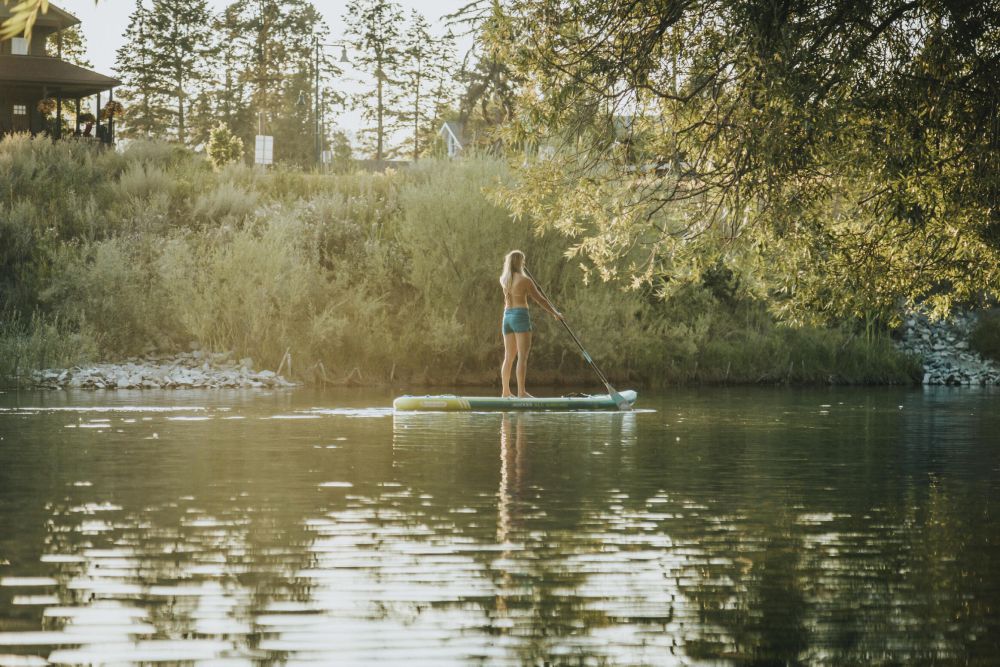
Touring paddle boards are made to move fast and go far, perfect for a lengthy paddle board exercise session. Paddling for 40 minutes or more can give you a really good workout, making sure both arms get plenty of action. To make your workout even better, try doing pushups on your board, which helps strengthen your chest muscles and make your paddle boarding workout even more complete.
3. SUP Surfing
SUP surfing offers a unique and engaging way to get a stand up paddle board workout. Unlike traditional surfing, paddle surfing is simpler since you start off standing on the board with an easier way to catch waves. The activity provides an excellent stand up paddle board workout, especially for the upper body, due to the extensive paddling involved in wave catching. After a long session of paddle surfing, you'll feel a significant workout effect.
Paddle surfing is not only a top choice for exercise on a paddle board but also adds fun to the fitness routine. For beginners or those curious about paddle board surfing, our SUP surfing article offers thorough details and guidance.
SUP Workout with iROCKER Paddle Board
Dive into the exhilarating world of SUP workout with iROCKER paddle boards, where fitness meets adventure. iROCKER is renowned for making boards that blend stability with agility. With their cutting-edge designs, the boards suit both beginners and experienced paddlers. Get ready for a workout that strengthens your core and boosts your heart rate, all while the beauty of the water surrounds you. Let iROCKER paddle boards turn your fitness routine into an exciting and energetic sport.

Embarking on a water adventure of canoe vs kayak debate? Both are for navigating through water using paddles and have a long history of helping people explore rivers, lakes, seas, and oceans.
So, what sets a kayak apart from a canoe?
Many people use the terms interchangeably, yet each has its own set of characteristics rooted in design, gear, and even their historical paths. Let's delve into the details.
Canoe And Kayak Differences
Diving into the canoe vs kayak discussion reveals that their main difference lies in the design of each vessel.

Canoes have an open-top design that allows paddlers to sit on a bench or kneel, moving forward with a single-bladed paddle. Meanwhile, kayaks have a closed deck with the paddler sitting inside, where paddlers can extend their legs alongside a double-bladed paddle for propulsion in both directions - moving backward and forward.
Here’s a comparison that simplifies the complex:
- Canoe: An open deck vessel where paddlers can sit or kneel using a single-bladed paddle.
- Kayak: A closed deck that seats the paddler with legs extended, navigated with a double-bladed paddle.
For those curious about further exploring the unique aspects of kayak vs canoe, including their historical significance and where you might try them out, stick around.
Different Kinds of Kayaks
With a focus on sit-inside models, the kayak world offers something for every paddler.

| Type | Description | Best For |
|---|---|---|
| Recreational Kayak | Beginner-friendly, stable, easy to paddle, typically sit-in style. | First-time paddlers, calm water exploration. |
| Whitewater Kayak | Longer, less volume for maneuverability, used with a spray skirt. | Navigating rapids, adventure seekers. |
| Sea Kayak | Sleek design for stability in choppy water, made for easier paddling. | Ocean expeditions, long-distance journeys. |
| Touring Kayak | Specialized hull that tracks well in currents, for rough waters. | Extended paddling trips, challenging conditions. |
| Racing Kayak | Long and narrow, built for speed, requires experience. | Competitive racing, speed enthusiasts. |
| Sit-on-Top Kayak | Perfect for fishing, higher vantage point, more deck space. | Anglers, leisure paddling, warm climates. |
| Inflatable Kayak | Good for travel and recreational paddling, easy to store and transport. | Casual paddling, adventurers with limited storage. |
Different Kinds of Canoes
While canoes do not boast as vast an array as kayaks, there's still a variety of choices for different paddling needs and preferences.
| Type | Description | Best For |
|---|---|---|
| Recreational Canoe | Wide for extra stability, made for everyday paddling on calm waters. | Beginners, family outings, leisure paddling. |
| Whitewater Canoe | It is shorter in length with a high rocker for navigating rapids. | Whitewater adventures, experienced paddlers. |
| Racing Canoe | Narrow with a pointed stern, designed for speed. | Racing, paddlers seeking performance. |
History Of Canoes And Kayaks
When we talk about canoe vs kayak, we're unfolding a history that stretches back thousands of years and crosses many cultures. Canoes are some of the oldest boats ever discovered, with the earliest called “the Pesse canoe” - dating back to 8200 BC in the Netherlands. The word "canoe" itself comes from the Carib people, hinting at its ancient roots.
Across the Americas, indigenous peoples relied on canoes for transportation, exploration, and trade. In the cold Arctic regions, the Inuit designed kayaks with wood and animal skins to brave icy waters, which are perfect for hunting.
The sports world caught on to kayaking first, showcasing it in the 1936 Berlin Olympics. Canoeing wasn't far behind, making its Olympic debut 12 years later. These events helped transform both activities from survival techniques to competitive sports and recreational activities enjoyed worldwide.
Now more accessible than ever, canoes and kayaks are paddled and manufactured around the globe using materials like plastic and fiberglass.
The rich history of kayak vs canoe adds depth to every stroke. So, whether you choose a kayak or canoe, you're part of a long tradition of water explorers.
Canoe vs Kayak: Which Is Better?
When the canoe vs kayak comparison comes to life, both canoeing and kayaking come with their own sets of advantages and drawbacks. Ultimately, deciding between a canoe and a kayak hinges on what fits your personal style and situation best.
Pros and Cons: Canoeing
Canoeing provides an excellent opportunity for leisure, fishing, or even camping trips due to its large carrying capacity. However, like any activity, it has its upsides and downsides. Below is a detailed list of the pros and cons of canoeing.

-
Pros of Canoeing
- Easy to get in and out of
- Large space for carrying lots of gear easily
- Comfortable sitting position; can stand up for a good view
- Perfect for longer expeditions with comfort and capacity
- Offers stability and is difficult to capsize
- Easy to learn the basics
- You usually stay dry unless you're in rough water
- Easy for kids or dogs to join on the water
-
Cons of Canoeing
- Big and heavy, difficult to transport
- Can fill with water in whitewater conditions
- Single paddles are less efficient than double paddles
- More effort required to reach top speed
Pros and Cons: Kayaking
Kayaking is known for its diverse styles and the unique feeling of being close to the water. However, mastering kayaking, especially in more challenging conditions, requires time and effort. Here are the pros and cons of kayaking.
-
Pros of Kayaking
- Quick to learn how to start
- Fast with speed, requiring little effort
- Huge variety of kayaking disciplines
- Gear and paddler are kept dry (unless capsizing)
- Light and easy to transport
- Good maneuverability
- Handles whitewater well
- Feel connected with the water as you sit closer
- Double kayak paddles are more efficient than single paddles
-
Cons of Kayaking
- Learning advanced kayaking takes a lot of work
- Transitioning from flat to fast-moving water can be daunting
- Spray skirts can feel restrictive and scary for learners (If you use a spray skirt when the kayak capsizes, the skirt will lock you inside the cockpit
- Double paddles are heavier than single canoe paddles
How to Choose Between Canoeing or Kayaking
Choosing between canoeing and kayaking depends on several factors that reflect your lifestyle, preferences, and the type of water adventures you seek. Here’s a guide to help you decide whether a canoe or a kayak better fits your needs.

What to Consider: Canoe vs Kayak
- Paddling Location: The environment where you'll paddle greatly influences your choice. Canoes are ideal for calm waters like lakes and gentle rivers, while kayaks handle choppy conditions like ocean waves or whitewater better.
- Companions: If you plan to paddle with family or friends, canoes offer more space and are great for group experiences. Kayaks are typically made for solo or duo adventures.
- Trip Type: For day trips or short excursions, kayaks are convenient and easy to handle. Canoes offer more space for gear, making them suitable for longer, multi-day trips.
- Transport and Storage: Consider how you'll transport your watercraft. Kayaks, especially the inflatable or modular types, are easier to carry and store compared to canoes.
Questions to ask yourself before the decision:
- Do you value speed on the water? Kayaks generally offer a quicker ride, whereas canoes are for a more leisurely pace.
- Do you want stability? If you don’t want to rock much on the water, canoes are usually more stable than kayaks.
- Need to turn easily? If you like to zigzag and explore, kayaks are better at turning and moving around.
- Capacity: Planning to take a lot of things with you? Canoes have more room for your stuff.
- Getting in and out often? If you need to get in and out a lot, canoes are easier than kayaks.
Reflect on these aspects and questions to guide your canoe vs kayak decision, which can give you choices to find one that suits your lifestyle.
Fishing: Canoe vs Kayak
Fishing is a blast, whether you're in a canoe or a kayak. If you're leaning towards a kayak, go for a sit-on-top type. They give you more room for all your fishing gear and a higher seat for better views and casting. Kayaks are especially good for ocean fishing. But for a peaceful day on a lake or river, canoes are your best bet – they've got plenty of space for all your fishing gear.
Stability: Canoe vs Kayak
If you're just starting out or a bit wary of the water, canoes are generally more stable and less likely to tip over, thanks to their size and width. This makes getting in and out of them easier too, which is great for beginners or anyone who wants a steadier ride.
Speed: Canoe vs Kayak
When it comes to speed, kayaks usually win the race because their double-bladed paddles let you move faster. But if you've got a friend in your canoe, and you both paddle together, you can get pretty close to kayak speed.
For Beginners: Canoe vs Kayak
If you're new to paddling, picking between a canoe and a kayak isn't so clear-cut. While some folks might find canoes a bit tougher at first, both types need some practice to get the hang of balancing and moving smoothly.
So, for beginners, both canoes and kayaks have their own learning curves.
Family Outings: Canoe vs Kayak
Canoes are ideal for family trips, thanks to their larger size and capacity so you can get multiple people to paddle together.
Kayaking with the family is also possible, but it's more of an individual thing. Everyone, including the kids, might need their own kayak, which is something to think about depending on how comfortable and skilled everyone is.
Canoeing and Kayaking Gear
Whether you decide on kayaking or canoeing, you'll need a similar set of equipment to start your journey on the water.
- Canoe or Kayak: Of course, you'll need either a canoe or a kayak. If buying one seems a bit much right now, check out local rental options to get a feel for what you like.
- Paddle: This is a no-brainer; however, the type depends on your boat. Therefore, opt for a double-bladed paddle for kayaks and a single-bladed one for canoes.
- Helmet: Better safe than sorry, especially when you're near shallow areas or rocky spots. A helmet is a smart choice to keep your head safe.
- Personal Floatation Device (PFD): A life jacket is a must, even for the most skilled swimmers, to ensure safety while paddling.
- Appropriate Clothing: Your outfit depends on the weather and where you're paddling. It could be a neoprene suit, waterproof clothing, or something to shield you from the sun. Dress appropriately for a comfortable and safe trip.
Different Types of Boats Used for Each Discipline
Choosing the perfect boat depends on what kind of paddling you're into. Here's a quick and friendly breakdown to help you find your match:
- Canoe Sprint: Focus on quick and straight-line races, with short to medium distances on flat water. For this discipline, sprint canoes (C1, C2, C4) and kayaks (K1, K2, K4) are suitable with their lightweight and streamlined design.
- Canoe Slalom: Unlike sprints, canoe slalom requires control and precision of the athletes over speed. Slalom boats (K1, C1, C2) are what you are looking for with their maneuver control on whitewater.
- Paracanoe: This one is a boating race for athletes with physical impairments, using traditional kayaks and Va’a canoes (a stabilized version kayak with outriggers attached to them).
- Wildwater Canoe: With the challenging nature of this sport, the kayaks (K1) and canoes (C1, C2) in this discipline are balanced and rugged for navigation in fast-moving rapids, and prioritize durability over speed, unlike the sprint boat models.
- Freestyle: Focus more on the skills and techniques of athletes than a normal race, this category requires compact and highly responsive boats (canoes, kayaks, or squirt boats) to perform tricks and flips with a creative edge.
- Canoe Marathon: These marathons need long-distance canoes/kayaks which prioritize lightweight build for efficient and easy paddling during portaging.
- Canoe Polo: As a team-oriented discipline with great impact collisions during the game, Canoe Polo athletes use rounded and agile kayaks to prioritize stability and safety.
- Ocean Racing: Ocean races need boats with endurance and wave-cutting design to challenge the open water. In this case, surfskis which feature open cockpits designed to cut through any waves are ideal for the discipline.
- Dragon Boats: Focuses very much on collaboration with synchronized group paddling, long, team-paddled canoes are the ideal boat for this discipline.
Top Destinations for Canoeing and Kayaking
Kayaking and canoeing are great activities that you can enjoy in any body of water.
For those just starting out, calm and flat waters are the ideal settings to master the basics of paddling. Peaceful lakes, protected ocean bays, or gently flowing rivers are perfect for beginners. As you grow more confident in your paddling skills, you can challenge yourself with the excitement of whitewater rapids or ocean waves.

So, if you're eager to hit the water and see some beautiful scenery, give the Blue Adventure app a look. You never know, your next great paddling adventure could be just a few taps away!
Embark on Your Canoe vs Kayak Adventure
Embarking on a paddling adventure brings the timeless debate of canoe vs kayak into focus. Whether your heart leans towards the tranquil glide of a canoe or the exhilarating pace of a kayak, each offers a unique path to discovering the wonders of waterways.
Don't let another day drift by. Choose your vessel, be it a canoe or a kayak, and dive into the endless possibilities that await on the water. With iROCKER’s top-notch gear and a world of rivers, lakes, and oceans to explore, your next great adventure is just a paddle away.
FAQs
-
Is it easier to kayak or canoe?
Many consider canoeing to be the easier option for beginners due to its stability. The wider build of canoes helps minimize the risk of capsizing and makes balancing easier.
-
Can you canoe or kayak as a beginner?
Absolutely! Both canoeing and kayaking are beginner-friendly activities. Many beginners find canoeing to be a bit easier to start with due to its stability and simplicity. However, kayaking is also a great choice, especially if you’re interested in exploring different types of waters.
-
How can I start kayaking or canoeing?
Starting is as simple as finding a local club or rental shop. Look for beginner courses in either canoeing or kayaking. Many places offer equipment rentals, so you can try out both to see what suits you best. It's also a good idea to start in calm waters and gradually move to more challenging environments as you build your skills.
-
Can I convert my SUP to a canoe or kayak?
Yes, with the right accessories, such as a seat attachment and the appropriate paddle, you can transform your SUP for a new paddling experience. Check out iROCKER's SUP to kayak conversion kit for an easy and convenient way to enhance your paddling adventures!