

Stories

Are inflatable kayaks any good? Yes, they provide many benefits for users. Many sports lovers, especially beginners, choose this type of kayak since it's portable, durable, stable, and versatile.
The equipment has many advantages overwhelming other water gear. Let’s consider its detailed pros and cons before making an informed purchase!
What Are the Benefits of Inflatable Kayaks?
Are inflatable kayaks any good? There are reasons why the answer is yes. Here are the advantages that make them overwhelm others:
- Lightweight nature
Due to their heavy weight, hard shell kayaks are difficult to carry, particularly when loading or unloading from car roof racks. It especially poses challenges for older people. Meanwhile, inflatable kayaks offer lighter weight and ease of carrying. They usually weigh between 30 and 40 pounds, making it a suitable choice to save your physical strength for water activities.
- Weight capacity
Compared to hardshell kayaks, inflatable kayaks can support much heavier loads—up to 400 pounds on average and up to 1000 pounds on more expensive versions.
- Compact size
Inflatable kayaks are popular due to their compact size. Users can easily fold them into a backpack or store them in a limited space. They are also suitable for small cars and do not require any roof racks or crossbars.
- Durability
It's a common misconception that inflatable kayaks are easily damaged or punctured because of their air-filled construction. But thanks to modern technology and strong rubber and PVC materials, they are sturdy and resilient enough to survive such challenges.
- Stability
Unlike pool floats that split in half under heavy weight, inflatable kayaks are not the same. They can be strong, rigid, and stable if the air inside them is sufficiently full (measured in pounds per square inch, or PSI).

Plus, they usually feature wider beams, which make it hard for them to capsize and offer necessary stability in water.
- Versatility
Thanks to its compact size, you can bring your inflatable kayaks anywhere and access some spots where a hardshell is impossible.
- Ideal choice for novices
Are inflatable kayaks any good? Yes, they have many advantages that a beginner can benefit from. Since inflatable kayaks are inherently buoyant, stable, and portable, it's easier for newbies to learn kayaks.
- Affordability
Inflatable kayaks are cost-effective compared to traditional hardshell kayaks, making them an excellent choice for budget-conscious individuals or beginners uncertain about investing heavily in the sport.
What Are the Disadvantages of Inflatable Kayaks?
Everything has its pros and cons, and so does the inflatable kayak. Some users may find issues with it, including:
- Controlling issue
Heavy hard shell kayaks offer better control under wind, strong currents, and choppy water conditions. But thanks to the improvement in inflatable technology, "higher-end" inflatables aren't far behind.
- Limited onboard storage
Inflatable kayaks have mesh pockets, tie-down spots, and bungee cords. However, there is no space for a dry storage hatch.
- Extra preparation
Unlike heavy hardshell kayaks, inflatable ones require one more preparation step: inflating. The process takes only a couple of minutes, but it also prevents you from jumping in the spot immediately. Plus, you must bring a pump with you to inflate your kayak before using it.
- After-use required caring
You can't just strap your inflatable kayak on the car's roof and head home. You need to let it dry before deflating to avoid unwanted smells when you use it next time.
Are Inflatable Kayaks a Good Investment?
Considering all the pros and cons, purchasing an inflatable kayak is a good investment. It provides the necessary performance and other side benefits, making the 10 minutes of inflating the kayak worth it.
The market has various options, ranging from $60 to $2000. If you haven't decided what to get, take a look at iROKCER's inflatable kayaks. We offer high-quality products for portability, convenience, and performance.
Inflatable Kayaks Vs. Hardshell Kayaks
Inflatable kayaks are a popular choice for those looking to get on the water. They are affordable, easier to transport, and store. Though they might not be seen as status symbols like costly boats, they are great vessels for discovering the waves.

Are inflatable kayaks any good? Since they are wider, inflatable kayaks are usually more stable than hardshell kayaks. However, they are slower and may not move as straight as hardshell kayaks.
Inflatable kayakers should paddle more carefully to avoid punctures. While inflatable kayaks are a good choice for flat-water adventure, hardshell kayaks are better for whitewater.
Inflatable Kayak Vs. Inflatable SUP
Inflatable stand up paddle boards are typically slower and more difficult to maneuver than kayaks. Since SUPs are easy to capsize, using them as a splashing and workout tool is preferable during warm weather. In colder weather, inflatable kayaks will keep you fairly dry.

Stand-up paddle boarding requires more core strength, while kayaking can bring you to the same destination with less effort. However, many people still prefer SUPs owing to their aesthetic appeal, health benefits, and trendy look.
One more difference is the price tag. Paddle boards often cost more than kayaks.
So to find out what equipment is suitable for you, you need to consider several factors such as your preferences, purposes of use, practicality, and budget.
⇒ Maybe you’ll be interested in: Paddle Board Vs Kayak: Which is Best?
Inflating and Deflating Your Kayak
Users need more preparation for inflatable kayaks than hard shell kayaks, mainly for the inflating and deflating process. A pump is required to provide the desired PSI. Filling up the air will take around 10 minutes.
Also, ensure the kayak is dry and clean before deflating and storing it. Otherwise, it will be wet and have an unpleasant smell next time.
Final Words on Are Inflatable Kayaks Any Good?
Are inflatable kayaks any good? Yes, they are. They're suitable for those looking for durability, mobility, and ease of use. Their compact size makes them ideal for long-distance travel and limited space storage. Though inflatable kayaks are not as tough as premium hardshell kayaks, they're still a good option because of their cost and versatility.
If you're considering which water equipment to use, visit iROCKER to choose an option and have a wonderful experience.
FAQs
An inflatable kayak has many benefits. If you’re still wondering about its usage and storage method, here are some FAQs with answers to clear your doubt.
How Safe Are Inflatable Kayaks?
Inflatable kayaks are safe when used correctly and in suitable water conditions. They include several air chambers for flotation, making them strong and reliable. But it's important to pay attention to the weather and shield the kayaks from sharp items like oysters since they can be punctured.
How to Store Inflatable Kayak?
After deflating your kayak, fold the sides first and then roll it up so you'll not create any fold line. Unroll it at home, rinse it in clean water, and let it air dry before rolling it up again.
How Easily Do Inflatable Kayaks Get Punctured?
They can be punctured, but you can use it safely for a long time with proper use and care. Modern inflatable kayaks can last 7 to 10 years with adequate care. Yet, your kayak won't survive longer than two years if you don't give proper maintenance.
Is Fishing from an Inflatable Kayak Possible?
Inflatable kayaks are a convenient and portable option for fishing, especially for those seeking remote locations. They are comfortable and simple to set up for a day on the water, with features like adjustable seats, rod holders, and plenty of gear storage.

Inflatable kayaks are a great option for any river since they offer a stable platform for landing large fish. These kayaks are a great option for people who want to enjoy the sport on the water since they are frequently more portable and sturdy than standard hardshell kayaks.
Are Inflatable Kayaks Stable and Easy to Paddle?
Yes, they are stable, thanks to their large and flat hulls. They're also easy to use and suitable for beginners.
Are Inflatable Kayaks Suitable for Ocean Use?
Inflatable kayaks are ideal for exploring ocean beaches and estuaries due to their lightweight, portable, and easy maneuverability. However, to ensure durability and safety, you need to select a kayak specifically made for this purpose. Research the conditions where you plan to kayak to choose a suitable one and take safety measures while exploring.

Paddling a kayak brings you exhilarating experiences that no other sport can. It can be a calm day on a still lake or a thrilling expedition on a quick-moving river. Every paddling trip reminds you of why you’re into this sport. And it can’t lack the most crucial companion—your kayak.
You can see that abundant kayak designs and types exist in the market now. This makes a beginner’s kayak selection, like yours, even more daunting. The good news is that it shouldn’t be a struggle. Following is a comprehensive guide covering the most crucial factors to consider when buying a kayak for your requirements.
This ultimate guide can help you touch the fundamental key points when buying a kayak:
- Location you want to paddle: in a lake, a river, or a seacoast
- Kayak designs: traditional sit-inside kayak or a sit-on-top one
- Kinds of kayak that suit your paddling purposes
- Major factors to consider before choosing a kayak
- Useful tips for easier launching
Where Are You Mostly Going to Be Paddling?
Buying a kayak requires careful consideration of the water conditions you plan to explore. Certain kayak designs are made especially for specific situations.
1. Lakes
Lakes offer tranquility, with a very small impact of wind and boat traffic near the shore. This environment is perfect for a relaxing day on recreational kayaks and day-touring kayaks.
2. Coasts
Unlike lakes, when paddling along seacoasts, you’ll get more contact with wind, waves, currents, and tides. For this purpose, when buying a kayak, keep your eyes on longer sit-inside kayaks or sit-on-top kayaks—they are suitable for calm coastal waters. However, if you’d like to paddle in open waters, such as navigating waters or waves, day touring kayaks with skegs or rudders are good ideas.
3. Rivers
A day-tour sit-inside one can also be a great choice if you’d like to float stably and sturdily on a slow-moving river. When buying a kayak, consider a short and stable recreational sit-in or sit-on-top kayak.

4. Rivers and Lakes
Don’t skip this versatile option of longer recreational or day-touring kayaks if you plan to paddle both calm and moving waters. Several kayaks are designed with longer lengths for both still and slow-moving creeks and rivers. You can choose a sit-on-top or a sit-in kayak with a skeg or rudder for a higher maneuverability degree.
General Kayak Designs
Some kayaks are made to be sat on, while you can sit inside the others. This fundamental difference has a huge impact on your paddling experience.
The distinction between sit-on-top kayaks and sit-inside kayaks is a fundamental notation that can remarkably impact how your paddling experience will be.
Sit-on-Top Kayaks
Sit-on-top kayaks have an open cockpit structure, allowing you to sit on top of the hull. Therefore, this is primary for beginners like you who are afraid of getting stuck in the kayak flips. As a result, buying a kayak like a sit-on-top one is a realistic choice for leisure water activities like recreational paddling and fishing on ponds, lakes, or slow rivers.

Advantages:
- The open design makes it easy to get in and get out. You won’t feel trapped if it capsizes—you just need to climb back on.
- They’re stable in calm waters because of their wide width.
- These kayaks are extremely adaptable, too—you can use them to paddle in different water environments like lakes, rivers, and even the ocean.
- You can easily keep water out and let it drain naturally by self-bailing with bilges.
Disadvantages:
- The open cockpit will expose you to the sun, wind, and various water conditions. This can be uncomfortable in colder weather or rough conditions.
- The width and high gravity center of sit-on-top kayaks make them less stable in waves or rough seas.
- They’re slower, thus requiring more effort to paddle.
- They’re less efficient for long journeys.
- It might be tricky to control and turn without the support of pressure on the footpegs. Navigating through tight spaces can be challenging for you.
- Sit-on-top kayaks offer less dry storage space compared to sit-inside models.
- Their significant weight also complicates the process of transportation and launching.
Sit-Inside Kayaks
Sit-inside kayaks are versatile vessels for various water environments, including lakes, rivers, and coastal waters. These kayaks are characterized by their enclosed cockpits covered by a spray skirt or a removable hatch.

Advantages:
- The cockpit design enhances protection from wind, waves, spray, and cold water.
- Sit-inside kayaks are renowned for providing enhanced stability and balance owing to their lower seating position. It means you’ll move faster and need less energy to propel. And it’s more efficient for long paddling trips.
- In rough water, sit-inside kayaks are easier to control and navigate due to the multiple points of contact inside them.
- There’s plenty of dry storage space for extra gear and supplies on longer or overnight trips.
- Sit-inside kayaks are easier to transport as they’re lighter than the sit-on-top models.
Disadvantages:
- Getting into and out of the cockpit can be quite complicated.
- Water can accumulate inside if it enters the kayak.
- They don’t have self-draining scupper holes. When water enters, you need to manually empty the kayak by using a bilge pump or bailing techniques.
- They require more skills to remain upright because of their more narrow beams.
All in all, it's important to assess the strengths and weaknesses of each design and compare them to your intended use, the environmental conditions, and your comfort level. This will help you in buying a kayak that best suits your needs.
Types of Kayaks
Kayaks nowadays have become various types, each designed for specific activities and water conditions. Here are the most well-known kayak types.
1. Recreational Kayaks
Recreational kayaks are awesome to paddle around on lakes, slow-moving rivers, and seacoasts. They have sit-on-top designs with open cockpits for easy entry and exit. Plus, they’re pretty affordable. That’s why they’re a popular choice for most beginners when buying a kayak.

The short length and wide body mean they’re really stable and easy to steer. They often measure between 10 and 14 feet in length, with beams being 28 to 32 inches wide. The only downside is recreational kayaks are a bit slow, so you'll need to put in more effort to make them move on water.
2. Day Touring Kayak
If you care about speed when buying a kayak, day touring alternatives are ideal options. Unlike recreational alternatives, day touring kayaks feature sit-inside designs, smaller cockpits, sleeker bodies, and longer frames—perfect for adventurous paddlers. Specifically, they’re 14 to 16 feet long and usually feature beams that are 22 to 25 inches wide.

Despite requiring more skill to handle, they provide you with a higher control degree when paddling in windy conditions. Additionally, they're easy to transport and have ample dry storage space.
3. Expedition Kayaks
The sit-inside expedition kayaks are specifically designed to be longer (17-20 feet long) and to accommodate larger loads with their generous storage areas. Additionally, they’re equipped with a retractable skeg or rudder—this device maintains stability and maneuverability.

When buying a kayak, expedition kayaks are practical for those seeking adventurous and fast-paced paddling journeys.
4. Specialty Kayaks
Apart from common types of kayaks, there are also some specially designed to solve your headache of buying a kayak, like tight space problems or to fit a whole family going paddling or even extreme paddling activities. Those are tandem kayaks, fishing kayaks, pedal kayaks, whitewater kayaks, folding and inflatable kayaks.
5. Tandem Kayaks
Like its name, tandem kayaks have an extra large cockpit or two distinctive cockpits and accommodate two paddlers. Tandem kayaks are ideal for families or a group of friends when buying a kayak to paddle together.

Because there are two paddlers to propel them, you don't have to spend much energy while the kayaks move fast forward. They're suitable for quiet ponds, small lakes, or still rivers. So, if you plan for a kayaking day with your partner or family, tandem models are perfect for you when buying a kayak.
6. Fishing Kayaks
These kayaks are usually sit-on-top designs that bring you pleasant feelings when fishing. They're also equipped with rod holders, paddle holders, electronics consoles, and tank wells for gear storage. And don't worry about your catches, as these kayaks can carry more weight than the above types. This helps you haul gear.

It's one kind of recreational kayak, so no matter whether you use a fishing kayak on small to large lakes or calm rivers, it will satisfy your fishing pleasure.
7. Pedal Kayaks
Yes, it's a combination of a kayak and a "pedal". If you're on a paddling trip and would like to take some photos or use binoculars to watch birds but want to keep track, then aim for a pedal kayak when buying a kayak.
They are steered by a rudder controlled from the cockpit and propelled by fins operated by bike-like pedals. Pedal kayaks require less effort to propel; however, they are heavier and more expensive than average sit-on-top kayaks.
It explains why most paddlers choose to haul them on a trailer for easier transportation. Moreover, you have to switch to using paddles when paddling in shallow water so that it won't damage the fins.
8. Folding Kayaks
Folding kayaks are easy to assemble and disassemble, offering you a great solution for your worries about lack of storage space.
Although they are usually slower, pretty expensive compared to other kayaks, and require more effort to propel, folding kayaks still stand out for their unique features.

10' Tucktec Foldable Kayak by iRocker
Their collapsible aluminum frame and foldable waterproof skin allow you to fold them inside two separate bags to transport. Plus, it doesn’t take you long to unfold a kayak. To demonstrate this interesting feature, iROCKER's Tucktec Foldable Kayak only takes you 15 minutes for the first assembling attempt and just under 2 minutes after you become familiar with it.
Besides, iROCKER's folding kayak's flexible frames and sturdy plastic function like a hard shell that is resistant to tearing or punctures suitable when padding in lakes, ponds, bays, and inlets. You may rest easy knowing that the kayak won't leak since every fold is a Z pattern that folds in on itself, and there are no exposed seams beneath the upper level.
9. Whitewater Kayaks
This aggressive type of kayak is built to withstand big rapids, drops, and hard bumps with high-durable materials. Designed with a shorter length, they’re greatly maneuverable for quick response to obstacles and hazards.
The sit-inside design allows you to have more control and shift the kayak with your body weight. And the kayak will become a part of your body. This will bring you adrenaline-high experiences when paddling over tight spaces and obstacles.
However, if you’re a beginner, buying a kayak like a whitewater one might not be ideal for your first purchase.
10. Inflatable Kayaks
Another excellent solution worth considering when buying a kayak for space shortage is inflatable kayaks. It’s easy to assemble and disassemble them just by rolling them up and fitting them into a bag. You’ll transport them to any lakes, rivers, or seacoasts with no sweat.

Photo by iROCKER
Nowadays, there is a diverse selection of inflatable kayaks to suit your needs. They’re famous for being sturdy, durable, and able to withstand various water conditions since they’re made from strong and long-lasting plastic.
Whether you’re buying a kayak for recreational paddling or an exciting expedition, you can buy an inflatable kayak perfectly tailored to your chosen activities.
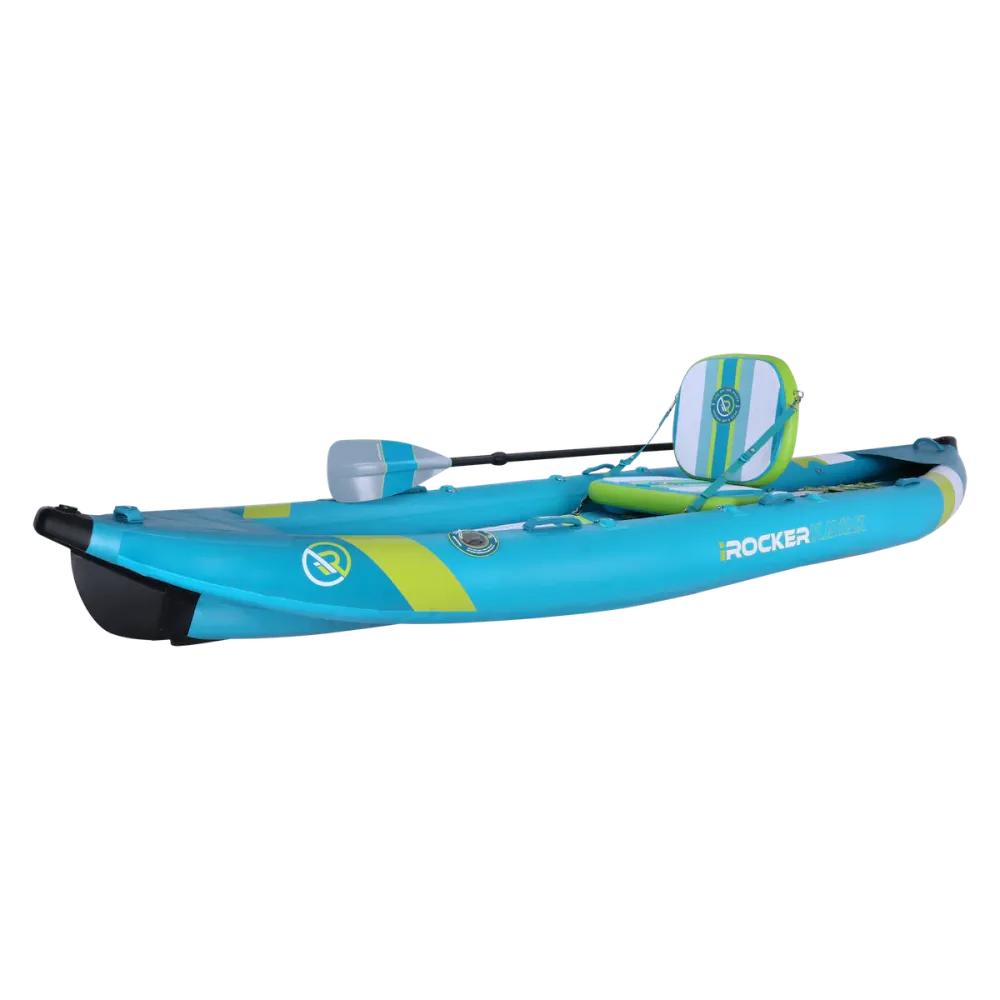
For your outdoor activities, the inflatable Kayak from iROCKER is a robust and versatile option. It’s designed with a pleasant sitting paddling experience and is stable but simple to use. With 26 D-rings and several mounting locations, the kayak’s modular design lets you personalize it with a range of extras, including coolers, speakers, and fishing gear. If you want to have a company, you can add a second seat to turn it into a tandem kayak.
Its lightweight and small size makes it incredibly portable. You just need to deflate it when not in use and store it in the wheeled bag. Now, prepare to go on an amazing adventure!
Factors to Consider When Choosing a Kayak
You should carefully take into account these essential elements when buying a kayak to ensure your kayak model best fits your paddling preferences.
- Length
Longer kayaks offer higher speed and stability for longer-distance paddling. When using a longer kayak, mastering the edging technique is a must-have as tilting the kayak onto its side increases maneuverability.
On the other hand, shorter kayaks provide greater versatility and are exceptionally well-suited for recreational use in calmer waters.
- Width
Remember, the narrower the kayak is, the faster it moves. Thus, narrower kayaks are better for rougher waters, while wider kayaks are good choices for calmer and stiller rivers.
Keep in mind that your kayak shouldn’t be too tight. You need enough space to move and exit in case of a capsize. The appropriate kayak width depends on your skill level and the types of water conditions you plan to paddle in.
- Seats
You should look for adjustable and comfortable seats that provide good back support so that you can stay relaxed even on long paddling journeys.
- Cockpit Size
If you want more control and connection to the kayak, aim for smaller cockpits. But pay attention, they can be harder to enter and exit. In contrast, larger cockpits are easier to access, but you’re more exposed to the sun, wind, splashes, and other natural elements.

When buying a kayak, we recommend you ensure the cockpit fits your height and body size. You should also consider your intended use when choosing the right cockpit size.
- Skegs and Rudders
Skegs and rudders are devices that can enhance directional stability and maneuverability when you go paddling.
There are two types of skegs: fixed and retractable. They’re fins installed on the underside of the hull. Fixed skegs are featured on recreational and inflatable kayaks, while retractable skegs are usually more suitable for day touring and expedition kayaks.
A rudder is also a fin below the water line and helps you maintain the course. Whereas skegs can’t rotate, rudders can rotate from side to side to street the kayak.
- Load Capacity
Ideally, you should choose a kayak that can safely support your weight and all your gear and belongings, including food and water.
- Materials
Kayaks are by and large made from three primary materials: composites, ABS plastic, and polyethylene plastic. Composite materials, including fiberglass or carbon fiber offer lightweight and high-speed performance, but they come at a premium cost. ABS plastic kayaks provide solidness and durability against ultraviolet light exposure and have a longer lifespan compared to polyethylene plastic kayaks.

The foremost budget-friendly choice is polyethylene plastic kayak models. The problem is that they’re the heaviest among the three, hence requiring more effort to paddle and transport. Having said that, for recreational paddling trips, polyethylene kayaks can be a viable choice.
- Weight
When buying a kayak, it’s important to factor in the calculation of the vessel weight. It will significantly influence how you transport and store your kayak. Lighter kayaks are much easier to transport and store. On the other hand, you may need assistance when stacking and unloading heavier kayaks.
- Gear Storage
When arranging a longer or overnight trip, one of the primary considerations should be sufficient storage capacity to accommodate the fundamental gear and supplies.
Kayaks constructed with bulkheads, hatches, and bungee rigging are a down-to-earth solution for storing, securing, and organizing your gear. This kind of equipment keeps your assets dry and accessible.
- Price
Kayak costs may vary strikingly, from budget-friendly alternatives to high-end sporty models. It’s significant to build a reasonable budget based on your monetary condition and intended usage. Making a thorough evaluation of kayak types, materials, sizes, and features will smoothen the process of buying a kayak for your experiences on the water.
Tips for Making Launch Easier
Taking advantage of launch sites and using the right techniques can unravel the process of getting on the water. Following are six tips to elevate your launching experiences:
- Choose a suitable launch site (drive-through launches, ADA launches, or one-way launches) with easy access to water.
- Have your gear ready before you arrive at the launch site.
- Use a cart to transport your kayak to the water's edge. Remember to position it properly.
- Opt for a kayak with a carrying handle or attachment points for trouble-free lifting and unloading.
- Ask a friend to assist you with carrying and launching your kayak.
- Practice proper launching techniques and be mindful of others. This is to give everyone a great experience and avoid creating unnecessary disturbances.

=> Maybe you'll be interested in: Canoe vs Kayak: What is the Difference?
Buying a Kayak Making Your Experiences Unforgettable!
As a beginner, it can take you more time to make a decision when buying a kayak. But don’t rush. Instead, take your time to assess the key points above (the location where you want to paddle, your intended use, kayak styles, and other crucial factors), you can narrow down your options and find a kayak that’s meant for you.
After this guide, you’ll be able to make a sound decision, find your way to get the perfect kayak, and make the most of your time on the water.
If you still need help with your decision, consult iROCKER’s kayaks to ease your decision process.
FAQs
Now let's move on to some common questions beginners have about buying a kayak, transporting it, how long it usually lasts, and converting from tandem to solo kayaking.
1. What size of kayak should beginners buy?
A wider alternative is the perfect choice for beginners when buying a kayak. It provides more stability and is less demanding to control and balance.
When it comes to leisure paddling activities, we suggest kayaks around 10 feet long and 26-32 inches wide. On the other hand, if you intend to go day touring paddling, a sleeker kayak that is 13-14 feet long and 24-26 inches wide is recommended for achieving higher speeds.
2. What is the lifespan of a kayak?
A kayak’s ordinary lifespan potentially endures for 6–12 years. Yet, it’s also subject to how you use and maintain your kayak and how much it gets exposed to sunlight, wind, and different water conditions. If your kayak is well reserved, it can last much longer.
3. How will you transport and store the kayak?
When transporting a kayak, you can use common straps like cinch straps. They’re a great solution and are easy to use. Another option is ratcheting straps, but it can damage your kayak when pulled too tight. Kanulocks are also a good option if you’re traveling.
To effectively store multiple kayaks, we recommend building a wooden rack to hold or store them. But if your space is limited, vertically attach the sterns to the ceiling and place them flat on the bow.
4. Can 1 person go in a 2-person kayak?
The answer is yes. Many tandem kayaks offer the option to remove the second seat if you don’t need it. However, paddling in a tandem kayak alone might be a bit harder. And it’s also less efficient compared to paddling with 2-3 people. Another better solution for you is using iROCKER’s inflatable kayak. The kayak is designed for you to enjoy your lonesome adventure or easily share it with a friend by adding a second seat.
![Paddle Board Calgary: Best 10 Spots [Beginners to Pros]](https://cdn.shopify.com/s/files/1/0623/7510/0601/articles/where-to-paddleboard-in-calgary-irockerca-1_44a34452-c2b5-4c6b-b95a-67826e2e6757.jpg?v=1737703217&width=100&height=100&crop=center)
Calgary's dynamic waterways offer tranquil lakes and roaring rivers to fuel any spirited outdoor enthusiast’s wanderlust. This city teems with paddle boarding spots that cater to novices, seasoned pros, and everyone in between. In this ultimate guide, let’s find where to paddleboard in Calgary and prepare for a thrilling adventure.
DISCLAIMER: Before traveling to a paddle location, ensure that the location still allows for paddle boarding and make yourself aware of any rules and regulations in place.
Paddleboard in Calgary: Beginner-Friendly Locations
For those new to the world of paddle boarding, or simply seeking a relaxing day on the water, these serene locations offer calm waters and welcoming environments.
1. Lake Bonavista
Nestled in the vibrant southeast quarter of Calgary, Canada, the enchanting man-made Lake Bonavista beckons beginner paddleboarders with its serene waters. The lake's consistently calm and glassy surface, coupled with gentle breezes and minimal waves, creates a perfect haven for honing essential paddleboarding techniques, such as mastering balance and finesse in maneuvering.
- Water Type and Skill Level: Calm, a man-made lake with minimal waves, ideal for beginners.
- Launch Points: Easy access around the lake.
- Unique Feature: Consistently glassy surface, perfect for practicing balance and paddle techniques.
2. Carburn Park
Nestled along the Bow River's banks, Carburn Park presents a picturesque haven for paddle boarders yearning for tranquility infused with a bit of adventure. The park's sheltered lagoon is the perfect warm-up spot before braving the river's more demanding currents. Abundant in wildlife and graced with towering trees, Carburn Park beckons nature enthusiasts to uncover its enchanting secrets.

Source: Flickr
- Water Type and Skill Level: Sheltered lagoon, suitable for beginners.
- Launch Points: The second pond in Carburn Park (larger pond and furthest from the parking lot)
- Unique Feature: Abundant wildlife and a rope swing for fun breaks.
3. Bowness Park Lagoon
Located within the beautiful Bowness Park, with an average depth of just about 1.5 meters, this lagoon offers calm waters perfect for beginner paddle-boarders. Surrounded by trees, it's sheltered from strong winds, making your paddle boarding experience smooth. Plus, with park amenities nearby, you've got everything you need for a fun day out!

Source: Wikimedia Commons
- Water Type and Skill Level: Calm waters, perfect for beginners.
- Launch Points: Ferry Nab and Cockshot Point
- Unique Feature: a picturesque setting surrounded by trees, offering protection from wind.
4. Sikome Lake
Nestled within the 13.48 square kilometer expanse of Fish Creek Provincial Park, Sikome Lake is a man-made aquatic facility known for its sandy beaches and clear waters. With a designated swimming area that spans over 10,000 square meters and a maximum depth of about 2 meters, it's an inviting spot for beginner paddle boarders. While the lake's infrastructure ensures gentle waters, its popularity, especially during weekends in July and August, means potential crowds. Therefore, early morning or weekday visits might offer a quieter paddle boarding experience.
- Water Type and Skill Level: Clearwater, beginner-friendly.
- Launch Points: Multiple access points around the lake.
- Unique Feature: There’s a designated swimming area that is popular for summer activities.
Paddleboard in Calgary: Intermediate Locations
For more experienced paddle boarders craving exhilarating challenges and boundless exploration, these intermediate locations promise unforgettable experiences.
1. Bow River
The Bow River, coursing through Calgary's vibrant heart, offers an invigorating paddle boarding experience for spirited intermediates. Gliding along its winding waters, you'll marvel at the breathtaking city skyline and lush riverbanks. With multiple access points peppered along the river, tailor your adventure to your heart's content. Be ready to conquer occasional currents and embrace the dynamic pulse of urban life as you paddle.

Source: Flickr
- Water Type and Skill Level: Flowing river, suitable for intermediates.
- Launch Points: Multiple access points along the riverbanks.
- Unique Feature: Home to many different plants and animals, it is also popular with fishing, swimming, and boating.
2. Spray Lakes Reservoir
Also located in Kananaskis Country, Spray Lakes Reservoir is a larger body of water that can be a bit windy, but it still has some calm areas that are suitable for Intermediates. It's important to check the weather conditions before paddle boarding on Spray Lakes Reservoir.

Source: Wikimedia Commons
- Water Type and Skill Level: Strong waves and winds; some calm sections with pristine clear water, suitable for intermediates.
- Launch Points: Whiteman's Pond and Spray Lakes West Campground.
- Unique Feature: Great views of Ha-Ling Peak, paralleled hiking trails with the western shore, picnic sites, and campgrounds.
3. Elbow River
Stretching approximately 120 kilometers from the Rocky Mountains to its confluence with the Bow River, the Elbow River offers a gentler paddle boarding experience. It's smoother than the Bow River and, with a width ranging between 20-50 meters in most parts, offers a scenic route replete with Calgary's natural beauty. Brush up on navigating its unique currents, and you're set for a memorable journey!
- Water Type and Skill Level: Gentle river with a few rapids, ideal for intermediates.
- Launch Points: Multiple points to launch on the river, including Elbow Falls boat launch and Fort Calgary.
- Unique Feature: A wide variety of terrain, including aspen parkland, undulating boreal foothills, and high alpine and sub-alpine mountains.
Paddleboard in Calgary: Advanced Locations
For seasoned paddle boarders craving adrenaline-pumping challenges and thrilling escapades, these advanced locations deliver an experience like no other.
1. Ghost Lake Reservoir
Just a short drive from Calgary, Ghost Lake paddle boarding offers a thrilling paddle boarding experience amidst the striking backdrop of the Rocky Mountains. Ghost Lake is usually not overly crowded, allowing you to enjoy a peaceful paddle boarding experience. With its vast expanse and frequently changing conditions, this location is best suited for experienced paddlers seeking a thrilling adventure.

Source: Wikimedia Commons
- Water Type and Skill Level: Large reservoir with steady strong winds, rocky shore, and deep water, best for advanced paddlers.
- Launch Points: Easy access from the South Launch.
- Unique Feature: Stunning Rocky Mountain views and variable conditions, year-round recreation such as sailing, windsurfing, swimming, and fishing.
Paddle boarding at Ghost Lake offers a unique chance to connect with nature, get some exercise, and unwind from the daily grind. Embrace the refreshing mountain air as you navigate the reservoir's choppy waters and immerse yourself in the rugged beauty of Alberta's landscape.
2. Chestermere Lake
Just a heartbeat from Calgary, Chestermere Lake emerges as a coveted hotspot for water sports aficionados. Its vast, shimmering waters are a thrilling arena for seasoned paddlers craving an adrenaline-fueled challenge. Encircled by a dynamic community and offering an array of recreational amenities, Chestermere Lake is the ultimate destination to immerse yourself in an electrifying SUP adventure.

Source: Wikimedia Commons
- Water Type and Skill Level: Man-made reservoir, suitable for advanced paddlers.
- Launch Points: Multiple public access points, including Anniversary Park and Beach and Cove Beach Hand Launch.
- Unique Feature: Featuring a sandy beach, home to various fish species, popular for fishing and various water activities.
3. Barrier Lake
Nestled within the sprawling 4,210 square kilometers of Kananaskis Country, Barrier Lake covers an area of about 2.9 square kilometers. As a reservoir, its waters can occasionally turn from placid to challenging due to changing winds. With the backdrop of Alberta's magnificent mountains and given its vast expanse, this lake beckons advanced paddle boarders seeking a blend of beauty and challenge.

Source: Wikimedia Commons
- Water Type and Skill Level: Not very deep water, but changeable winds, ideal for advanced paddlers.
- Launch Points: Boat launch in Barrier Dam Day Use Area.
- Unique Feature: Surrounded by craggy peaks and alpine forests, a sandy beach area for barbecues and camping.

Paddle boarding Adventure Awaits in Calgary!
So, what are you waiting for? Don't let another season slip by without experiencing the magic of paddleboarding in Calgary! Explore iROCKER's extensive range of inflatable paddle boards and gear to find the perfect fit for your skill level and embark on a memorable SUP journey. Ignite your spirit of adventure and create lasting memories on the enchanting waters of Alberta's beloved city.

Paddle boarding Kingston is rising in popularity as it offers a variety of wonderful and diverse experiences. Located on the shores of Lake Ontario, this historic town boasts crystal clear waters, stunning vistas, and calm conditions that even beginner paddle boarders can fall in love with. There are also plenty of areas to quench your thirst for travel alongside paddle boarding spots, including a great collection of waterside restaurants, wineries, biking trails, and museums.
Let’s head on to discover the best spots and rental places in Kingston for your next on-the-board dream adventure.
DISCLAIMER: Before traveling to a paddle location, ensure that the location still allows for paddle boarding and make yourself aware of any rules and regulations in place.
Top 6 Best Places for Paddle Boarding Kingston
Locating the ideal paddleboarding Kingston spots is a challenge because there are so many amazing options. Your preference and paddleboarding skill level will determine your preference, but here are the best options for a start.
1. St. Lawrence River
The St. Lawrence River forms part of the border between Canada and the United States.

Source: Flickr
Its mix of calm stretches and challenging rapids, various waterfront activities, and scenic beauties of charming old towns and coves offer a one-of-a-kind paddling experience.
- Skill level: all skill levels
- Access points: Jacques Cartier State Park in Morristown, Parc Marie-Victorin in Quebec City, and Old Port of Montreal
- Type of water: flat water, with some light currents in certain areas
- Best time to paddle board: June-August when the water is warm, but Fall months if you want to whale-watch
- Weather conditions: depending on the areas; some have a cool summer, while others can be quite hot with rough wind
- Rental places: plenty along the St. Lawrence river, including KSF and Crysler Park Marina
2. Rideau Canal, Ottawa
Next up in our paddle boarding Kingston top spots is the popular Rideau Canal in Ottawa. As you glide along this 202-km long UNESCO World Heritage Site in the lush green setting, you can spot birds, turtles, and other wildlife.

Larry Farr - Unsplash
The sights of historic buildings and bridges are also a real feast for the eyes. Paddle the full length of the canal or in sections you love then set up your camp for a good rest.
- Skill level: all skill levels, but more ideal for beginners
- Launch points: there are a good bout of public launch ramps in lock stations and campgrounds
- Type of water: calm and flat water in most sections. Kingston and Ottawa ends are mostly free from rough winds. Colonel By Lake may be a bit rough, and the Upper Brewer Locks may have a bit of traffic
- Best time to paddle board: Summer months are calmer, and weekday mornings are great for avoiding traffic
- Weather conditions: Lots of sunny days with light winds but nothing too extreme
- Rental places: Ahoy Rentals, Pattinson’s Paddles, and Dow’s Lake Pavillion are two popular options, and most marinas and local communities along the canal have supply stores
3. The Kingston Waterfront, NY
The Kingston Waterfront is 8 kilometers of both near-shore calm waters and challenging open water. It’s an excellent spot for paddle boarding in Kingston with natural beauties and a vibrant hub for learning the city's history with museums and historical sites.
- Skill level: depending on the sections, beginner to experienced
- Launch points: Lake Ontario Park, Wolfe Island Ferry Dock, Kingston Point Park, and Rondout Creek
- Type of water: calm and flat in some areas (mostly near the shore), and wavy and choppy in others
- Best time to paddle board: year-round, and early mornings and late evenings are often more peaceful
- Weather conditions: be informed of occasional storms
- Rental places: Ahoy Rentals Kingston, A Day Away Rentals
4. Frontenac Provincial Park, Ontario
There are many amazing adventures you can have in the park, both on your paddle board and on foot. Established in the 1970s, this 5000-acre park offers serene lakes, rugged terrains, lush green forests, and stunning trails that are wonderful for a weekend trip paddle boarding, fishing, hiking, and camping.
- Skill level: all skill levels
- Launch points: Big Salmon Lake or South Otter Lake
- Type of water: clear and calm
- Best time to paddle board: summer is good for paddling in Frontenac. The weather is warm and great for swimming. Remember to avoid mosquito season (late spring)
- Weather conditions: keep an eye out for strong winds and thunderstorms before launching
- Rental places: bring your own board or look for a rental place in the nearby towns
5. Millstone River, NJ
The Millstone flows approximately 62 kilometers through Somerset and Mercer counties before joining the Raritan River in the town of Manville. Its long history and recreational opportunities attract locals as well as visitors year-round.
- Skill level: beginner to intermediate
- Launch points: various points, but most popular is Lake Carnegie or Rocky Hill
- Type of water: calm with gentle and visible waves, but some sections are not recommended for getting into the water
- Best time to paddle board: spring and summer months
- Weather conditions: clear skies with light winds, perfect for intermediate paddle boarders and beginners to practice
- Rental places: Local recreation shops in the area should have paddle boards for rent. You can check with Princeton Canoe and Kayak Rental
6. Sandbanks Provincial Park, Ontario
Home to the world’s largest baymouth barrier dune formation, Sandbanks Provincial Park is an ideal location for paddle boarding near Kingston. It has 3 beautiful pristine beaches - the famous Dunes beach, Outlet beach, and Lakeshore beach - with easy access points to the water.
- Skill level: all skill levels
- Launch points: the beaches
- Type of water: calm and flat water, but it can get very busy with lots of traffic
- Best time to paddle board: summer months when the weather is warm, and the water is the clearest
- Weather conditions: hot and humid summer, cold winters, and look out for rough winds even on sunny days
- Rental places: there are shops within the park that have all sorts of amenities, from food to gear rental
7. The Thousand Islands
The collection of 1800 islands located on the St. Lawrence River is a unique set of geographical beauties. The islands range from rocky outcrops to inhabited areas with homes and cottages.

Amanda - Unsplash
From luxury resorts to the best mother nature has to offer, the Thousand Islands promise nothing but a wonderful paddleboarding Kingston experience.
- Skill level: all skill levels; beginners can paddle in sheltered coves and bays while experienced paddlers can venture further out in the open waters
- Launch points: the water is accessible by car, boat, and public transport Some common launch points are in Gananoque, Clayton, Alexandria Bay, and Boldt Castle
- Type of water: relatively calm, but with how diverse it is, there are areas with currents and waves
- Best time to paddle board: peak season is from July to August when the weather is nicer, but you can enjoy a leisure paddle board adventure in September as well. Avoid crowded hours of late mornings and early afternoons
- Weather conditions: the area is subject to unexpected changes in temperatures and wind conditions, so do your research before launching
- Rental places: check out 1000 Islands Kayaking Co in Gananoque and Ahoy Rentals
Where Can You Rent SUP in Kingston?
Paddle boarding in Kingston is a fantastic experience. Renting a SUP might not be a big deal for experienced paddlers of the area, but for a first timer, there is just one option too many.
Here are some of our suggestions.
- Ahoy Rentals: It’s been a popular name in the paddle-boarding Kingston scene. They have everything from kayaks and paddleboards to bikes and pedal boats. The staff is friendly and knows their stuff, but the choices for paddle boards can be a bit limited during peak season. The price range is from $20 per hour to $60 for a full-day rental.
- Trailhead: Its location is convenient for many paddlers in Kingston. They offer SUP lessons and rentals for newcomers. Their for-sale SUPs tend to be on the pricier side, but the quality and convenience can be worthwhile for some. The price range is from $20 on weekdays to $90 on weekends.
- Boutique de la Baie: They offer a variety of rental services along with SUP in a beautiful bay area. SUPs come in a variety of styles and sizes for different skill levels. Peak seasons may require advance reservations. The price range is from $20/hour to $66/6 hours with the options for lockers and flotation vests.
However, it’s better to have your own SUP. Rental costs add up quickly, and it’s not guaranteed that you can rent the one you want all the time. Having your own paddle board offers more flexibility and freedom of choice.
Check out iROCKER SUPs. There are a wide range of boards, from styles and types to prices.
Safety Tips When Paddle Boarding in Kingston
Having fun paddleboarding requires ensuring safety, just like with any other outdoor sport.

Practicing these safety tips is essential to have a memorable, thrill-filled, and exciting day of paddle boarding in Kingston.
- Always wear a floatation device, even if the water appears flat and current-free
- Make sure to do your research before heading out into the water. There might be high winds and sudden storms that can make paddle boarding dangerous
- Practice gear safety by checking for flaws and any defects - both on your SUP and your clothing - before launching
- Know your waters. This means learning the way of the currents, the temperature, and the behaviors of the currents
- Inform someone of your whereabouts and schedule beforehand when paddle boarding in spots outside the cell coverage area.
Enjoy Paddle Board Journey in Kingston with iROCKER
You’ve got your pick for the best paddle boarding Kingston spot. Now, it’s time to up your game with a great SUP board with iROCKER.

From seasoned to newbies, everyone can have their share of an unforgettable experience in the waters of Kingston with an iROCKER SUP board. They are sturdy and come with dual and triple-layer construction. Plus, there is fast shipping and a flexible return policy, so you can get all you need for a perfect paddle-boarding adventure in Kingston.
For more new and unique paddle boarding spots to launch your next adventure, get Blue Adventures today! Download the app now and paddle your way to unforgettable experiences.
Paddle Boarding Kingston FAQs
1. What types of SUP do I need to paddle board in Kingston?
An all-round paddle board is a versatile option that works well with the waters of Kingston. It’s stable enough, with great maneuverability and good tracking, for a leisurely glide in the calm water near the shore and an active adventure in the open waters. You can start with a classic BLACKFIN MODEL X or an IROCKER CRUISER.
2. What are tips for better lake paddle boarding?
While they share some key techniques, ocean SUP and lake SUP are not the same. Regardless of whether you’re switching from ocean paddle boarding or not, to get better at lake paddle boarding, you have to understand the environment and get a board that works best for it.
All lakes have their own rules and guidelines. Make sure you adhere to them before engaging. Also, remember to always practice safe paddle boarding.
3. What are other locations to paddle board in Ontario, Canada?
Algonquin Provincial Park and Killarney Provincial Park are two great destinations for paddle boarding in Ontario, both for beginners and experts.
 Jason Ng - Unsplash
The old and famous Algonquin Provincial Park is known for its stunning lakes, such as Lake Opeongo and Cedar Lake. Its calm and serene water makes it a perfect place for peaceful paddle boarding and camping.
Finding a place that can beat Killarney Provincial Park in terms of natural beauty is hard. The park features the famous Killarney Lake, which is surrounded by beautiful pink granite cliffs and offers calm waters for paddle boarding.

In the world of kayaking, there are endless types of kayaks to choose from. From seasoned kayakers to those just learning their ways in the water, it’s important to pick the best one. No two types are exactly the same, just as no paddlers are identical in preferences.
Sturdy options may be best for thrill-filled whitewater adventures. If you prefer a peaceful paddle, lightweight kayak types perform exceptionally well in flat water.
Types of Kayaks Based on Construction
Kayak types are categorized into many factors. The most common, which you will encounter often, is construction.
Different types of construction can affect a kayak's performance, durability, and weight, making it crucial to choose the most appropriate one for your needs.
1. Rigid or Hard-Shell Kayaks
Rigid or hard-shell kayaks are made from rigid materials such as plastic, fiberglass, or composite materials. They cannot be easily inflated and folded like inflatable kayaks, hence the name.

Pros:
- They are more resistant to punctures and tears, but this often depends on the quality of the manufacturers.
- This type of kayak is faster and also has better tracking compared to inflatable ones.
Cons:
- They are heavy and harder to store and transport.
- They are often more expensive than inflatable kayaks and do require a certain level of maintenance to perform their best.
2. Blow-molded Kayak
Blow-molded kayaks are made by injecting plastic into a mold and then inflating it to produce the desired shape.
Pros:
- They are affordable and more lightweight compared to hard-shell kayaks.
- Due to their structure’s strength, they are quite resistant to rocks, bumps, and scrapes.
- They are cost-effective and convenient. It’s easy for you to store and handle this type of kayak
Cons:
- They are often pretty basic in terms of design, meaning that there won’t be much space for customized features.
- While lightweight, there may be limits to their performance in rough waters.
3. ABS Plastic Kayak
ABS plastic kayaks are made from acrylonitrile butadiene styrene, a lightweight and durable thermoplastic material. They are also known as thermoform kayaks. The hull and deck are made separately then joined together.
Pros:
- ABS plastic is lightweight and highly durable, and it’s also easy to clean.
- Experienced kayakers also prefer thermoform kayaks due to their ability to withstand choppy waters.
- The appearance is fancy, with a glossy finish provided by an acrylic outer layer.
Cons:
- ABS plastic is not UV-ray resistant. The kayak’s base may deteriorate with time.
- This type of kayak is not suitable for cold climates when being shattered at below-freezing temperatures.
4. Composite Kayak
Composite kayaks are typically made from a blend of two or more lightweight materials such as fiberglass, aramid fiber, and carbon fiber which is later infused with resin.
Pros:
- Composite kayaks are fast. Perhaps, the fastest of all kayak types based on construction. Their sleek and aerodynamic hulls are great for paddling.
- It has high performance, responsiveness, and efficiency.
- It’s easy to repair the composite kayak
Cons:
- The materials are expensive, so composite kayaks may not be the best option for those with a tight budget.
5. Inflatable Kayak
Inflatable kayaks have gained popularity in recent years due to a rise in outdoor adventures. They are typically made of durable materials such as PVC or rubber and are designed to be lightweight and easily portable.
Pros:
- If you plan on traveling with your kayak frequently, a kayak that can be deflated and kept in the back of your car or in a bag is perfect.
- Some inflatables also offer added comfort, such as an extra seat, without taking up any space.
- To an extent, they are also quite sturdy against bumps.
Cons:
- Sharp debris can be a pain for inflatable kayaks.
- Since you have to inflate them beforehand, setup time is longer than other types of kayaks.

If you’re looking for an inflatable kayaker that can help you explore the water in style and comfort, consider the iROCKER inflatable kayak. It’s lightweight and compact when deflated and stable and versatile when inflated. It also comes with an extra kayak seat so you can share the fun with your kayak buddy.
6. Folding Kayak
Folding Kayak is basically an inflatable kayak’s sibling. While it doesn’t need to be inflated, the premise is pretty much the same - easy transportation. This type of kayak typically has a collapsible frame made of wood, aluminum, or plastic, with a skin or shell made of durable fabric such as PVC or nylon.
Pros:
- They have flat bottoms, which can be good for shallow waters.
- They are lightweight and very responsive to movements.
- They offer easy portability and storage.
- You can repair minor tears easily with convenient patch kits
Cons:
- The seams between panels can be seen as weak points, but that may depend on the manufacturers.
- Due to their thinness, folding kayaks may not withstand rocks and punctures very well.

iROCKER’s Tucktec Folding Kayak is worth a try for fans of this portable, ready-whenever-you-are type of kayak. The adjustable seat and footrest are made with extra comfort in mind to overcome the misconception that folding kayaks are awkward to sit in. With its simplified design, setting up only takes minutes, and maintenance is even less cumbersome.
7. Rotomolded Kayak
Rotomolded kayaks are made from a plastic material, which is heated and rotated in a mold to create a seamless and durable hull. The process is called rotational molding.
Pros:
- Easy control and maneuverability are the qualities rotomolded is known for.
- They offer great performance-to-price value.
- They possess indestructible construction that you can paddle with on whitewater and rocky shorelines.
Cons:
- They are susceptible to dents when left in the sun for too long, but there are ways to fix them.
- They are pretty heavy, so they may not be the best option for those who are concerned about portability.
8. Modular Kayak
By characteristic, modular kayaks are hard-shell kayaks. However, they are not one solid piece but are divided into modules - separate parts - that can be put together using a snap-lock mechanism.
Pros:
- Their construction makes them perfect for moving your kayak around in hard-to-reach areas.
- Some modular kayaks allow you to add or remove sections to adjust the length and capacity of the kayak based on your needs.
Cons:
- They require a bit of learning to get the hang of proper assemblance. If it’s not assembled correctly, there may be leaks. For that reason, they also need frequent maintenance.
9. Hybrid Kayak
A hybrid kayak can be a canoe-kayak mix or a kayak-paddle board mix. This kayak type often comes with an accessory or two to assemble it into another thing, for example, a seat to convert it from a SUP to a sit-on-top kayak.
Pros:
- Kayak/canoe hybrids can offer extra storage, and kayak/paddle board hybrids give you full use of the deck.
- They are stable and perform well in calm lakes, slow-moving rivers, and coastal waters.
Cons:
- Some can be quite expensive, and depending on the manufacturers, some designs may have subpar performance for both functions.
Types of Kayaks Based on Design
Apart from construction, types of kayaks are also different from one another based on design. There are two main kayak designs: sit-on-top or sit-inside.
The debate has always been about which one is better than the other. But the truth is that each has its own ups and downs as well as purposes. “For you” is the keyword here. The best kayak design is the one that works for you.
10. Sit-on-top Kayak
A sit-on-top kayak does not have an enclosed space, which means that you’re going to be sitting with your legs exposed, and everything is sealed off from the water. Yes, you will get wet when there are waves, but water won’t stay trapped in the kayak.

Pros:
- It’s ideal for warmer climates as it allows for easy entry and exit into the water. You can also dip your toes in the water because your legs have more freedom to move when you’re paddling.
- When people say it’s easier to have control with a sit-on-top kayak, they don’t always mean it’s going to magically make you paddle better. What it means is that since you’re not tucked inside, you can just climb back onto the kayak on your own when flipped over and continue your journey smoothly.
Cons:
- Sit-on-top kayaks typically have less storage space compared to sit-inside kayaks, making them less ideal for longer trips or camping excursions. Being exposed to the elements may also make them uncomfortable to use when it’s cold or rainy.
- Due to their open design, sit-on-top kayaks have a higher risk of capsizing compared to sit-inside kayaks, especially in rough water or surf conditions.
11. Sit-inside Kayak
Sit-inside kayaks are kayak types with a cockpit. This is where you sit, and your legs are tucked in and below the waterline, sheltered from the outside elements.
Pros:
- A sit-inside kayak is better for venturing further out into the open waters compared to a sit-on-top.
- It is a bit more stable because your center of gravity is lower in this position. This means that you can paddle through the water more efficiently without exerting too much energy for the same distance.
- Another upside is that you are partially protected from the elements. When attached with a spray skirt, the cockpit can help keep the water out and trap in warmth, making it perfect to kayak in colder climates.

Cons:
- There’s going to be a lot more work to do when using a sit-inside kayak. While rewarding, you still need a bit of learning to get the control right. Also, since you have to put your legs inside whenever you want to get in the kayak, it’s not the swiftest thing getting in and out of it. You will have to learn self-rescue techniques or, sometimes, have to get extra assistance to get back on the kayak.
- A big con that makes many shy away from sit-inside kayaks is that when water gets in the cockpit, it stays there until you drain it by flipping the kayak over. However, spray skirts can prevent this by keeping the water from splashing in the cockpit.
Types of Kayaks Based on Function
Several types of kayaks are designed for different functions. Some have added features to serve a purpose; some are pretty basic and streamlined. It all depends on what type of water activities you are looking for.
12. Touring Kayak
A touring kayak is great for covering long distances. It is often long and narrow, making it effortless to paddle. They are also designed to have more storage, making them perfect for multi-day expeditions or camping trips.
Pros:
- The longer hull of a touring kayak provides better tracking, meaning the kayak will stay on course more easily and require less effort to paddle straight.
- It’s also faster to cover more distances.
Cons:
- Touring kayaks tend to be more expensive. Their weight and design also make it harder to store and maneuver.
13. Recreational Kayak
A recreational kayak is a smaller, lightweight kayak designed for calm water activities such as exploring lakes, rivers, and ponds. It is not meant to cut through choppy water and strong waves like a sea kayak, and it requires fewer skills for a casual kayaker.
Pros:
- They are more versatile than touring kayaks in terms of what you can do with them, be it fishing or exploring nature.
- They typically have a flat bottom for stability and a wider hull for easy maneuverability.
- It’s a lot easier to use compared to a sea kayak.
Cons:
- Due to their smaller size, recreational kayaks typically have limited storage space for gear and supplies. They also have certain limits when it comes to how much weight you can load.
14. Sea Kayak
Sea kayaks are made for the open ocean where water conditions are oftentimes unpredictable. They are longer and narrower than recreational kayaks and have a pointed bow to help with paddling through rough waves. Some models also come with bulkheads for floatation and skeg for better tracking.

Pros:
- Their sleek and aerodynamic design makes them exceptionally fast and easy to control in whitewater.
- The smaller cockpit makes it easier to attach a spray skirt and to make sharper turns compared to touring kayaks.
- As they are made to deal with rough waters, it’s easier to roll a sea kayak to self-rescue than a recreational one (with training).
Cons:
- If you’re not kayaking in the ocean, sea kayaks are probably going to be underused for the money you’re paying.
- Since it’s slim, inexperienced kayakers may feel like it’s a bit tippy.
Surf Kayak
Surf kayaks are kayak types made specifically for surfing big, moving waves. They are unique in look and feature features such as rocker (the curve from bow to stern), edges, and fins.
Pros:
- Surf kayaks are designed to excel in riding waves, which can be an exhilarating experience.
- They are good for performing tricks and maneuvers in the surf.
Cons:
- Other types of kayaks may be used interchangeably to an extent, but with surf kayaks, surfing may be solely what they are made for.
- Switching from recreational kayaks to surf ones may require a bit more practice and learning than you’d expect.
15. Sail Kayak
A sail kayak is typically a dedicated design made specifically for sailing, rather than simply attaching a sail to a traditional sea kayak. They may have features and rigging systems that are optimized for sailing, such as a retractable centerboard or rudder, a mast step, and reinforced hull construction.
Pros:
- With the use of the sail, it’s certainly faster than other types of kayaks. You may only need to use half the energy to get it to travel the same distance as others.
- You can rest a bit and let the wind take its course, giving you some time to admire the scenery.
Cons:
- Added features can mean bigger price tags for some.
- You need to learn both kayaking and sailing safety.
16. River Runner Kayak
A river runner kayak, or whitewater kayak, is for navigating whitewater rapids and fast-moving currents. They are on the shorter side and don’t travel as fast over long distances, but the rounded hull and rocker profile give them the advantages in unpredictable conditions, especially of rivers.

Pros:
- They are perfect for moving through tight turns and obstacles in fast-moving water.
- They are often made from durable materials that can withstand impacts.
- Due to their purpose, river runner kayaks usually come with safety features like flotation bags and grab handles.
Cons:
- River runner kayaks are specifically designed for whitewater paddling and may not perform as well in calm or flatwater conditions.
17. Duckies Kayak
Duckies are inflatable sit-on-top kayaks for flatwater fun. They are often used solo but can fit an adult and child. They are lightweight, portable, and easy to store, suitable for calm lakes and rivers. However, they are less durable than hard-shell kayaks and may require more maintenance.
18. Racing Kayak
Racing kayaks are used in competitive kayaking. There are two main types of races: sprint (covering a short distance as fast as possible) and marathon (endurance over long distances). With that being said, racing kayaks are often designed to excel at one specific aspect - speed. They are sleek and low-profile. Think of an arrow, but on water!
Pros:
- They are customizable to an athlete’s preference or race type.
- They are designed to have minimal resistance compared to recreational kayaks.
Cons:
- Unless you’re competing, a racing kayak may be a bit too niche for casual paddling.
19. Fishing Kayak
A fishing kayak typically has extra space for fishing gear, rod holders, and sometimes indents to hold small items like lures and phones. Anglers may customize a fishing kayak to their liking. Some fishing kayaks have pedals instead of paddles.

Pros:
- Fishing kayaks are more affordable than fishing boats, and they are easier to squeeze into tight spots.
- Because of its ease of use, some designs are safe for fishing with kids, compared to a larger boat.
Cons:
- They may not be suitable for longer fishing trips or for fishing in rough waters.
Check out our guide on Kayak Fishing for more tips and tricks!
20. Freestyle Kayak
Freestyle kayaks are a type of kayak designed specifically for freestyle kayaking, which is a form of whitewater kayaking. A flat hull and sharp edges to make it easier to perform tricks like spins, flips, and loops. Unless you’re doing freestyle kayaking, you might not need it.
21. Crossover Kayak
They are recreational kayaks but are made to paddle well in whitewater as well.
Pros:
- They can be used in a variety of water conditions, including calm lakes and rivers with small rapids.
Cons:
- Crossover kayaks may not perform as well in more challenging whitewater environments as playboat and river runner kayaks.
22. Playboat Kayak
Playboat kayaks are similar to freestyle kayaks. Their design allows for tricks in whitewater. They have a shorter and stubbier hull with less volume.
23. Hunting Kayak
A hunting kayak is not that much different from a fishing kayak. It has lots of storage space for gear and stability to approach wildlife more effectively. Many hunters prefer pedals over paddles because they allow more freedom to use their hands. On top of that, hunting kayaks are quiet and have colors/patterns that help them blend in with the environment.
Types of Kayaks Based on Seat Number
If you plan on kayaking with friends or family, you can choose types of kayaks based on how many people they can carry.
24. Tandem Kayak
Tandem means two seats. Tandem kayaks are made for duo-paddling: one person in the front and one at the back. There are sit-on-top tandem kayaks and sit-inside tandem kayaks.
Pros:
- The obvious advantage is that you can paddle with someone else.
- They can take more weight than a solo kayak that is long and can seat two people.

Cons:
- Two people need to be in-sync to avoid paddles banging against each other.
- A tandem kayak may feel awkward when used by one person, so unless you’re going to frequently paddle with a partner, it may not be the most convenient option.
- They can be quite heavy.
25. Solo Kayak
Solo kayaks are made for 1 person to paddle. It’s the most common type of kayak. Many people tend to fall for the myth that tandem kayaks are better than solo kayaks, but that might not always be the case.
They are good for their own kayaking purposes. If you purchase a solo kayak but decide to seat another person on it, of course, it’s not going to perform its best, and vice versa.
26. Family Kayak
A family kayak is made to carry more than two people. There are 3-person kayaks and 4-person kayaks. Some of them are sit-inside kayaks, while some are sit-on-top. The latter is often the more popular choice for paddling with young children.
Pros:
- They can accommodate a mix of paddling abilities and experience levels.
- They are spacious and comfortable for multiple paddlers.
Cons:
- They are heavy, so a lot of people prefer inflatable family kayaks.
- They can be more challenging to maneuver and control compared to solo kayaks.
- Sit-inside family kayaks require some skills to handle safely in case of being tipped over.
=> Maybe you'll be interested in: Canoe vs Kayak: What is the Difference?
27. Kids Kayak
A kid kayak is a smaller, lightweight kayak specifically designed for children to use on calm waters. It has features that can help children paddle more comfortably, such as a smaller cockpit and adjustable foot braces.
Pros:
- They have safety features dedicated to children compared to a normal kayak in the same size.
Cons:
- They can be expensive, and children may outgrow them very quickly.
Types of Kayaks Based on Propulsion
Propulsion refers to how different types of kayaks move forward. Depending on their functions, propulsion styles will suit different needs.
28. Paddle Kayak
Paddle kayaks come with a paddle - a pole with broad blades on both ends. It’s what kayaking has always been known for.

Pros:
- They are easy to use and can access a wide range of bodies of water.
- Paddle kayaks are usually more affordable than pedal and motorized kayaks, and there is less maintenance too.
Cons:
- You may not have the option to go hands-free, which can be a disadvantage while fishing and hunting.
- They are slower compared to pedal and motorized kayaks.
29. Pedal Kayak
Pedal kayaks have a pedal attached to the hull near the seat. You propel the kayak using the strength of your legs and feet.
Pros:
- Hands-free kayaking gives people more freedom to either rest or do something else like taking photos and holding a fishing rod.
- Paddling by foot is relatively faster.
- Since the hull is wider to fit a pedal system, they are also more stable.
Cons:
- They may not be the true kayaking experience (with a paddle) many look for.
- Underwater plants and shallow water may require an additional paddle to move through.
- It’s harder to store and transport.
30. Motorized Kayak
A motorized kayak is typically powered by batteries. The motor can be installed at the bow or the stern. Motorized kayaks are popular in the world of fishing and hunting.
Pros:
- They are faster and can cover more distances.
- It’s easier to navigate and focus on fishing/hunting instead of continuous paddling.
Cons:
- Batteries can run out, so you need more careful planning.
- They can hardly be as cheap as a traditional kayak.
If you’re a newbie to kayaking, check out our beginner guide on how to kayak!
Choose The Best Kayak at iROCKER
With so many types of kayaks, you should probably be asking now which one is the best.
From lightweight inflatable kayaks that can be accessorized to work as a tandem to convenient foldable kayaks for a hassle-free day in the water, iROCKER is a good starting place to find your answer.
Once you’ve found the right kayak for you, download the Blue Adventures app to score the best kayaking destinations in the palm of your hand!

Knowing how to get in and out of a kayak safely is a fundamental skill for anyone wanting to explore this type of sport. It can be challenging, especially for beginners, despite the fact that it may appear simple and is oftently overlooked. Whether you're launching from a dock, rocky coastline, or even from a sandy beach, knowing these strategies will help your kayaking excursion go more easily. You will always feel more prepared and self-assured if you follow these tips. Let's get started on the steps and tips that will quickly make you an expert kayaker and make your experience safer and more fun!
Why It's Important to Know How to Enter and Exit a Kayak
Learning how to get in and out of a kayak may be more difficult for beginners than paddling. It could be frightening, and nobody wants to injure themselves or appear foolish in front of more seasoned paddlers. Mastering these techniques is essential for having fun and staying safe.
Learning the right techniques can prevent unnecessary tiring and potential injuries. Knowing how to get in and out of your kayak makes it much easier and saves energy for paddling, which can be exhausting. There's nothing worse than using up all your strength getting into your kayak and being too tired to enjoy the journey.
Safety is a major reason to master these skills. Not knowing how to get in and out of kayak incorrectly can cause falls, slips, and even major injuries. Yes yes, a few bumps might not seem serious, but nobody wants to run the danger of suffering a concussion. You may steer clear of these risks and ensure the safety and enjoyment of your kayaking experiences by learning the right techniques.
The good news? Once you grasp the basics, it's much simpler to understand how to get in and out of a kayak. Let's now explore the steps and advice for various situations so that you can always feel comfortable and prepared to enter the water in style.
How to Get In And Out of A Kayak
When diving into kayaking, you'll need to get in and out of your boat in various situations—in the water, from shore, or a dock. Let's start with the beach, the most typical and accessible launching point.
On a Beach or Ramp
Setting up your kayak perpendicular to the coastline allows for a straightforward beach launch with the front half in the water and the back half on the sand. Your boat will become stuck and you will look like a beached whale if it is completely on the sand. Make sure a portion of the kayak is in water to prevent this. Ask a friend to help you balance your kayak if it's floating in just a few inches of water or if you're on a cement ramp.

So how do you get into a kayak? Straddle your kayak slightly behind the cockpit, take a seat on the back edge, and slowly slide your feet in. Straighten your legs and slide into the seat.
If you have thigh braces on your kayak, get in with your knees slightly bent, then slide your thighs beneath the braces. Simply swing your legs in, push off, and paddle away when using a sit-on-top kayak.
To get out, aim your kayak perpendicular to the shoreline and paddle onto the sand, or stop in a few inches of water. Getting out can be a bit trickier. Start by stepping one foot out at a time to straddle the kayak, or place both feet on one side. Reach forward, grab the front of the cockpit, and pull yourself up to stand.
Women might find this more challenging since our strength is often in our hips and legs, whereas men typically have more upper-body strength. Practice makes perfect! If you tumble onto the sand, don’t worry. Roll onto all fours and push yourself up. It might not look graceful, but it works! And remember, laughing at yourself makes the whole process more enjoyable.
At a Dock
How to get on a kayak from a dock can be straightforward, especially with a friend to hold it steady. It's slightly more difficult but still manageable if you're alone. Launch your kayak parallel to the dock, ideally at the water's lowest point. Place your feet in the cockpit, turn to face the bow, sit on the pier next to your kayak, and gently and swiftly drop yourself into the seat while maintaining a low center of gravity.
Move quickly to avoid the kayak drifting away and keep your weight low to maintain stability. If things go south, aim for the water, not the dock!
To get out at a dock, reverse the process. Pull up alongside the dock at its lowest point. Hold onto the dock for balance, stand up, and step out. Alternatively, lift yourself butt-first onto the dock, keeping your legs in the kayak for stability. Your lower body will help keep the kayak in place. Once seated on the dock, pull your legs out and secure your boat.
Remember, the key is to lean on the dock and transfer your weight smoothly. With a bit of practice, you’ll look like a pro—no head bumps or unintentional swims required!
On a Rocky or Uneven Shoreline
Dealing with a rocky or uneven shoreline? No problem! Your paddle is your trusty sidekick here. First, position your kayak parallel to the shore. Lay your paddle perpendicular across the back of the cockpit, with one end on the shore and the other on the kayak. To get in, sit on the shore just in front of the paddle and place your feet in the kayak. Grip the paddle behind you, hands shoulder-width apart, with most of it resting on the shore. When stable, press into the paddle and smoothly shift your butt into the seat, keeping your weight low.

Here's a tip: put all your weight on the paddle side that's on the shore. Lean into it for support—trying to balance across the entire paddle will just make you wobble since your kayak's floating and not as stable.
What about how to get out of a kayak when the shore is uneven, use the same technique in reverse. Easy as pie! And remember, if you do wobble a bit, laugh it off. Kayaking is all about having fun and enjoying the adventure, bumps and all!
Sitting in Your Kayak (Properly)
As we're talking about how to get in and out of a kayak, let's also speak about how important it is to sit properly once you're inside. Recognizably, adjustable back supports on recreational kayaks entice you to recline like you're in a chair. Comfortable? Maybe. Good for you? Definitely not. This posture can strain your back and shoulders and make paddling a nightmare.
To keep your back happy and healthy, you need to sit with proper posture. Adjust the backrest to sit upright, helping you maintain a straight position. Use your abdominal muscles to sit up straight, with the backrest as support. Keep your chest lifted and your head balanced—not sticking out like a turtle. Press the balls of your feet firmly against the foot pedals, and keep your knees out. This open-leg position is easier on your lower back and helps you stay upright comfortably.
If your lower back starts to hurt, tight hips and hamstrings might be the culprits. So, remember to stretch those out before hitting the water.
While in Open Water
Let’s say you decided to take a dip while kayaking—planned or unplanned, the best part is just letting yourself fall into the water. Lean over, stand up and jump off—whatever suits your style. Just make sure the water is deep enough for a safe jump. And a crucial tip: keep your paddle in your kayak. Finding your paddle missing and getting stranded is the last thing you want to happen when you're swimming back.

Now that you are surrounded by nothing but open water, how to get into a kayak again? Although difficult, it is certainly practicable. Ask a friend who is close by to steady your kayak. But if you're sailing by yourself, make sure your paddle is within easy reach in case you need to grab it while trying to get back in.
To begin, choose a position on the side of your kayak close to the cockpit. Grab the far side of the boat—pulling from the near side will likely flip you right over. Pull your abdomen onto the cockpit and tuck your legs in. You can then wiggle back into place. If it requires several attempts, don't give up. It's difficult to get back into a kayak after being in deep water, but you'll get the hang of it!
Techniques When You Have Bad Knees, Hips, or Other Body Aches
Kayaking is a sport that brings health, but in order to participate on a regular basis you also need to have good health and a flexible body. What about those that have knee and hip problems? How to get in and out of a kayak without discomfort and strain.
1. Shallow Water Entry
Shallow water is a common technique for reducing knee stress. It is easier to get in and out of your kayak if you enter the water at the knee-to-thigh level and maintain your kayak parallel to the shore. This reduces knee flexion and requires minimal coordination and upper body strength. However, you might need an assistant for stability, and it requires a shallow, even shoreline. Plus, you’ll start with wet feet.

Some paddlers suggested staying in about a foot and a half of water from the shore. When you exit, it's gentler on the knees than bending them less than 90 degrees and trying to get up from the shore.
2. Paddle Bridge/Brace Methods
The paddle bridge technique is a traditional method used by many kayakers, whether or not they have knee problems. This technique involves using your paddle as a bridge for support while getting in and out of your kayak. While effective in various environments like shorelines and docks, it does require significant upper body strength. This might be challenging for those with joint issues or reduced strength in their quads, core, arms, or shoulders. Despite its advantages, it can potentially damage your paddle and may be difficult in kayaks with high seat backs.
3. Straddle & "Butt First"
The Straddle & “Butt First” method emphasizes the order and positioning of your body while getting in and out of the kayak. First, you set up your kayak parallel to the shore in shallow water. Next, take a seat on the seat, straddle the kayak, and extend your legs inside. This approach minimizes knee flexion and requires minimal coordination and upper body strength. However, it does need some hip flexibility and a relatively even shoreline.
4. Ask for Partner Assistance
It is much easier to practice how to get in and out of a kayak if you paddle with a companion. The whole thing can be made safer and simpler by your partner's much-needed solidity and support.

This approach works well with many other methods too, such as the paddle bridge or straddle techniques, giving you an extra layer of stability. However, relying on a partner rules out solo outings and requires your partner to have some strength and coordination.
5. All Fours & Corkscrew Techniques
For those with arthritis or minor knee issues, the all-fours technique can be a lifesaver. First, you need to place your kayak in shallow water, but not all, with part of it still on shore. Step in, sit down and scoot into the water. To exit, drive the kayak onto the shore, twist around, and stand up.
The corkscrew technique is great for those who lack core or upper body strength. Twist your upper body to face the back of the kayak, then flip your lower body to match, kneeling on the seat. From there, you can easily lever yourself out without putting stress on your legs. This method is best with large cockpits and might require a bit of coordination or even an assistant to stabilize the kayak.
6. Slide Out Techniques
The Slide Out Method, or as some might call it, the Crawl/Fall/Roll Out Method, is great for those struggling with stability or knee issues. Paddle onto land as much as possible, roll your kayak on its side, and scoot your butt out. You might need someone to help you up, or you can crawl into the water and swim back to a standing position. To enter, straddle your kayak with half of its surface in the water and the other on the bank, then launch yourself backward into the cockpit. While it’s might not the most elegant approach, it does the job!
7. Using Supportive Devices
Many aids and equipment are available to make how to get in and out of a kayak simpler. A simple rope tied to the front of the kayak can help pull yourself up. U-shaped braces or stakeout poles, often used by anglers, can also stabilize your kayak.

Another handy tool is a sturdy plank. Once your kayak is beached, place the plank across the cockpit rim behind you. Use your arms and feet to lift yourself onto the plank, swing your legs over the side, and stand in the shallow water. The plank can be stored inside the hull when not in use.
Ideal Spot to Launch Your Kayak
The best spot to launch your kayak is a quiet, sandy beach. Using your hands, push yourself out of the boat while sitting near the water's edge. Move your kayak till it's floating in a few inches of water if it's a fiberglass or composite model that you don't want to scratch. Straddle the boat, lower yourself into the cockpit, and paddle away.
If you’re launching from a dock, choose the lowest point. It is easier to enter a boat that is closer to the dock. This can go much more smoothly if you have assistance stabilizing your kayak, either from the dock or another boat.
Have More Fun with iROCKER’s Inflatable Kayak
Having a safe and happy kayaking experience depends on knowing how to get in and out of a kayak. After reading this piece of writing, are you starting to get the hang of it? I truly hope so, because it is critical to safety. Now, if you're searching for an amazing kayak, check out iROCKER's Inflatable Kayak. Its high sides keep you dry, and its shape offers excellent comfort and portability. It may also be customized with D-rings and action mounts to fit all of your adventure gear. Your ideal paddling partner is the iROCKER Inflatable Kayak, whether you're sprinting through the waves or simply floating along. Try it out and enhance your kayaking experiences!

For leisure and water sports, Sylvan Lake is the perfect place, with its picturesque surroundings and friendly beach. Imagine taking a morning sail across the placid lake, when it's quiet and full of life. Kayak, canoe, or paddle board exploration are all popular ways to spend a day in the highlands at Sylvan Lake, which offers a serene and picturesque setting for relaxation. We've covered all the necessary details for an amazing Sylvan lake paddle board experience in this article.
DISCLAIMER: Before traveling to a paddle location, ensure that the location still allows for paddle boarding and make yourself aware of any rules and regulations in place.
About Sylvan Lake
Sylvan Lake is a lively lakeside town known for its inclusive and transparent governance, environmental respect, and abundant economic opportunities. The residents, known as Sylvan Lakers, take great pride in their community and enjoy a variety of unique recreational activities that come with living by the lake.

Source: Airbnb
Paddling at Sylvan Lake
Sylvan Lake State Park is the perfect spot to dive into stand-up paddle boarding! That calm water is ideal for seasoned paddlers seeking tranquility, and just right for beginners looking to build confidence. It’s an awesome place to learn and enjoy this fun sport! Imagine the peace of hearing the sound of birdsong along the shore as you slice through the water with your paddle, all against the breathtaking backdrop of mountains.
Location
A pleasant getaway into nature, Sylvan Lake is a quaint village located in central Alberta, Canada. Water lovers will love this town because it is located on the southeast side of the 15-kilometer freshwater lake. An average of 760,000 people visit this location throughout the summer months.
Lake Access
Accessing Sylvan Lake is a breeze, with Lakefront Park being a top choice for launching your paddle board. This location offers easy access to the beach; it's close to the lighthouse at 5th Street and Lakeshore Drive. About ninety minutes is the driving time from Calgary to Sylvan Lake, and approximately one hour and forty-five minutes is required to go from Edmonton. You may drive straight up to the water to unload your stuff and then park nearby. The small beach at Lakefront Park is perfect for setting off on your sylvan lake paddle board adventure.
Can you swim at Sylvan Lake?
Absolutely! Sylvan Lake is perfect for swimming, offering a fantastic beach destination with plenty of activities for family and friends, whether you're looking for a casual dip or a competitive swim.
The lake hosts numerous swimming events and contests, adding to the vibrant community spirit. One highlight is the Sylvan Lake Open Water Swim every July. With a 500m event for ages 10+, it’s an excellent opportunity for those new to open water swimming. Kids can participate in an untimed event, choosing to swim between 100m and 500m, with an adult if they wish. For adults and athletes, there are challenging 2km and 4km races. Swimming at Sylvan Lake is a fun, engaging, and inclusive experience that everyone can enjoy.
Activities to Make Your Trip More Fun
Get in your kayak, canoe, or paddle board and paddle along Sylvan Lake; it's a beautiful location. View the activities along the shoreline, the wildlife, and hidden bays. Worrying that you don't have your own gear? Take a room at one of the local suppliers. There's a lot here for you and your loved ones to enjoy exploring.
Sylvan lake paddle boarding is a must-do, to start with. Any kind of paddlers will love the serene, pristine waters. I assure you, if you're here, you must give it a try!

Sylvan Lake is also a boater's paradise. Its freshwater makes it ideal for boating, sailing, and all kinds of watersports. Boating is a classic Sylvan Lake activity. The lake's depth and tranquil waters make it ideal for cruising and enjoying a wonderful day on the water for many types of boats, motorboats, sailboats, and fishing boats.
Kneeboarding and tubing are great group activities for beginners and families. Wake surfing is currently one of the most popular sports, even though wakeboarding and waterskiing have been around for a while. It's like surfing on a lake! Using boats with ballast systems, they create powerful waves for surfers to ride hands-free on the wake.
And if you prefer a more relaxed day, you can’t beat a houseboat or pontoon boat. These flat-deck boats are perfect for sunbathing, hosting guests, and relaxing on the water.
Hence, Sylvan Lake has something to offer everyone, whether you favor active water sports or just relaxing. Get your canoe, kayak, or paddle board ready for an incredible day of exploration and fun at Sylvan Lake, or rent some equipment!
When is the Best Time of Day to Paddle Board at Sylvan Lake?
For a serene and enchanting sylvan lake paddle boarding experience, head out early in the morning, around 9 a.m., when the lake is still and wildlife is abundant. Evening paddles after supper also offer a peaceful atmosphere and stunning sunset views. These times help you avoid crowds and enjoy the natural beauty.

Source: Travel Alberta
Remember to stay close to the shoreline, as winds can pick up quickly, making conditions unsafe in the middle of the lake. Paddle boarding at these ideal times ensures a delightful and memorable adventure on Sylvan Lake.
Paddle Board Rentals Sylvan Lake
Sylvan Lake's pristine waters, stunning rocky outcroppings, sandy beaches, and nearby hiking trails make it the perfect place to spend a day. You're in luck if you're trying to find paddle board rental Sylvan Lake options. Check out The Launch, Sun Sport Recreation, or Castaway Adventure Fishing.

You can also rent boats and other equipment. For those looking to enjoy wake surfing, tubing, fishing, or pontoon boat cruising, The Launch offers a $40 day boat launch fee.
In Sylvan Lake, stand up paddle board rentals Sylvan Lake typically start at $30 per hour. For those seeking an exhilarating experience, Seadoo and speed boat rentals begin at $149 to $199 per hour.
Although renting is a great option, purchasing your own equipment might be worthwhile if you want to paddle oard frequently. We recommend checking out high-quality equipment from iROCKER. Our paddle boards are an excellent choice for both novice and expert paddlers due to their reputation for performance and longevity. Additionally, not having to worry about rental availability when you own your own board means you're always up for an adventure.
Nature Exploration at Sylvan Lake with iROCKER!
Exploring nature by Sylvan Lake paddle boarding is an experience like no other. Glide over clear waters, surrounded by stunning scenery and wildlife. You might spot birds, fish, and others as you paddle along the serene shoreline. Every paddle stroke brings you closer to nature’s wonders.

To make your adventure even better, download the Blue Adventures app for iOS and Android. This app helps you find the best waterways, save your favorite spots, and record your sessions. Whether you’re exploring locally or globally, the app has a growing database of paddle boarding locations to discover.
With Blue Adventures, keep a log of your memorable journeys, track your time and distance, and capture photos of your favorite SUP spots. Share your experiences, monitor your fitness progress, and leave reviews to help others in the community discover new locations.
So, grab your iROCKER paddle board, download the Blue Adventures app, and set out on an unforgettable nature exploration at Sylvan Lake!
FAQs
1. Do you have to pay to go to Sylvan Lake?You will need to pay for parking, but there is no fee to enter the picnic area! So pack your lunch, grab your Sylvan Lake paddle board, and enjoy a day at the lake without worrying about entry fees.
2. Are there bears in Sylvan Lake?
Yes, there have been bear sightings on the west side of Sylvan Lake. Remember, paddle boarding with bears is not recommended! Stay safe, keep an eye out, and if you see one, don’t approach it. Instead, contact Municipal Enforcement.
3. How deep is Sylvan Lake?With a surface area of 42.8 km² (16.5 sq mi) and a maximum depth of 18.3 meters (60 feet), Sylvan Lake is a mesotrophic lake. It is located 3,196 feet (974 meters) above sea level. Perfect for all kinds of water activities, whether you're swimming, fishing, or enjoying your sylvan lake paddle boarding.

If you're looking to paddle board in Sherbrooke, you won't want to miss these top spots. While Sherbrooke may not be situated directly on a major body of water, the surrounding lakes, rivers, and reservoirs provide excellent opportunities for paddle boarding. These locations boast stunning natural landscapes and diverse waterways suitable for all skill levels. Dive into this guide to discover the most scenic spots and enjoy a fantastic outdoor adventure!
DISCLAIMER: Before traveling to a paddle location, ensure that the location still allows for paddle boarding and make yourself aware of any rules and regulations in place.
1. Saint-François River
The Saint-François River is the most significant waterway in Eastern Townships. Its shallow depth and rocky bed create great conditions for any water sport.

Image source: Pexels
This incredible waterway has a stunning section that passes through Sherbrooke. Paddling between Richmond and Ulverton takes you into a peaceful, verdant valley where you can only hear the sound of singing birds and the breeze rustling through leaves.
- Types of water/winds: Placid water and generally calm wind
- Skill levels: All skill levels
- Launch points: You can access the water through launch points such as public parks (such as Frontenac National Park), rental facilities, and boat ramps along the river.
- Amenities: Depending on specific launching points. Some may even include restaurants and shops.
- Unique features: The exceptional, calming paddle journey begins in the lovely Frontenac National Park with views of the surrounding countryside, mountains, trees, and blue sky, creating a memorable experience.
2. Magog River
The second location paddle board Sherbrooke, is the picturesque Magog River. It's also located on the Corridor Bleu in the center of Sherbrooke, offering the beauty of both nature and urbanity.
The river is 15 km, and the paddling journey will take more than 3 hours, starting from the park of the plage-Municipale-de-Deauville and ending at Parc Lucien-Blanchard.
- Types of water/winds: Generally calm; however, you may experience more turbulent waters in some sections.
- Skill levels: Both beginners and experts can enjoy the river's placid water and minimum currents, while experts can challenge themselves with areas featuring stronger currents.
- Launch points: It's possible to approach the water from Centrale Frontenac Park or Lucien-Blanchard Park.
- Amenities: Parking slots, rental services, trails, picnic areas
- Unique features: Besides admiring the lush greenery along the bank, paddle boarders can have a chance to see the hydroelectric plant while walking near the natural history museum in the park.
3. Lac des Nations
Lac des Nations is a picturesque urban lake in Sherbrooke, Quebec. Paddlers may find peace and quietness here, with stunning views of the surrounding mountains, greenery, and city landmarks.

Image source: Pxhere
The unique experience of combining the urban and natural beauty of Lac des Nations will keep you coming back for relaxation.
- Types of water/winds: Calm and stable water and occasional light to moderate winds
- Skill levels: All skill levels, including beginners.
- Launch points: Paddle board launches are available in Lac des Nations at both public and rental locations. They are usually found in parks or other open spaces.
- Amenities: Parking, picnic spots, benches, shops and cafes
- Unique features: Paddlers may combine their outdoor experience with cultural exploration by visiting the nearby galleries, museums, and historic places that make up the lake's cultural attractions.
4. The Cherry River Marsh and Lake Memphremagog
If you want to paddle board Sherbrooke in the summer, head to Magog's shores. The river offers stunning mountain views along its 40-km length, attracting many SUP enthusiasts.
This hidden gem will offer a great treat for your eyes and make your excursion more memorable. Sometimes, there can be paddle boarding competitions for community gatherings.
- Types of water/winds: Crystal clear and stale water
- Skill levels: Since the water is calm with slow flows, any paddle boarder can enjoy it.
- Launch points: There are many launch points along its shores and rental services.
- Amenities: Parking, trails, and benches for resting along the shoreline
- Unique features: You can explore the serene setting of the place at night while paddle boarding on the lake and enjoy the moonlight.
5. Aquaticook
Aquaticook is a 42 km circuit covering 3 portions of the Coaticook River. This dynamic river experiences significant seasonal fluctuations due to precipitation and dam management along its banks. The lakes that feed the river also affect the water level, making it crucial to ensure sufficient water before visiting.
The river passes through urban areas, agricultural zones, and forests. Thus, you can enjoy different settings while paddle boarding. You will even cross a covered bridge on your way!
- Types of water/winds: Quite calm water with minimum waves and moderate winds.
- Skill levels: Suitable for both beginner and advanced levels.
- Launch points: Public access points are available along the river.
- Amenities: Parking and picnic areas.
- Unique features: While enjoying the breathtaking view of Aquaticook, you will even cross a covered bridge on your way!
6. Brome Lake
If you're looking for a peaceful location paddle board Sherbrooke, you should consider Brome Lake. The lake is 14km2 and located near Knowlton.

Image source: PICRYL
Its tranquil atmosphere and stunning mountainous views will attract visitors. Brome Lake is ideal for many water sports, such as paddle boarding, kayaking, and canoeing, since there are few motor boats.
- Types of water/winds: Placid water and light to moderate winds
- Skill levels: All skill levels
- Launch points: You can access the water through public and private launch points along its shore.
- Amenities: Parking and picnic spots
- Unique features: You may have a chance to explore the lake's ecosystems with various wildlife. Plus, it may be possible to glimpse Mount Brome during the excursion.
7. Parc Jacques-Cartier
Parc Jacques-Cartier is a popular location paddle board Sherbrooke. The park's stunning waterways and recreational opportunities offer a serene outdoor experience for paddlers of all skill levels.
Paddle boarding here will allow you to enjoy the lush forests and rocky outcrops. Plus, you can explore the wildlife of fish, birds, and other species.
- Types of water/winds: Since it's located along the Magog River, the water conditions are diverse, ranging from calm, mild currents to fast-moving currents.
- Skill levels: The location is generally beginner-friendly. However, some areas are more suitable for intermediate to advanced levels.
- Launch points: The park likely has designated launch points along the Magog River, offering paddle boarders easy access to the water through docks or ramps.
- Amenities: Parking, picnic areas, and restrooms
- Unique features: Besides paddling, visitors can enjoy other outdoor activities, including picnics, hiking, and cycling.
8. Lake Massawippi
Lake Massawippi, in Quebec, Canada, is a serene lake surrounded by lush forests and picturesque countryside. Here, you'll have a chance to immerse in nature and relax while paddle boarding.

Image source: Pexels
People who love paddle board Sherbrooke and explore nature should come to Lake Massawippi. The environment of Lake Massawippi supports fish, birds, and aquatic plants, and it also provides historical charm and opportunities for animal observation.
- Types of water/winds: Generally calm and clear water and occasional light to moderate winds
- Skill levels: It's suitable for both novices and experts.
- Launch points: Several public access points are available along the shoreline. In addition, there are some private resorts and docks where you may find access.
- Amenities: Parking facilities, benches, picnic areas, shops and restaurants
- Unique features: Lake Massawippi always has something to offer everybody. You may even catch glimpses of Mount Orford in the distance.
9. Parc de la Gorge de Coaticook
This scenic natural park in Coaticook, Quebec, is a must-visit paddle board Sherbrooke destination for all paddle boarders. It's well-known for its breathtaking scenery, hiking paths, and outdoor leisure options.
Visitors can explore the picturesque river and enjoy the peace and quiet of the outdoors while paddling along. Parc de la Gorge de Coaticook always has something to offer everyone.
- Types of water/winds: Calm stretches and gentle currents with light to moderate winds
- Skill levels: Beginner-friendly
- Launch points: You can find launch points equipped with docks or ramps along the Coaticook River.
- Amenities: Parking, rest areas and visitor center
- Unique features: Paddle boarders can enjoy the magical atmosphere of night paddling and admiring the moon and the stars. Besides, Parc de la Gorge de Coaticook hosts various adventure activities such as mountain biking and zip-lining.
10. Parc Victoria
Parc Victoria is a beautiful park in the center of Sherbrooke, Quebec. Paddling here offers a delightful way to take in the beauty of nature without having to travel far from the city.
Visitors can paddle board Sherbrooke and enjoy a unique viewpoint of the city, with views of the surrounding urban landscape, which includes parks, historic buildings, and cultural attractions.
- Types of water/winds: Calm water and minimal wind
- Skill levels: All skill levels
- Launch points: Access to the lake is easy through public launch points along the shores and nearby rental services.
- Amenities: Parking, green spaces for resting, cafes, and restaurants
- Unique features: Parc Victoria offers a range of outdoor activities, such as paddle boarding, walking, cycling, and picnicking. It also enhances the outdoor experience by hosting events and festivals all year long.
11. Sherbrooke's Corridor Bleu
For those who enjoy paddle boarding, the Corridor Bleu in Sherbrooke is a beautiful and easily accessible location that provides a lively and engaging outdoor experience. It features interconnected waterways, such as the Magog River and Lac des Nations, offering leisure and exploration opportunities.

Image source: Pexels
The Corridor Bleu provides tranquil sections of the Magog River and Lac des Nations, which are ideal for inexperienced paddlers to develop skills. Meanwhile, intermediate-to-advanced paddlers may choose to explore other parts of the Magog River for their paddle board Sherbrooke experience with quicker currents or navigational issues.
- Types of water/winds: Diverse water conditions, from calm stretches to occasional rapids
- Skill levels: All skill levels depend on location
- Launch points: Launch points vary, including parks like the park of the plage-Municipale-de-Deauvile and the Parc Lucien-Blanchard park, other designated launch sites, waterfront areas, and rental places.
- Amenities: Parking facilities, resting areas, and Sherbrooke's urban setting, including cafes, restaurants, and shops
- Unique features: The paddling experience is enhanced by several yearly events in Corridor Bleu, including community gatherings and festivals.
12. The Missisquoi and Missisquoi North Rivers
The river spans 46 km from Eastman to Highwater near Mansonville. It provides a tranquil paddling route with many launch points along its shores.
The river is suitable for paddling. However, navigation is limited due to rapids or dams. Plus, you should check the water level before traveling, particularly in the Eastman area, where it may be quite low during the summer, to ensure a seamless experience.
- Types of water/winds: A mix of calm stretches, gentle currents, and occasional rapids
- Skill levels: Beginner-friendly, but some sections require expert skills
- Launch points: You can approach the water through public launch points along the river. However, some sections belong to conservation organizations and require permission to access.
- Amenities: Parking, picnic spots, campgrounds, accommodation and stores
- Unique features: The rivers offer opportunities for exploration and education as they flow through areas rich in history and cultural heritage. Besides, you can have an exceptional experience of thrilling white water features for adventure-seeking paddlers.
Safety Tips & Rental
Ensure you follow safety tips while enjoying the paddle board Sherbrooke excursion.
You should:
- Prepare your equipment: You should pump your inflatable SUP board to the suggested PSI and correctly assemble the paddle to ensure safety.
- Check the weather forecast: It is not recommended to head out in adverse weather, such as a too-strong wind or storm. Thus, check the forecast before going.
- Use a leash: A waist-belt leash or ankle leash is useful to maintain balance, especially for beginners.
- Wear a PDF: Bring a Personal Flotation Device, such as a Waist Belt PFD or Buoyancy Aid, to keep you floating when you fall off.
- Take a phone: It's always better to let your closest people know where you are and what your plan is in case of risk.
- Paddle with a friend: A companion will make your excursion more fun and offer help if necessary.
- Know your skills: Understanding your level identifies where the water is suitable for your paddle board.
- Research the water: Knowing information about the area, such as water type or tiding time before going, will ensure a smooth and safe experience.

Image soucre: Peakpx
You can rent paddle boards at many places, including outdoor recreation stores, beach resorts, and water sports centers. These places can even give you advice and suggest suitable locations for your level. However, it’s highly recommended to have your own stand up paddle board. You can purchase one from reliable shops, such as iROCKER, to receive ideal, well-maintained equipment.
Paddle Boarding in Sherbrooke with iROCKER
For an unforgettable paddle boarding adventure, explore the recommended spots in Sherbrooke. The stunning scenery and serene environment provide the perfect backdrop for honing your paddle boarding skills and unwinding. Enjoy a peaceful and rejuvenating experience with iROCKER paddle boards in this beautiful setting.
Your journey can be more convenient with the help of the Blue Adventures App of iROCKER. This great travel companion will suggest suitable locations, save your favorite spots, and record your sessions. Download it right now and explore!

Whether you're a beginner or an expert, you should paddle board Lanaudière once to admire the natural beauty of Quebec. The experience is unique since you can explore various serene lakes, picturesque rivers, and scenic waterways. The area is rich in culture and history, making it an attractive place to visit.
Let's explore the article below to find the most suitable location paddle board Lanaudière for you!
DISCLAIMER: Before traveling to a paddle location, ensure that the location still allows for paddle boarding and make yourself aware of any rules and regulations in place.
1. Taureau Lake Regional Park
The massive reservoir Lac Taureau, with 95 km2 of surface area and 270 km of coastline, is a popular attraction for water sports lovers. It's a great place for paddle boarding since it features 45 islands and 32 kilometers of sandy shoreline.

Image source: Freerange Stock
Taureau Lake Regional Park is a gateway to conquering the water. It also offers rental watercraft, including paddle boards, canoes, and kayaks.
- Types of water/winds: Calm and tranquil water
- Skill levels: All skill levels
- Launch points: Launch points are available with clear signs along the shoreline and ample space for launching.
- Amenities: Restrooms, picnic areas, parking and rentals
- Unique features: Warm weather, beautiful sunshine, and a stunning sandy beach allow visitors to enjoy various recreational beach sports.
2. Rawdon Municipal Beach
Rawdon Municipal Beach is another location paddle board Lanaudière that attracts many enthusiasts. It's located on the border of Lac Rawdon and not so far from Queen Street on 8th Avenue.
Rawdon Municipal Beach is concealed among lush greenery and offers a serene atmosphere. It features a sandy natural slope that leads to a swimming area.
- Types of water/winds: Calm freshwater and generally mild wind
- Skill levels: All paddle boarders can enjoy the beach.
- Launch points: Launch points are settled along the shoreline for convenience.
- Amenities: Restroom, showers, parking, and rentals
- Unique features: Sometimes, there are water events, such as paddle board races, to enhance spirit among enthusiasts.
3. Groupe Plein Air Terrebonne
If you still don't know where to paddle board Lanaudiere, consider Groupe Plein Air Terrebonne. It's located at Parc de la Rivière, near the Mille-Îles River.
Conquering the waves at Groupe Plein Air Terrebonne is a unique experience. Paddlers can admire beautiful natural landscapes and observe wildlife. Moreover, enthusiasts will have a chance to discover hidden coves and waterways, and enjoy wonderful experience as there are various birds in well-preserved natural surroundings at the water exploration area.
- Types of water/winds: Depending on a specific location, you may face different wave types, from calm to more challenging.
- Skill levels: Paddle boarders of different skill levels can choose the area suitable for their skills.
- Launch points: Access to water is made through launch points along the water bodies.
- Amenities: Restrooms, changing rooms, rentals, and guided tours
- Unique features: Collaborations with environmental groups are made to offer educational sessions on respecting the environment and conservation initiatives.
4. Ouareau Forest Regional Park
Ouareau Forest Regional Park is well-known for its unspoiled natural beauty of lakes, rivers, and forests, making it a great place to go paddle boarding. You can fully enjoy water sports and immerse yourself in nature without traveling too far.

Image source: Pexels
Access to the park can be made through Grande-Vallée, Grande-Jetée, Pont Suspendu, Contreforts, and Massif. Besides paddling, visitors can practice other outdoor activities such as hiking, snowshoeing, and cross-country skiing.
- Types of water/winds: Tranquil and gentle water flow
- Skill levels: It caters to a wide range of skill levels.
- Launch points: Along river or lake sides.
- Amenities: Rental facilities, picnic area, and hiking trails
- Unique features: The Ouareau Forest Regional Park offers guided paddle boarding tours with a focus on the park's history, ecology, and places of interest.
5. L'Assomption Canoe Circuit
L'Assomption Canoe Circuit offers various water activities along the Assomption River in Saint-Côme, Lanaudière, which is close to Montreal. The 12 km circuit offers an unforgettable experience in the heart of Quebec.

Image source: Pexels
The tranquil atmosphere, transparent water, and warm Quebec sun are suitable for everyone, including families, couples, and individuals.
- Types of water/winds: L'Assomption River features both calm waterways and dynamic sections with occasional rifles.
- Skill levels: Though beginners can practice their skills in some areas, the various conditions of the river make it more suitable for intermediate and advanced paddlers.
- Launch points: Launch points are designated along the river with convenient entry and exit points.
- Amenities: Parking, map, picnic spots, and shops
- Unique features: The rivers offer different settings, such as urban, forest, or meadow, along the paddling way. It's recommended to take a multi-day trip here to enjoy overnight camping.
6. L'Assomption River in Joliette and its surroundings
Another location paddle board Lanaudière that blends nature and urban settings is L'Assomption River in Joliette and its surroundings. While paddling, visitors can enjoy the peaceful river with trees and wildlife. As the river also flows right through the center of Joliette, it offers paddle boarders views of old buildings and other historical sites.

Image source: Pexels
You can rent paddle boards at three places: Parc Louis-Querbes, Parc des Champs-Élysées in Notre-Dame-des-Prairies, and Maria-Goretti Beach in Saint-Charles-Borromée.
- Types of water/winds: Mostly calm water
- Skill levels: Paddle boarders of all skill levels can practice their skills here.
- Launch points: Available at public parks or boat ramps.
- Amenities: Parking, restroom, and picnic spots
- Unique features: The area holds many annual events, such as paddle board races, guided tours, and community clean-ups, to connect visitors with locals and create unique experiences.
7. Flying Canoe
Flying Canoe or Chasse-Galerie is an interesting location paddle board Lanaudière. It is inspired by the French-Canadian folk tale of the "Flying Canoe" about brave voyagers sailing through the night sky.
The place includes different sections suitable for all skill levels. Introductory routes with calm waters and minimal obstacles are ideal for novices, while professionals can challenge themselves with faster currents, narrow channels, and other natural obstructions.
- Types of water/winds: The water is generally gentle, and the wind varies from gentle to strong, depending on the weather.
- Skill levels: It's suitable for both beginners and experienced paddle boarders.
- Launch points: Multiple launch points are designated along different sections of the waterway for easy entry and exit.
- Amenities: Parking, restrooms, picnic areas, and sometimes rental services
- Unique features: Flying Canoe offers a unique combination of outdoor adventure, cultural legacy, and scenic beauty.
8. Saint-Donat
Saint-Donat provides a calm setting in the Laurentian area. Its idyllic backdrop of pristine lakes and breathtaking scenery creates a delightful experience when exploring the water.

Image source: Pexels
The mountain vistas and lush forests will calm and relax your soul. Since the water is crystal-clear, you can even observe the aquatic life on your board.
- Types of water/winds: Generally calm and clear
- Skill levels: Saint-Donat's quite predictable waterways are suitable for beginners, while more challenging routes are waiting for professionals to explore.
- Launch points: Mont-Tremblant National Park, in the Pimbina-Saint-Donat sector or the municipal beach of Saint-Donat, at Parc des Pionniers
- Amenities: Parking, rentals, restrooms, changing rooms and picnic spots
- Unique features: Special events and guided tours are offered to enhance visitors' knowledge about the nature of the area.
9. Courant Marin Nautical Center
Courant Marin Nautical Center, located on the picturesque Lake Maskinongé beach in St-Gabriel de Brandon, Quebec, offers a variety of water activities, including stand-up paddling, windsurfing, kayaking, canoeing, and sailing.

Image source: Pexels
The lake's 20-kilometer circumference makes it ideal for those who love to paddle board Lanaudiere. If you're a beginner, you can take a short session with professionals to learn the basic techniques.
- Types of water/winds: The water is generally calm and peaceful, and wind conditions depend on specific locations.
- Skill levels: Beginners can take guided sessions here while experts can explore the challenging waters.
- Launch points: Courant Marin Nautical Center boasts various launch points for different water sections with the necessary facilities for an easy start.
- Amenities: Rentals, showers, changing rooms, lockers, onsite snack bars and cafes.
- Unique features: Visitors can hike on the lake by boat to discover sandy beaches and fish for bass, walleye, muskellunge, and smelt.
10. Epiphany Chasse-Galerie Canoe Circuit
The last-but-not-least location paddle board Lanaudière is Epiphany Chasse-Galerie Canoe Circuit. L'Épiphanie offers paddle board rental at Parc du Barrage, allowing visitors to explore the Achigan River with current all summer.
This canoe circuit is inspired by the fairy tale of the Chasse-galerie, providing diverse aquatic flora and fauna. Its shores are home to many types of birds. The place is ideal for paddle boarding, kayaking, canoeing, and pedaling.
- Types of water/winds: Calm, tranquil, and gentle streams
- Skill levels: The circuit caters to paddle boarders of all skill levels.
- Launch points: Various access points are strategically located throughout the area for convenience.
- Amenities: Parking, restrooms, picnic areas and rental services
- Unique features: Paddle boarding in Epiphany Chasse-Galerie Canoe Circuit is a one-of-a-kind and historically significant excursion with a chance to explore landmarks, cultural exhibits, and interpretive signage.
Paddle Board Rental in Lanaudiere
Enthusiasts can rent inflatable paddle boards in Lanaudière to access an amazing world of breathtaking lakes and rivers in the area. Rental services are available for a variety of skill levels and preferences. With proper equipement, you can try paddle boarding for the first time or expand your horizons as a professional searching for new experiences.

If you're looking for high quality paddle boards and accessories, visit iROCKER to get yourself the best stand up paddle board and make the most of your journey through Lanaudière's picturesque waterways.
Paddle Boarding in Lanaudiere with iROCKER
Visit at least one of the places above to paddle board Lanaudière; you'll be addicted to its beauty and want to experience more. Its serene lakes and winding rivers with cultural and historical backgrounds will create an unforgettable excursion.
If you need a companion to help plan your next memorable outing and record your amazing paddle boarding moments, download the Blue App Adventure right now!