

News

Every adrenaline-pumping adventure calls for the right gear. Yes, you got your paddle board already, but what about your suit? As you look forward to thrilling water-sport activities and paddle boarding experiences, the wetsuit vs drysuit debate inevitably comes into the picture. Maximizing your aquatic exploits requires a keen understanding of these two pieces of equipment. So, let's plunge into the details!
What is a Wetsuit?
A wetsuit is a marvel of modern design that serves as a protective shield for aquatic enthusiasts. Built from neoprene, a synthetic rubber celebrated for its insulation, a wetsuit is your trusted companion in combating chilly waters.

How it works: As soon as you jump into the water, a small amount of water gets into the wetsuit and touches your skin. Your body responds by generating heat with this thin layer of water. This warmth is held captive within the wetsuit, creating a protective barrier that aids in maintaining your body temperature, even amidst cold water. The outcome is a warm, insulating layer that guards against the cold, enabling you to relish extended periods of water fun in colder environments.
What is a Drysuit?
A drysuit is designed to prevent any water from entering – a vital piece of gear for adventurers who dare to explore the colder reaches of our underwater world. It is made from waterproof materials like neoprene, rubber, or laminated nylon, it envelops your body, sealing at the neck and wrists to prevent water from sneaking in entirely, unlike a wetsuit–which allows a small amount of water to enter and then uses your body heat to warm it.

How it works: Once you're wearing a drysuit, you get to wear cozy layers that you can adjust based on just how cold the water is. A handy waterproof zipper makes getting in and out of it a breeze, and there are even special valves that let you control your buoyancy in water. Don't forget to let out any excess air within the suit before paddling for safety.
Key Differences Between Wetsuits and Drysuits
Each suit has its merits that can impact your adventure, especially when paddle boarding. Let's dive deeper into this discussion.
| Feature | Wetsuit | Drysuit |
|---|---|---|
| Material | Made of neoprene, a type of synthetic rubber. | Often made of waterproof fabrics like nylon or neoprene, with waterproof seals. |
| Design Purpose | Designed to allow a small amount of water in, which is then warmed by the body. | Designed to keep you completely dry, with seals at the neck, wrists, and sometimes the face. |
| Temperature Range | Generally used in warmer conditions, suitable for water temperatures above 10°C (50°F). | Suitable for colder conditions, can be used in water temperatures well below 10°C (50°F). |
| Insulation | Provides thermal insulation through the water trapped inside and the neoprene material. | Insulation depends on the undergarments worn beneath the suit; the drysuit itself is not insulating. |
| Buoyancy | Increases buoyancy due to the neoprene's natural buoyancy. | Less inherently buoyant, but often requires wearing a buoyancy control device. |
| Mobility | Offers good flexibility and mobility, but can be restrictive depending on thickness. | Generally offers more room and is less restrictive on movement, but can feel bulkier. |
| Fit | Needs to fit snugly to minimize water flow and maximize warmth. | Looser fit to accommodate insulating layers underneath. |
| Sealing | Does not have seals; instead, it fits tightly to minimize water entry. | Equipped with seals at the neck, wrists, and sometimes ankles to prevent water entry. |
| Usage | Commonly used for surfing, paddle boarding, diving in warmer waters, snorkeling, and other water sports. | Preferred for diving in cold water, kayaking, SUPing and activities in extremely cold conditions. |
| Maintenance | Easier to maintain; just rinse with fresh water and dry. | Requires more careful maintenance, especially of the seals and waterproof zippers. |
| Longevity | 5 to 10 years | 15 to 20+ years |
| Cost | Generally less expensive than drysuits, around $150 to $300. | More expensive due to the specialized materials and construction, and can start from $250 to over $1,500. |
Wetsuit vs Drysuit: What to Choose?
When deciding between a wetsuit and a drysuit, consider several factors to make the best choice for your water activity

1. Water Temperature
A wetsuit is your trusty ally regarding moderately cold to warm water since they are made of neoprene, a material designed to keep you warm by trapping a thin layer of water against your skin that your body heats. A drysuit wins hands down if you are daring enough to face icy, frigid waters. These suits are designed to keep you completely dry, with insulation layers you can adjust to your comfort, making them the undisputed champion in colder conditions.
2. Your Intended Activity
If you're deciding between a wetsuit vs drysuit for paddle boarding, it's important to consider the degree of activity and flexibility you'll need. Wetsuits, designed to fit snugly, can potentially limit certain movements, but they are less bulky and more hydrodynamic, which could give them the edge in high-energy activities. However, while possibly a bit bulkier, drysuits offer more freedom of movement, making them the winner for activities requiring a larger range of motion.

3. Personal Preference
Some enthusiasts might favour the secure, close-to-skin fit of a wetsuit, while others could lean towards the roomier and more flexible nature of a drysuit; hence, your comfort and preference are pivotal when considering drysuit vs wetsuit for paddleboarding. Ultimately, the best suit is the one that aligns with your personal comfort, letting you paddle board with ease and joy. Choose the suit that allows you to make the most of every wave!
4. Your Budget
Wetsuits may be the victor in the value-for-money battle since drysuits are typically more expensive than wetsuits, owing to their superior insulation capabilities and more complex construction. However, for those who like winter paddle boarding, the additional cost of a drysuit could be a worthwhile investment, making drysuits the winner when cold-water protection is the priority.
In the end, the decision between “drysuit vs wetsuit” is heavily influenced by a variety of factors. But fret not, because every wave-rider, diver, or paddle boarder is just one informed choice away from embracing their perfect water escapade.
5. How to Use
While using a drysuit for paddle boarding isn't as complex as diving, it still requires some know-how. Unlike wetsuits, which you just wear and go, drysuits involve managing the air inside them. This is important for comfort and mobility while on the board. Learning to adjust the suit to your needs can make a big difference in your paddle boarding experience.

6. Wetsuit vs Drysuit: What to Wear Underneath
- Wetsuits don’t have much room for extra clothes underneath. Usually, you can only wear a thin shirt called a rash vest. This means wetsuits are not as flexible as drysuits for different temperatures.
- Drysuits keep you warm depending on what you wear under them. In very cold water, like when ice diving in winter, wear thick warm clothes. In summer, you can wear something light and thin. Drysuits are good because you can change what you wear under them for different weather.
7. Changing Gear
If you're switching from a wetsuit to a drysuit for paddle boarding, you may need to consider different gear. For instance, your life jacket may need to be larger to fit over the drysuit. Also, understand how to adjust your buoyancy with the drysuit, as it can be different from what you’re used to with a wetsuit, especially when it comes to maintaining balance and stability on your paddle board.
Deciding Between a Wetsuit and a Drysuit
Decoding the 'wetsuit vs drysuit' quandary is your ticket to enhanced water adventures. Each offers distinct advantages and choices, influenced by water temperature, your intended activity, personal preference, and budget. When these factors align perfectly, you're poised for a water adventure that's not only thrilling but also safe and snug.
Embrace the call of the open waters with iROCKER. Contact us now to ride the best waves together!

We’re all about using creativity to take your SUP investment as far as possible. While every iROCKER board packs plenty of adventure opportunities, it’s always fun to take things to the next level. Get even more out of your board with our versatile SUP to Kayak Conversion Kit.
Test your limits in the ocean or Intracoastal by converting your SUP into a kayak and in less than five minutes you have a completely different piece of equipment and another sport!
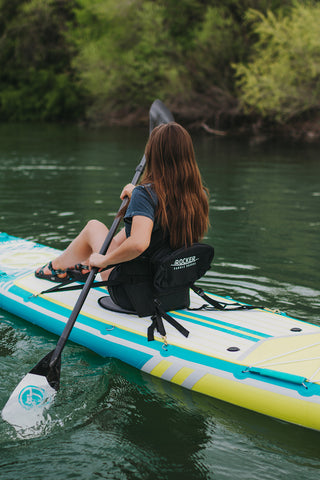
Transforming your SUP into a kayak provides not only a different on-the-water experience, but also offers several benefits. If you’re paddling long distances, having the option to take a break and give your legs a rest means you can adventure further, longer. Having a dual-blade kayak paddle can also be helpful against strong winds or currents. The option to sit down while SUP fishing can also prove beneficial as a seated position can give you more leverage while reeling in your catch—not to mention can be more comfortable if you’re planning a long day of trawling on the water!
Follow this simple advice for your paddle/blade and board and you’ll be kayaking before you know it.
“Even though I primarily like to stand up and paddle, I like the flexibility of being able to use the board as a kayak when my daughter is on board with me. We enjoy using our iROCKER as a kayak more than our actual kayak.”
– Justin N., iROCKER customer
FIVE SIMPLE STEPS TO TURN YOUR IROCKER INFLATABLE PADDLE BOARD INTO A KAYAK
- Step 1: Purchase the Right Kayak Bundle for Your Board Type.
- Step 2: Attach the Seat Straps to the Rings.
- Step 3: Flip the Seat Up and Adjust Straps to Desired Length.
- Step 4: Pull the T-Bar Handle Out of the Paddle.
- Step 5: Replace the T-Bar Handle with the Kayak Blade.
Check out our GWP_1: Kayak Seat + Kayak Blade collection to help turn your iROCKER Inflatable Paddle Board into a Kayak.
Specifically,
Step 1: Purchase the Right Kayak Bundle for Your Board Type
We can’t stress this enough—make sure the kit you purchase is compatible with your SUP package. Our SUP to Kayak Conversion Kit is compatible with all iROCKER boards.
Step 2: Attach the Seat Straps to the Rings
Place the kayak seat facing forward in the middle of your paddle board. Attach the straps on the top of the kayak seat to the D-rings on the front of your board, then attach the straps on the bottom of the kayak seat to the D-rings on the back of your board.
Step 3: Flip the Seat Up and Adjust Straps to Desired Length
Once all the straps are attached correctly, flip open the seat. Adjust the straps accordingly to make sure the seat opens evenly. You may need to take the kayak out for a spin and adjust the straps to fit the posture that’s most comfortable for you.

There you go! Your board is now a kayak. Now it’s time to attach the kayak blade to your SUP paddle.
Step 4: Pull the T-Bar Handle Out of the Paddle
Simply flip the attachment piece on the paddle to remove the original top handle.
Step 5: Replace the T-Bar Handle with the Kayak Blade
Push the kayak blade from your kit into the open end of the paddle. Click the latch down to secure it in place. Now you have a dual-sided paddle perfect for your kayak adventures!
If you’d rather watch—check out this quick how-to video.
That’s all there is to it! The SUP to Kayak Conversion Kit is a great way to save hundreds of dollars on a traditional kayak and a great way to get more out of your SUP. Be sure to take your SUP-Kayak combo on your next trip for endless hours of water fun on your feet or on your bum.

OTHER ISUP ACCESSORIES YOU’LL LOVE
WATERPROOF/BLUETOOTH STEREO ATTACHMENT
If you crave music while you’re on the water, the VIBE Waterproof Speaker is the perfect accessory. Simply use the suction feature to securely attach it to your SUP.
ATTACHABLE COOLER DECK BAG
Gone are the days of relaxing in the middle of the water without a cold drink or snacks in hand. An advanced bungee system attaches the water-resistant Cooler Deck Bag to the D-rings on your board for on-the-go convenience.
ELECTRIC PUMP
Function is the name of the game with the fast-acting iROCKER 12V Electric Pump. Inflate your board to 15 PSI in 12 minutes or less and spend more time on the water.
Explore our BLACKFIN Standard Accessories for BB collection now!

3 Awesome Spots to Paddle Board to Welcome Fall
There’s something special about gliding across crystalline waters on your trusty paddle board on a crisp autumn morning. You drift along the surface of the water and breathe in that fresh, cool air. What could make this moment even better? How about gorgeous snowcapped mountains in the background? Or foliage erupting in the colors of fall?
The summer paddle boarding season may be behind us for 2022, but the fall paddle boarding season is just getting started. And as you kick things off, there are several epic locations around the United States worth visiting. From high mountains to wild forests, here are three destinations that make those fall mornings on the water even better!
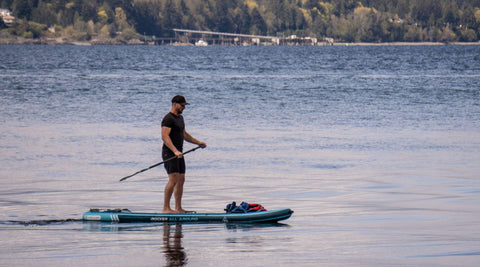
The Foliage of Lake Champlain, Vermont
Lake Champlain is big. If you’re from the Northeast, you know this can be an extraordinary place. The lake sits on the border between New York and Vermont, stretching into Canada. With a lake as big as Champlain, you can bet there are plenty of places to set off with your inflatable paddle board. From Burlington to Swanton Beach, the choice is yours. From the middle of September and well into October, the trees explode in fall color throughout Vermont and the rest of New England—and most importantly, all around Lake Champlain. Paddle board in a rural spot around the lake, and you’re sure to be immersed in everything that makes fall so magical.
The Mountains of Jackson Lake, Wyoming
Jackson Lake is due east of the Tetons and off US Route 191 (also known as the John D. Rockefeller Jr. Parkway), so it’s hard to miss. Of course, the view is hard to miss, too. Few paddle boarding locations around the US can match the majesty of Jackson Lake with a pristine view of the Tetons in the background. The great thing about visiting Jackson Lake and Jackson, Wyoming in early fall is the snow has yet to set in. Much of the time, it’s still fairly warm during the day—balanced by those crisp autumn mornings and evenings. When you go out on the lake at sunrise and the light hits the Tetons in golden blazing glory, you might need a moment to catch your breath.

The Serenity of Somes Sound, Maine
Right in the middle of Acadia National Park in Maine, you’ll find Somes Sound. It’s one of the defining features of the park—and it’s perfect for breaking out the inflatable paddleboards. And yes, there’s a reason why a second New England locale is worth mentioning here. During early fall, much like Lake Champlain, the forests of Acadia become a fall foliage wonderland. Not only that, but Acadia National Park—situated on Mount Desert Island—is both fairly remote and mountainous. As you paddle board around Somes Sound and in the various coves that dot the shores of the island, you’re rewarded with spectacular views of color.
About iROCKER
When you need a new paddle board, iROCKER has the perfect option for any excursion. For nearly a decade, they’ve been the go-to source for all things inflatable paddle boarding, offering boards and equipment for all skill levels and interests. Need an inflatable SUP built for stability? iROCKER has it! Need a board made for touring? Find it at iROCKER. Already have a board but need accessories? iROCKER delivers everything you need, including beverage coolers, fishing attachments, waterproof speakers, and much more. As you set out on your next adventure, iROCKER has everything you need. Leave no lake, pond, river, bay, or coastline unexplored, thanks to iROCKER!
Get ready for your fall paddle boarding adventure at irockersup.ca